Washington Awards $5.3M to Four Tribes for Solar Microgrids
- Emergency & Local Government Microgrids News
Marin Holt
- 1
- 6 minutes read
- Washington State awarded $16.8M across 22 tribal clean energy projects, March 11 2026
- Suquamish Tribe: 118.9 kW solar + 96 kWh battery, $2.17M
- Jamestown S'Klallam Tribe: 129.6 kW solar + 125 kWh battery, $1.37M
- Nooksack Indian Tribe: 95 kW solar + 125 kWh battery, $1.06M
- Hoh Indian Tribe: 174 kW solar + microgrid, $715,897, Resiliency and Administration Center
- Funded under Washington Climate Commitment Act Tribal Clean Energy Grants Program
Washington State’s Department of Commerce awarded $5.3 million on March 11, 2026 to four tribal nations for solar-plus-battery microgrid projects under the state’s Climate Commitment Act. The awards are part of a broader $16.8 million tribal clean energy package covering 22 projects across 17 tribal communities statewide. The four resilience-focused microgrid projects target tribal buildings and centers that serve as community anchors during grid outages.
Critical Perspective
Washington State’s $5.3 million covers equipment and installation for four tribal sites, but long-term operations and maintenance falls to each nation after project completion, with no disclosed O&M cost provisions in the grant awards. None of the project descriptions confirm whether the inverters are grid-forming-capable, a specification that determines whether these microgrids sustain power through multi-day utility outages or only short-duration disconnects. The awards draw entirely from Washington’s Climate Commitment Act carbon auction revenue, a funding mechanism that faces industry litigation seeking to unwind the program. Which of the four projects has its utility interconnection agreement signed, and what is the expected commissioning date?
The Four Microgrid Projects
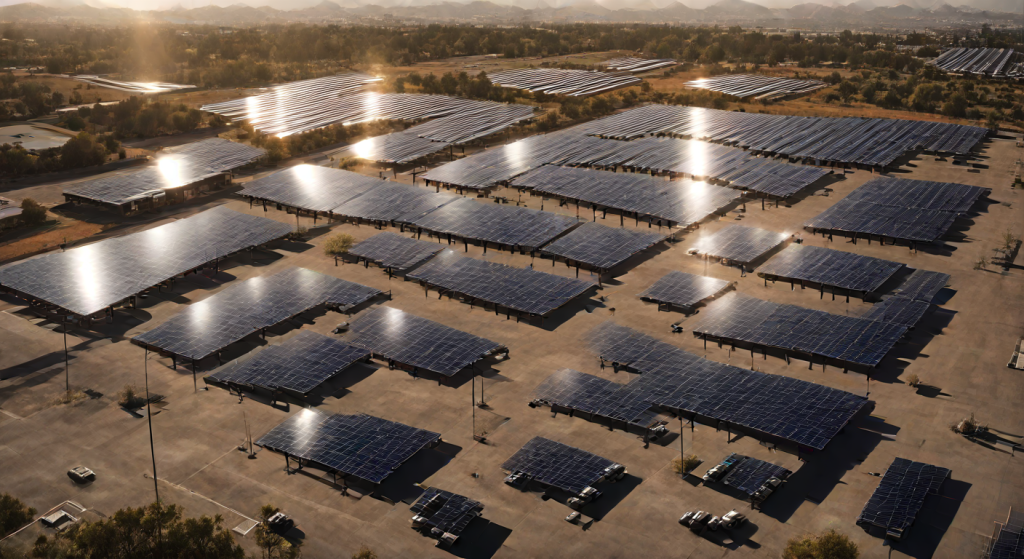
The Suquamish Tribe received the largest microgrid award at $2,169,750 for a 118.9 kW DC solar array paired with 96 kWh of battery storage in Kitsap County. The project is explicitly designated as a Solar + Storage Resiliency Project to keep tribal facilities powered during outages. The Jamestown S’Klallam Tribe in Sequim (Clallam County) received $1,365,692 for a 129.6 kW solar array with 125 kWh of battery storage at the Dungeness River Nature Center, framed as a long-term energy sovereignty project. The Nooksack Indian Tribe in Everson (Whatcom County) received $1,055,544 for a 95 kW solar array with 125 kWh of battery storage at the Sulwhanon Community Building. The Hoh Indian Tribe in Forks (Pacific County) received $715,897 for a 174 kW DC solar array integrated into a microgrid at the tribe’s new Resiliency and Administration Center , a facility explicitly built for emergency response functions.
Why It Matters
Washington’s Olympic Peninsula and Puget Sound tribal communities face grid reliability challenges specific to their geography: long transmission spurs, exposure to winter storm outages, and in several cases, roads that become impassable during severe weather. For these communities, battery-backed solar microgrids serve both as a cost-reduction tool and as a critical infrastructure backstop when grid power is unavailable. Commerce Interim Director Sarah Clifthorne noted that “tribal nations are shaping their own energy future” and that the awards support priorities the tribes themselves identified. The four microgrid grants add to Washington’s track record of funding tribal clean energy at a scale that moves beyond feasibility studies into concrete commissioned infrastructure, with all four projects funded under the Climate Commitment Act’s Tribal Clean Energy Grants Program.
Power Quality and Interconnection Standards
Each of the four tribal solar-plus-battery projects must meet IEEE 1547-2018 Section 6.5 anti-islanding detection requirements, limiting detection time to two seconds or less to prevent inadvertent energization of de-energized utility lines when the system transitions to islanded backup operation. At low-voltage points of common coupling below 1 kV, IEEE 519-2022 Table 1 limits voltage total harmonic distortion to 8 percent and individual harmonics to 5 percent; modern string inverters typically achieve below 3 percent THD at rated load, but transition to battery-only islanded operation can elevate odd-order harmonics if the inverter is not configured for standalone control mode.