State of Power Electronics: Megawatt Charging Emerges
- Analysis Power Electronics
Marin Holt
- 0
- 19 minutes read
- Power level: 350 kW
- Charging Power: 1 MW+
- Charging Power: 1 MW
- Power scale: 1+ MW
- Number of chargers: 5,600
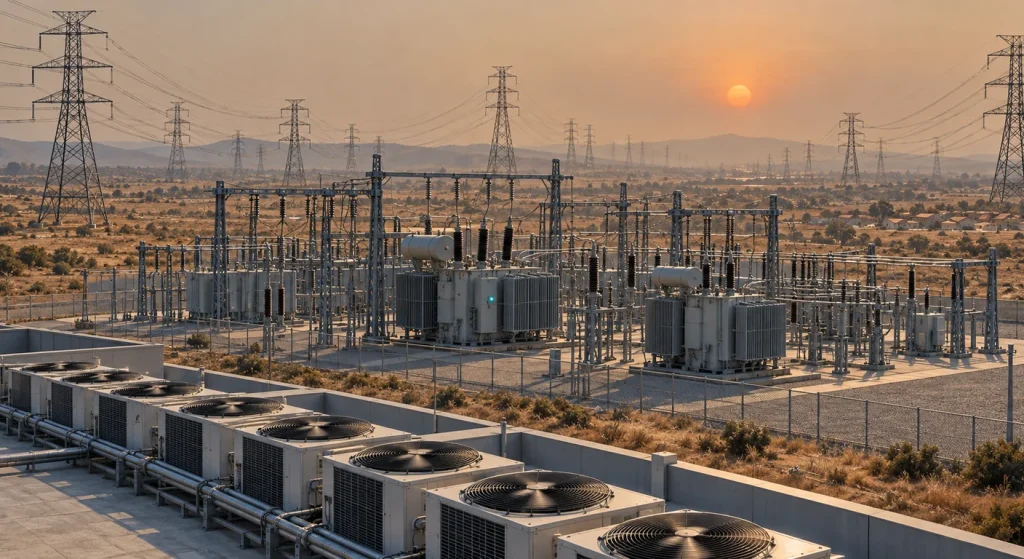
The power electronics sector in 2026 shows a clear split around a megawatt threshold. EV charging infrastructure now moves toward 1 MW+ systems for heavy-duty vehicles. However, solid-state transformer technology, needed to manage that power cleanly, has only single-digit field deployments globally. This occurs despite approximately 100 MGRID articles documenting the technology across origins, manufacturers, and applications.
The Megawatt Charging Convergence
Multiple manufacturers and research institutions now agree on 1 MW as the standard for next-generation heavy-duty vehicle charging. MAN Energy Solutions develops megawatt charging systems[1] delivering 1 MW+. Daimler Truck and Volvo Group jointly develop systems[2] at exactly 1 MW. Argonne National Laboratory’s development work[3] targets the 1+ MW scale. Heliox has launched megawatt charging[4] with 1 MW power output. This industry-wide alignment on megawatt-scale charging for commercial vehicles contrasts sharply with passenger vehicle infrastructure. ABB’s Terra HP charging line expansion[5] remains at 350 kW. Run on Less discusses high-power charging[6] at the same 350 kW level. The megawatt threshold represents a threefold increase over current high-power standards. This creates new technical demands for grid interface and power quality management.
The Passenger Vehicle Fast-Charging Plateau
Passenger vehicle DC fast charging has settled into a 350-600 kW range. This range appears to define the current technical and economic optimum. Global Market Insights reports on ultra-fast EV charging[7] spanning 350 kW to 400 kW. PCIM develops ultra-fast DC charging stations[8] with 350 kW+ capacity. ChargePoint’s next-generation DC fast charging launch[9] pushes the upper boundary to 600 kW for passenger vehicles. This represents the highest power level in this segment. The infrastructure buildout continues at scale. Electrify America expands its public charging network[10] to 5,600 chargers. This 350-600 kW band for passenger vehicles versus the 1 MW standard emerging for commercial vehicles suggests the industry recognizes fundamentally different use cases. These include different duty cycles and battery architectures between the segments.
The Solid-State Transformer Reality Gap
Solid-state transformers face a stark deployment reality, despite extensive development activity. Field-deployed commercial SST units in revenue service globally measure in single digits[11]. This is according to a comprehensive industry reality check. The check examined patents and deployed infrastructure versus the 2025-2026 press-release wave. This gap persists despite approximately 100 MGRID SST articles published in May 2026[12]. These articles covered origins, manufacturers, deployments, programs, technology, and applications. Its relevance to power electronics comes from its potential to address grid power quality. Solid-state transformers can solve the IEEE 519 harmonic problem at megawatt EV chargers[13]. There, IEEE 519-2022 sets a 5% voltage THD limit at the utility-customer interface. The deployment gap suggests technical, economic, or regulatory barriers remain between laboratory performance and field reliability.
The Historical Context of Transformer Innovation
The solid-state transformer’s slow commercialization reflects the remarkable durability of incumbent technology. The iron-core transformer has outlasted every replacement attempt for 130 years[14]. This dates back to William Stanley’s demonstration of the first commercial AC transformer in Great Barrington, Massachusetts, in March 1886. Modern SST development traces to the 1968 GE patent. That patent founded solid-state transformer technology[15]. It represents a 58-year gap between patent and meaningful deployment. A critical acceleration point came with the FREEDM Systems Center at NCSU[16]. This NSF Generation-III Engineering Research Center launched in 2008. It turned solid-state transformers into real devices. Even terminology remains unsettled. The technology has evolved from “electronic transformer” to “intelligent universal transformer”[17] in its naming history. This reflects ongoing conceptual development.
The Single-Stage Architecture Challenge
Technical architecture choices show why SST deployment lags development timelines. Single-stage AC-AC solid-state transformers are considered the holy grail[18]. FREEDM targets 99% efficiency at 20 kW. However, these direct AC-AC conversion designs remain laboratory-only. Almost all manufacturers build two-stage systems instead. They accept the efficiency penalty and complexity in exchange for proven reliability and manufacturability. This architectural compromise chooses demonstrated two-stage designs over theoretically superior single-stage systems. It mirrors the broader pattern of conservative engineering decisions when deploying power electronics at megawatt scale with utility-grade reliability requirements. The gap between laboratory efficiency targets and field-deployed architectures explains much of the single-digit deployment count.
What to Watch
Commercial megawatt charging standardization: Multiple manufacturers now converge on 1 MW for heavy-duty vehicles. Watch for formal standardization efforts and interoperability testing protocols. These could speed deployment beyond demonstration projects.
SST deployment catalysts: The single-digit field deployment count for solid-state transformers needs a catalyst. This could be regulatory mandates for harmonic compliance, utility incentives for grid-interactive devices, or cost breakthroughs in semiconductor packaging. Such catalysts would bridge the gap between extensive development activity and commercial adoption.
Passenger vehicle charging power ceiling: ChargePoint’s 600 kW system may represent the practical upper limit for passenger vehicles. This is due to battery thermal constraints and diminishing returns on charge time reduction. Monitor whether the industry consolidates around this level or continues pushing higher.
Two-stage versus single-stage SST economics: Megawatt charging creates stronger demand for power quality management. Watch whether field reliability data from two-stage SST deployments builds confidence for single-stage architecture investments. Or, will the efficiency gap prove economically irrelevant at scale?
Why It Matters
Pillar pages help operators, planners, and procurement leads orient themselves in a fast-moving subsector. The value is not the aggregate numbers. Those drift weekly. Instead, the value lies in the ability to follow named projects, vendors, and policy actions as they progress through stages. Use this index as a launch point into the stage-tagged underlying articles. There, the actual decision-grade detail lives. For utility planners, this is most useful as a quarterly scan. For procurement leads tracking a specific vendor or technology, the named-entity articles linked from here offer a higher-resolution view.
Critical Perspective
This pillar collects MGRID’s recent coverage of the category. Readers should treat the aggregate numbers cited above as a snapshot of a fast-moving sector. They are not a final scoreboard. Three caveats apply: (1) project counts and capacity figures conflate announced, funded, under-construction, and operational tiers. So, consult individual articles for stage-specific status. (2) The corpus reflects what MGRID has covered, not the full universe of activity globally. (3) MW and dollar totals are nominal at time of publication. They do not adjust for cancelled or restructured projects. Use the pillar to navigate, but ground decisions in the underlying named-entity articles.
Sources
- MAN Energy Solutions Develops Megawatt Charging Systems [1]
- Daimler Truck and Volvo Group Develop Megawatt Charging Systems [2]
- Argonne National Laboratory Develops Megawatt Charging System [3]
- Heliox Launches Megawatt Charging [4]
- ABB Expands Terra HP Charging Line [5]
- Run on Less Discusses High-Power Charging [6]
- Global Market Insights Reports on Ultra-Fast EV Charging [7]
- PCIM Develops Ultra-Fast DC Charging Stations [8]
- ChargePoint Launches Next-Gen DC Fast Charging [9]
- Electrify America Expands Public Charging Network [10]
- Solid-State Transformer Industry Reality Check: What Patents and Deployed Infrastructure Actually Show vs the 2025-2026 Press-Release Wave [11]
- The MGRID Solid-State Transformer Coverage: A Comprehensive Index of Manufacturers, Deployments, Programs, Technology, and Applications [12]
- How Solid-State Transformers Solve the IEEE 519 Harmonic Problem at Megawatt EV Chargers [13]
- Why the Iron-Core Transformer Has Outlasted Every Replacement for 130 Years (And What Finally Threatens It) [14]
- The 1968 GE Patent That Founded Solid-State Transformer Technology [15]
- FREEDM Systems Center at NCSU: The 2008 NSF Center That Turned Solid-State Transformers Into Real Devices [16]
- From “Electronic Transformer” to “Intelligent Universal Transformer”: A Naming History of the Solid-State Transformer [17]
- Why Single-Stage AC-AC Solid-State Transformers Are the Holy Grail — And Why Almost Everyone Builds Two-Stage Anyway [18]
References
- [1] MAN Energy Solutions Develops Megawatt Charging Systems
- [2] Daimler Truck and Volvo Group Develop Megawatt Charging Systems
- [3] Argonne National Laboratory Develops Megawatt Charging System
- [4] Heliox Launches Megawatt Charging
- [5] ABB Expands Terra HP Charging Line
- [6] Run on Less Discusses High-Power Charging
- [7] Global Market Insights Reports on Ultra-Fast EV Charging
- [8] PCIM Develops Ultra-Fast DC Charging Stations
- [9] ChargePoint Launches Next-Gen DC Fast Charging
- [10] Electrify America Expands Public Charging Network
- [11] Solid-State Transformer Industry Reality Check: What Patents and Deployed Infrastructure Actually Show vs the 2025-2026 Press-Release Wave
- [12] The MGRID Solid-State Transformer Coverage: A Comprehensive Index of Manufacturers, Deployments, Programs, Technology, and Applications
- [13] How Solid-State Transformers Solve the IEEE 519 Harmonic Problem at Megawatt EV Chargers
- [14] Why the Iron-Core Transformer Has Outlasted Every Replacement for 130 Years (And What Finally Threatens It)
- [15] The 1968 GE Patent That Founded Solid-State Transformer Technology
- [16] FREEDM Systems Center at NCSU: The 2008 NSF Center That Turned Solid-State Transformers Into Real Devices
- [17] From “Electronic Transformer” to “Intelligent Universal Transformer”: A Naming History of the Solid-State Transformer
- [18] Why Single-Stage AC-AC Solid-State Transformers Are the Holy Grail — And Why Almost Everyone Builds Two-Stage Anyway
Related Coverage
Update: Late June 2026
New device launches were thinner on the ground in the back half of June than the megawatt-charging and solid-state-transformer momentum this pillar opened with. However, the two that landed both targeted the efficiency ceiling. Navitas launched an isolated through-hole SiC package aimed at higher-power, easier-to-manufacture designs. Onsemi launched its GaNEXUS GaN FETs, pushing gallium nitride further into the power ranges silicon carbide has dominated.
The quieter pace itself tells the story. The wide-bandgap news cycle has shifted from component announcements to deployment. The solid-state transformer and 800VDC data-center work this pillar tracks now moves into commercial shipments rather than press releases. The megawatt-charging thesis holds, but the near-term proof points increasingly lie on the systems side. This means watching who ships integrated SiC and GaN power stages at volume, rather than just datasheet firsts.