Army Awards $42.6M Fort Liberty JSOC Microgrid and Dual Puerto
- Microgrids Military & Defense News
Marin Holt
- 0
- 7 minutes read
- Fort Liberty JSOC microgrid contract $42.6M awarded September 25 2024 to David Boland Inc
- Fort Liberty JSOC system designed for 14-day continuous islanding supporting 24/7 worldwide operations
- Puerto Rico LTC Pesquera ARC microgrid awarded August 23 2024
- Puerto Rico Ramey ARC microgrid awarded August 30 2024
- Fort Cavazos Phantom Warrior Microgrid: 3 MW RICE + 1.5 MW solar + 1 MW BESS for 2.9 MW load
- Anniston Army Depot FY2025: $56.45M installation-wide microgrid with natural gas and solar
The U.S. Army awarded multiple Energy Resilience and Conservation Investment Program contracts in 2024 for microgrids at Fort Liberty, North Carolina, and Puerto Rico Army Reserve Centers, building on a growing portfolio of installations equipped with islanding-capable power systems. These awards advance the Army’s goal of deploying a microgrid at every installation by 2034, with each system designed to sustain critical operations for up to 14 days without commercial grid power.
Fort Liberty JSOC Microgrid: $42.6M Contract Awarded September 2024
On September 25, 2024, the U.S. Army Corps of Engineers awarded David Boland, Inc. a firm-fixed-price contract valued at $42.6 million for the JSOC Microgrid project at Fort Liberty (formerly Fort Bragg), North Carolina. The microgrid will power the Joint Special Operations Command compound within Fort Liberty, providing islanding capability from the base’s main electrical distribution system. The system is engineered to fully support all critical JSOC loads for up to 14 continuous days, sustaining the command’s 24/7 worldwide operational tempo during commercial grid outages or deliberate isolation events.
Fort Liberty is one of the largest military installations in the world, located in Cumberland and Hoke counties in North Carolina. The JSOC microgrid is a dedicated ERCIP project, funded through the Defense-Wide Military Construction appropriation specifically for energy resilience improvements that reduce mission risk from grid-dependent power supply.
Puerto Rico ARCs: Dual Microgrid Awards in August 2024
Two Army Reserve Center microgrids in Puerto Rico were awarded in late August 2024 following a design phase that began in the second quarter of FY2022. The LTC Pesquera Army Reserve Center microgrid in Juana Diaz was awarded August 23, 2024, followed by the Ramey Army Reserve Center microgrid in Aguadilla, awarded August 30, 2024. Puerto Rico’s grid vulnerability — underscored by the extended outages following Hurricane Maria and continuing fragility on the island’s transmission system — makes ERCIP microgrid investments there among the highest-priority resilience projects in the Army Reserve network.
Fort Cavazos Phantom Warrior Microgrid: FY2025 Construction
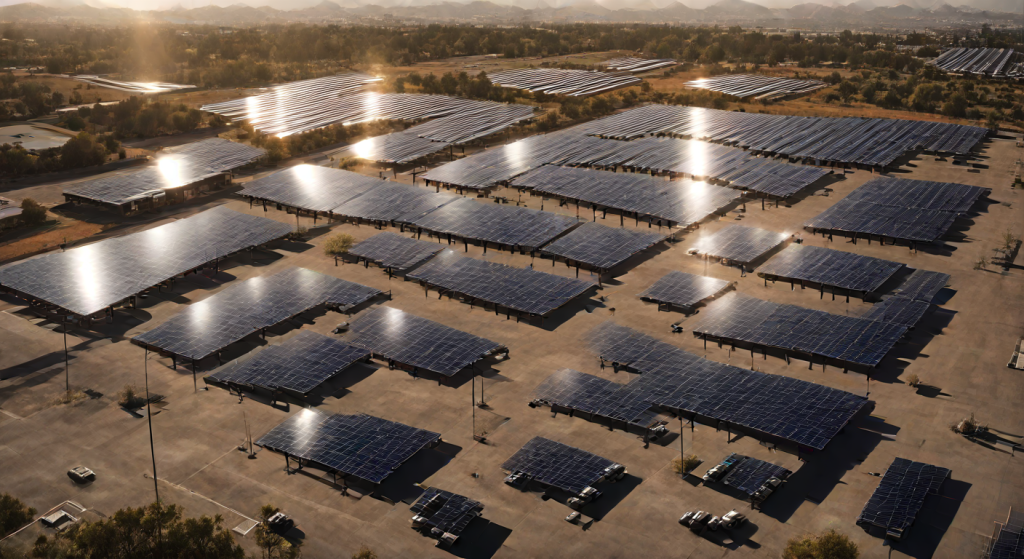
The Fort Cavazos Phantom Warrior Microgrid, authorized under the FY2024 NDAA and contracted to Dominion Privatization Texas, LLC, will provide 2.9 MW of resilient power — 2.12 MW to critical loads and 0.79 MW to non-critical loads. The system integrates 3 MW of natural gas RICE generators, a 1.5 MW solar photovoltaic parking canopy array, and a 1 MW battery energy storage system with automated switching for island mode operation. Fort Cavazos previously completed an earlier microgrid in February 2024 that provides a minimum of 14 days of operational capability for 43 installation facilities and more than $125,000 in daily energy savings during ERCOT peak demand periods.
Anniston Army Depot FY2025: $56.45M Installation-Wide Microgrid
The FY2025 ERCIP budget includes a $56.45 million project at Anniston Army Depot in Alabama to construct an installation-wide microgrid incorporating new natural gas generation and medium voltage distribution switchgear, integrated with an existing substation solar PV array and existing Army natural gas generation assets. When complete, the Anniston system will provide full installation resilience against commercial grid disruptions that could affect depot operations supporting Army vehicle and equipment maintenance programs.
Critical Analysis
The Fort Liberty JSOC microgrid’s 14-day islanding requirement invokes IEEE 1547-2018 Section 6.5.1 anti-islanding detection and Category B frequency ride-through (59.0–60.5 Hz continuous, 57.0–58.5 Hz for 299 seconds). JSOC islanding capability removes Fort Liberty’s critical loads from Duke Energy Carolinas’ grid during contingency events, reducing the utility’s priority dispatch obligation by the full microgrid load.
5-Year Projection
Over the next 5 years, early adopters of JSOC Microgrid (Islanding System) will set regional cost benchmarks, forcing secondary markets to standardize deployment protocols or risk stranded assets.
Critical Perspective
The Army awarded $42.6 million for the Fort Liberty JSOC microgrid. This cost per MW is significantly higher than the 2.9 MW Fort Cavazos microgrid awarded for FY2025 construction. Past Army microgrid projects, like the one at Fort Hood, experienced construction delays exceeding their original timelines. What is the projected capacity and duration of islanded operation for this $42.6 million Fort Liberty microgrid?