California Awards Scale $4.2 Million for Solar-and-Battery Microgrid at Santa Barbara City College
- Emergency & Local Government Microgrids News
Marin Holt
- 0
- 6 minutes read
- CEC grant: $4.2 million
- Solar capacity: 1.6 MW
- Battery storage: two Tesla Megapack systems
- Backup duration: 8 to 24 hours
- Completion: end of 2027
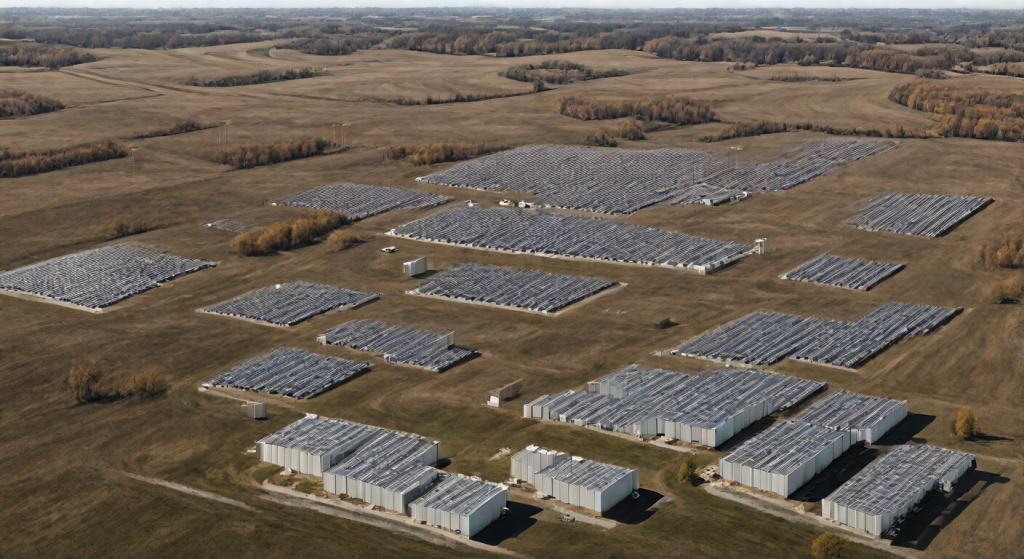
The California Energy Commission awarded Scale Microgrids a $4.2 million grant to build a solar-and-battery microgrid at Santa Barbara City College, turning the campus into a community resilience hub for one of the state’s most outage-prone regions. The June 3, 2026 award, made through the Commission’s Community Energy Reliability and Resilience Investment (CERRI) program, funds 1.6 MW of on-site solar arrays paired with two Tesla Megapack battery systems. Scale expects the microgrid to be finished by the end of 2027; the project is in planning and design as of mid-2026.
Once built, the microgrid qualifies the college as a designated community resilience hub, able to keep power flowing for eight to 24 hours when the surrounding grid goes dark. During a wildfire, earthquake, or extended outage, the campus becomes a place where nearby residents charge devices, access cooling, and shelter, rather than a dark building drawing on a strained utility feed.
Critical Perspective
The California Energy Commission’s $4.2 million grant pairs 1.6 MW of solar with two Tesla Megapack systems to give Santa Barbara City College eight to 24 hours of islanded power. Eight to 24 hours is a thin margin in a state where the 2019 Public Safety Power Shutoffs left parts of Northern California dark for up to five days, and a wildfire severing the region’s single 40-mile transmission line could outlast the battery long before crews restore the feed. The Blue Lake Rancheria microgrid in Humboldt County carried a rural community through those same 2019 shutoffs and became the model California now cites, yet it ran on a specific generation-and-load mix a single 1.6 MW campus array may not reproduce. If Santa Barbara sits in FEMA’s 99.4th percentile for disaster risk, is a hub rated for at most 24 hours sized for the multi-day event the grant is meant to survive, or only for the outage the region has already outgrown?
Why It Matters
Santa Barbara sits at the end of the line. The region’s grid depends on a single transmission line crossing roughly 40 miles of terrain prone to wildfires, earthquakes, and landslides, and it records outages longer and more frequent than most of the Southern California Edison system. The Federal Emergency Management Agency ranks the county in the 99.4th percentile for natural-disaster risk. For a corridor that exposed, a campus microgrid is less a backup generator than a piece of public infrastructure: it gives emergency managers a fixed, powered location to plan around before the next fire season, not after. Scale’s CERRI award is a template other grid-edge California communities are positioned to copy as the Commission expands the program.
Scale is partnering with the Community Environmental Council of Santa Barbara on local engagement, and the build will create union-supported construction jobs and student internships tied to the college’s workforce programs. “Santa Barbara faces unique grid reliability challenges and vulnerabilities that make local resilience solutions such as solar, battery storage, and microgrids a critical need for communities in the area,” said Shea Hughes, vice president of business development at Scale.
Sources
- Scale to Build Microgrid for Santa Barbara City College Community Resilience Hub, Backed by California Energy Commission (BusinessWire, June 3, 2026)
- California selects Scale to build microgrid for Santa Barbara City College emergency hub (Microgrid Knowledge)
- Santa Barbara City College to Use $4.2M State Grant to Build New Microgrid (Santa Barbara Independent, June 23, 2026)
- Scale receives $4.2M for microgrid project at Santa Barbara City College (Pacific Coast Business Times, June 13, 2026)
- SBCC’s New Microgrid Power Supply Supported by $4.2-Million Grant (Noozhawk, June 10, 2026)