$39M DOE Grant for Battery Storage in Tallahassee
- Emergency & Local Government Energy Storage News Utility-Scale BESS
Marin Holt
- 0
- 6 minutes read
- DOE GRIP awarded $28.7M to City of Tallahassee Electric and Gas Utility for BESS project
- Total project cost $39M with $10.7M city match at Birmingham Street Substation
- 10-25 MW battery energy storage system backs up four named community facilities
- Facilities served: Lawrence-Gregory Center, Lincoln Center, Miracle Hill Nursing, Tallahassee Senior Center
- Construction starts June 2026; expected annual fuel savings of $160,000
Tallahassee’s municipal electric and gas utility is installing a $39 million battery storage system that will provide backup power to four named community facilities during grid outages, using $28.7 million in federal DOE Grid Resilience and Innovation Partnerships funding. Construction starts June 2026.
What Is Being Built
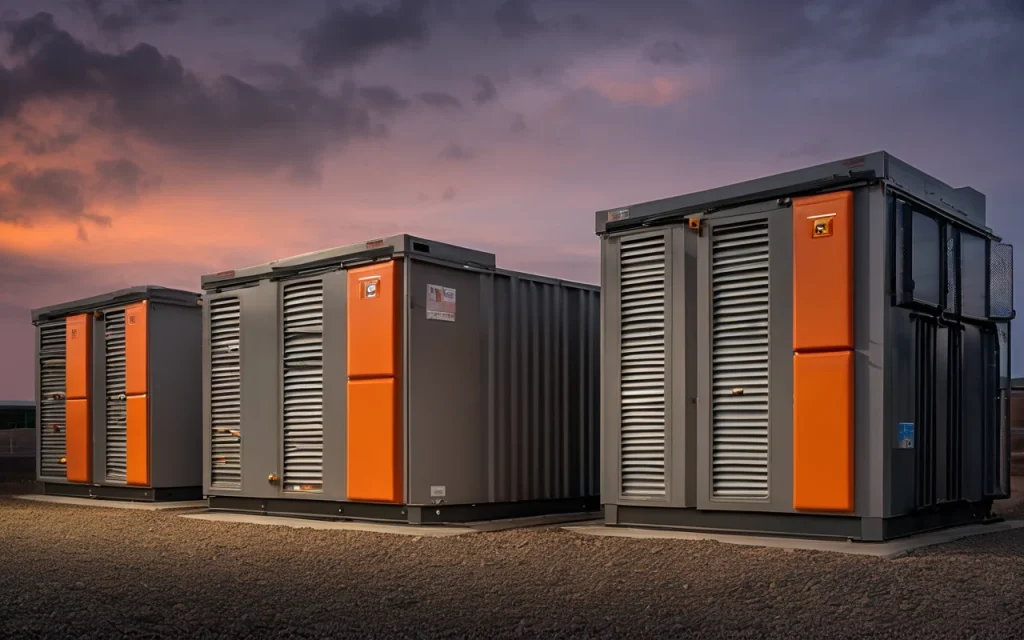
The City of Tallahassee Electric and Gas Utility is deploying a 10 to 25 MW battery energy storage system at its Birmingham Street Substation. Beyond the battery itself, the project includes grid hardening: pole replacements, hardened overhead equipment, improved feeder routes, automated switching, underground collection lines, and communication systems linking the battery units to substation controls.
Four facilities will receive direct backup power from the system during outages: Lawrence-Gregory Community Center, Lincoln Center, Miracle Hill Nursing and Rehabilitation Center, and Tallahassee Senior Center. These loads are connected via existing feeder infrastructure routed through the Birmingham Street Substation.
Total project cost: $39 million. The DOE GRIP program, funded under the Bipartisan Infrastructure Law, covers $28.7 million. The city contributes $10.7 million, roughly 27 percent of total cost. Preliminary design and engineering are underway as of early 2026. Construction is scheduled to begin June 2026.
Why This Matters
Substation-level battery storage gives municipal utilities selective dispatch capability during outages. Rather than waiting for full grid restoration, a utility with battery capacity and defined priority circuits keeps critical community facilities energized while broader repairs proceed. That capability is unavailable to utilities relying solely on traditional grid infrastructure.
The selection of a nursing home and senior center as priority loads reflects a documented pattern in post-storm mortality data: elderly and medically dependent populations face the greatest risk during extended outages. Tallahassee’s project names those facilities explicitly in the grant structure, making the backup power obligation part of the federally funded project scope rather than an informal operational commitment.
Estimated annual savings from peak shaving and load shifting: $160,000. This is not a resilience cost; it is revenue from normal grid operations that offsets the city’s capital contribution over time. The battery performs economically during routine operation and provides emergency capability when needed.
Implementation Details
The GRIP program’s matching requirement, which Tallahassee satisfies at the 27 percent level, is designed to ensure local financial commitment to long-term operations. Projects that require no local match tend to generate less institutional ownership of maintenance and performance outcomes.
The project’s community benefits agreement includes 30 Clean Energy Trades certificate positions for local workforce trainees. These are administered through the Resilient Infrastructure and Disaster Response (RIDER) Center at FAMU-FSU College of Engineering, tying the infrastructure investment to a local workforce development outcome that the GRIP program requires.
The substation-based battery approach gives Tallahassee a cost advantage over individual facility microgrids. A single installation at one substation provides resilience for multiple facilities simultaneously, using existing feeder routes rather than requiring new dedicated interconnections at each site. For mid-sized municipal utilities managing multiple critical community facilities, the substation model is more cost-efficient than the per-facility alternative.
Critical Perspective
The article highlights a $39 million battery storage project. The 10 to 25 MW system is comparable to the 100 MW battery installed by Duke Energy in South Carolina. The Aurora, Colorado 10 MW battery project experienced a significant thermal event in 2021. Will this project’s grid hardening measures truly prevent similar incidents?