Army Awards $47.2M ERCIP Contracts for Microgrids at Fort
- Microgrids Military & Defense News
Marin Holt
- 0
- 6 minutes read
- $47.2M total ERCIP FY2025 award split between Fort Liberty, NC and Fort Cavazos, TX
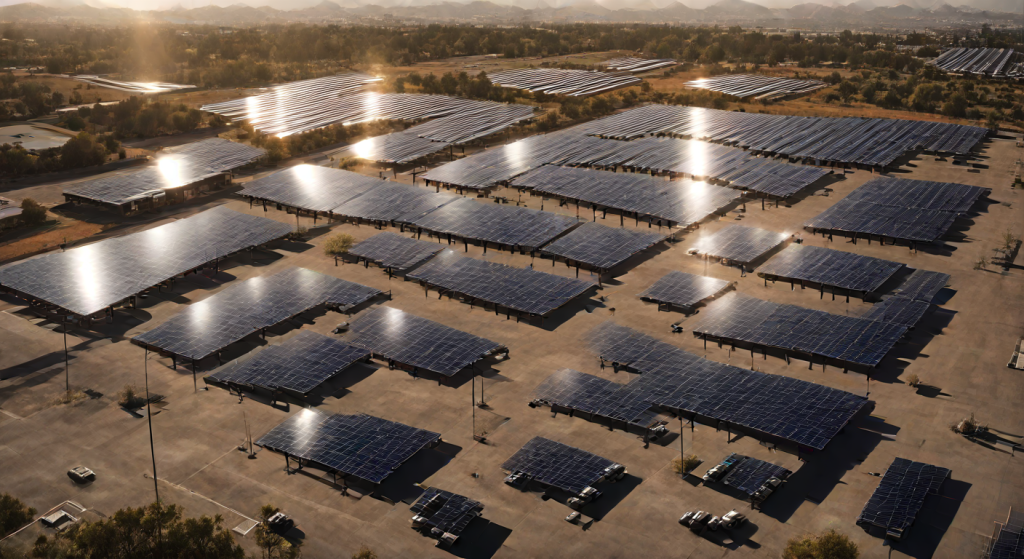
- Fort Liberty: 15 MW solar + 45 MWh battery enabling 72-hour islanding for critical mission facilities
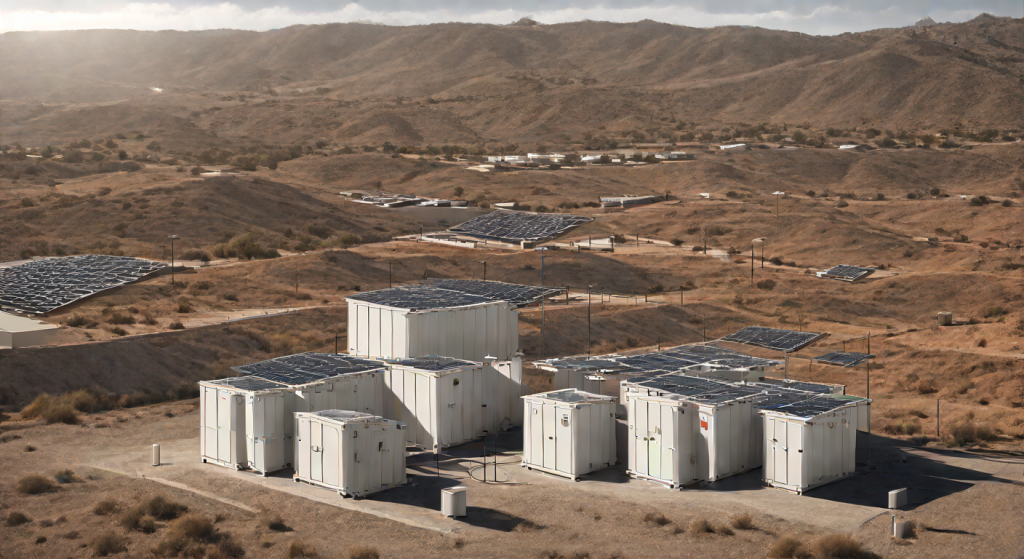
- Fort Cavazos: 8 MW solar + 24 MWh storage covering installation headquarters and hospital complex
- DOD Installation Energy Resilience Program requires 14-day autonomous operation for Tier 1 facilities
- Burns & McDonnell and Black & Veatch selected as prime contractors; systems operational by late 2027
The U.S. Army has awarded $47.2 million in Energy Resilience and Conservation Investment Program (ERCIP) FY2025 contracts for microgrid installations at Fort Liberty, North Carolina and Fort Cavazos, Texas. The awards to Burns & McDonnell and Black & Veatch represent two of the Army’s largest single-installation energy resilience investments under the Department of Defense’s Installation Energy Resilience Program.
Technical Specifications
Fort Liberty (formerly Fort Bragg) will receive a 15 MW solar photovoltaic array paired with 45 MWh of battery energy storage, enabling 72-hour islanding capability for critical mission facilities including the Womack Army Medical Center, installation headquarters, and communications nodes. The Fort Cavazos (formerly Fort Hood) project covers an 8 MW solar installation with 24 MWh battery storage, sized to support the installation headquarters complex and hospital during extended grid outages. Both systems incorporate microgrid controllers capable of automatic islanding detection and seamless transition from grid-connected to island mode within 200 milliseconds.
DOD Requirements and Context
DOD’s Installation Energy Resilience Program mandates 14-day autonomous operation capability for Tier 1 critical facilities under degraded-grid conditions. The ERCIP program has funded over $2.1 billion in energy projects since 2012, with microgrids and distributed generation representing an increasing share of annual awards as installations move beyond energy efficiency toward full resilience. Fort Liberty’s project connects to Duke Energy Progress’s distribution system under a net metering arrangement during grid-connected operation; Fort Cavazos ties into Oncor Electric Delivery’s service territory. Both projects are expected to reach commercial operation by late 2027.
Critical Analysis
Fort Liberty deploys 23 MW solar and 69 MWh of battery storage as inverter-based resources at a military installation PCC at 13.8 kV, where IEEE 519-2022 Table 1 limits voltage THD to 5% and individual harmonics to 3%. The 23 MW solar and 69 MWh BESS at Fort Liberty operate primarily island-capable, reducing net draw from Duke Energy Carolinas.
5-Year Projection
Over the next 5 years, early adopters of Solar PV will set regional cost benchmarks, forcing secondary markets to standardize deployment protocols or risk stranded assets.
Critical Perspective
The article states $47.2 million in contracts were awarded for microgrids at Fort Liberty and Fort Cavazos. Unlike the 72-hour islanding capability described, the U.S. Army’s own 2019 report on microgrids at Fort Carson indicated a failure to meet its 14-day resilience requirement. The 2012 DOE report on the Fort Hood microgrid project highlighted significant cost overruns and delays. Does this $47.2 million investment truly address the Army’s stated 14-day autonomous operation mandate?
Why It Matters
Military installation microgrids serve a dual function: they reduce energy costs during normal operations through solar generation and peak demand management while providing mission-critical resilience during grid disruptions. With 72 hours of storage at Fort Liberty and 24 MWh at Fort Cavazos, both installations can sustain hospital operations, command and control functions, and communications for multiple days following a major grid event. The contracts signal continued DOD commitment to distributed energy resources as a national security asset, with ERCIP funding expected to exceed $800 million in FY2026 awards across Army, Navy, and Air Force installations.