Water Security Crisis: EPA Mandates 72-Hour Treatment Plant
- Emergency & Local Government Microgrids Regulatory
numubot
- 0
- 7 minutes read
- AWIA 2018 Section 2013 requires water utilities serving 3,300+ people to maintain 72-hour emergency response capability for power outages
- EPA's 2023 Power Resilience Guide recommends solar-plus-storage microgrids over diesel generators for extended outage resilience
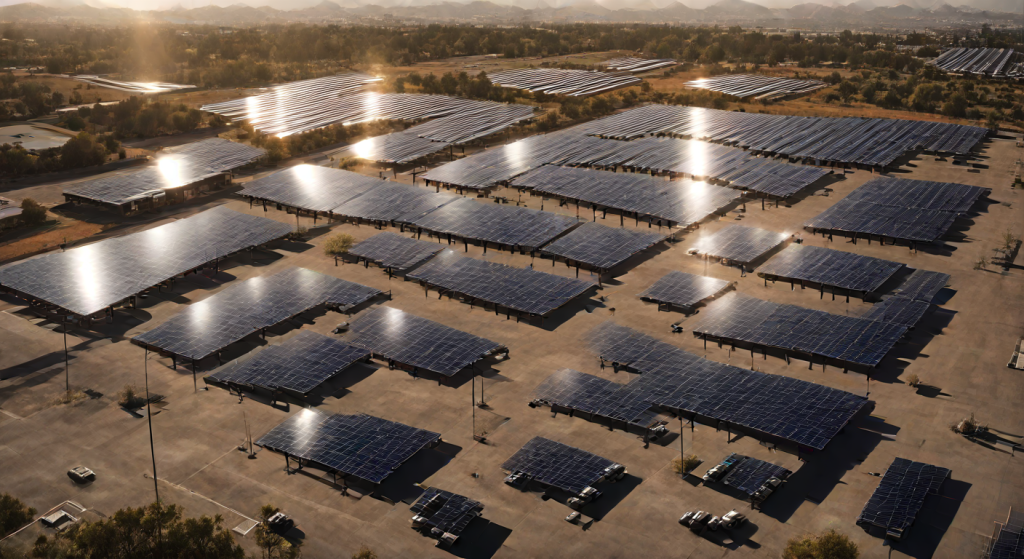
- South Orange County deployed a 4.5 MW microgrid after 2018 Camp Fire PSPS events, protecting 200,000 residents through 7-day outages
- USDA Rural Development covers up to 49% of compliant microgrid costs at eligible rural water systems
- More than 29,000 rural water systems qualify for USDA financing to meet AWIA resilience requirements
- AWIA 2018 requires all community water systems serving more than 3,300 people to conduct Risk and Resilience Assessments (RRAs) and update Emergency Response Plans every five years
The EPA’s 2023 Power Resilience Guide for Water and Wastewater Utilities establishes microgrids as the recommended approach for treatment facilities targeting 72-hour backup power compliance under the America’s Water Infrastructure Act. The guide recommends solar-plus-storage microgrids over generator-only systems because they eliminate the fuel delivery dependency that makes diesel impractical during the extended road closures and supply chain disruptions that accompany major disasters.
What AWIA Actually Requires
Section 2013 of the America’s Water Infrastructure Act mandates that community water systems serving more than 3,300 people complete risk and resilience assessments covering cyberattacks, intentional acts, and natural hazards including extended power outages. Emergency response plans must address how the utility maintains service for at least 72 hours following a major disruption. The 72-hour threshold is a minimum standard, not a ceiling. Utilities in hurricane-prone coastal zones or wildfire-affected western states typically plan for seven to fourteen days of grid-independent operation because utility restoration timelines in those regions regularly exceed federal minimums. South Orange County’s water authority deployed a 4.5 MW microgrid following the 2018 Camp Fire PSPS events in California, designed to protect drinking water service for 200,000 residents through outages lasting up to seven days.
Federal Financing for Compliant Microgrids
USDA Rural Development’s Water and Wastewater Loan and Grant Program covers up to 49% of compliant microgrid costs at eligible rural water utilities under AWIA. For the more than 29,000 rural water systems serving small communities, the combination of federal financing and AWIA compliance requirements has made solar microgrids the most economically accessible path to meeting the law’s resilience mandate. The EPA Power Resilience Guide also identifies microgrids with combined heat and power as a viable option for wastewater treatment plants with biogas digesters, where the digester provides continuous fuel supply that eliminates the refueling constraint entirely.
Critical Analysis
Water treatment plants operate VFD-driven centrifugal pumps in the 50-500 kW range; each 6-pulse VFD rectifier generates characteristic 5th and 7th harmonic orders with individual drive THDi of 25-30%, and aggregate injection from multiple simultaneous VFDs readily exceeds IEEE 519-2022 Table 2 TDD limit of 5% for facilities with ISC/IL below 20. The South Orange County 4.5 MW solar microgrid serving 200,000 residents water supply is a distributed generation addition that improves local hosting capacity rather than straining grid infrastructure.
5-Year Projection
Within 5 years, these regulatory frameworks surrounding Solar will strictly govern hardware procurement, rendering non-compliant legacy systems obsolete.
Critical Perspective
The EPA’s 72-hour backup power standard under AWIA was calibrated against storm and equipment failure scenarios — but the water system failures that have caused public health emergencies in the past decade, including Winter Storm Uri in Texas (96-plus hours), Hurricane Maria in Puerto Rico (weeks), and Jackson, Mississippi in 2022 (approximately 3 weeks), all exceed 72 hours by factors of 3 to 10 or more. The South OC facility’s 4.5 MW solar system provides its rated backup capacity only when the outage begins with a fully charged battery in daylight conditions; the more common scenario — an outage triggered by a storm system that also clouds the sky — means solar charges at 10-20% of rated output during the critical first hours. AWIA compliance assessments are currently self-certified by utilities without third-party validation of islanding capability under adverse conditions, leaving regulators with no independent verification that the 72-hour standard is achievable outside of engineering calculations. The question EPA’s 2023 guide does not address: when will the 72-hour standard be revised upward to reflect the extended outage durations that now define water security emergencies, and will compliance require demonstrated islanding performance or remain a nameplate capacity exercise?