North Carolina Commits $5M to Emergency Microgrids Across Six
- Emergency & Local Government Microgrids News
Marin Holt
- 0
- 6 minutes read
- $5 million dedicated from $10.4M federal IIJA allocation for microgrid deployment
- Up to 24 stationary microgrids across 6 Helene-affected NC counties
- 2 mobile Beehive microgrid hubs serving Western and Eastern NC
- Hurricane Helene left approximately 1 million NC residents without power in September 2024
- Project completion targeted for June 2027
North Carolina’s Department of Environmental Quality announced a $5 million investment to deploy up to 24 stationary microgrids and two mobile “Beehive” microgrid hubs across six counties devastated by Hurricane Helene. The initiative, funded through a $10.4 million federal Infrastructure Investment and Jobs Act allocation, targets Avery, Buncombe, Madison, Mitchell, Rutherford, and Yancey counties for its first phase.
Technical Details
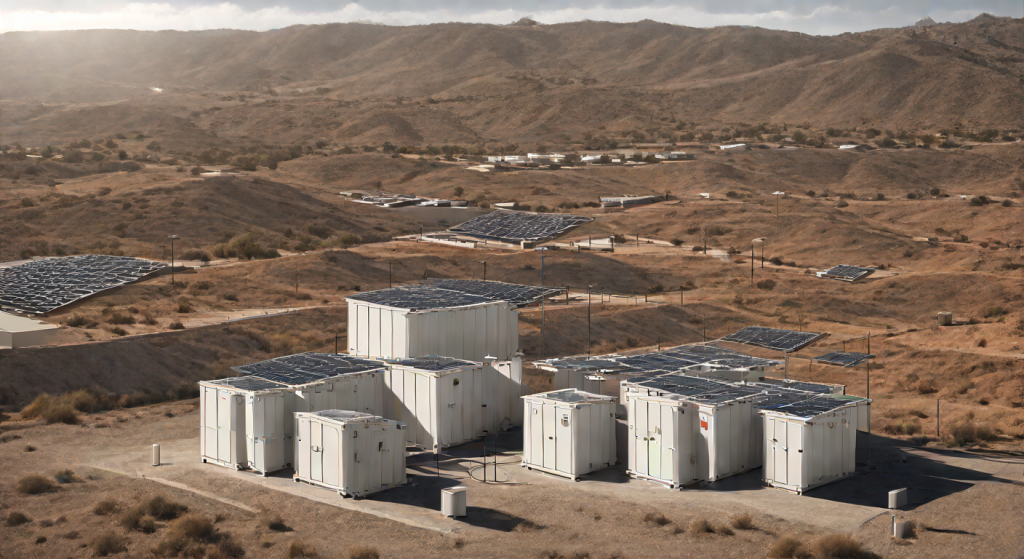
The program centers on a “Beehive” microgrid architecture developed by Footprint Project. Each hive consists of a stationary solar-plus-storage installation that serves as a charging depot for portable microgrid units — the “bees” — which can be dispatched to emergency sites on demand. Two hubs will serve Western and Eastern North Carolina respectively. The stationary microgrids will power fire departments, EMS stations, community centers, and water treatment facilities that lost power for weeks after Helene struck on September 26, 2024, leaving an estimated one million residents without electricity.
The Land of Sky Regional Council, NC Sustainable Energy Association, and Footprint Project are leading implementation, with site selection beginning in fall 2025 and completion targeted for June 2027. More than $1 million in additional clean energy equipment has been donated by industry partners to supplement the state funding.
Critical Analysis
The Beehive portable microgrid architecture operates in true islanded mode requiring grid-forming inverters to establish 60 Hz voltage reference; grid-following inverters cannot operate stably without an energized PCC. The 24 stationary and 2 mobile Beehive units in Avery, Buncombe, Madison, Mitchell, Rutherford, and Yancey counties operate off-grid, imposing no harmonic injection burden on Duke Energy Progress’s Blue Ridge restoration network.
5-Year Projection
During the 5-year outlook, capitalized Stationary Solar-Plus-Storage Microgrids ventures will drastically compress technology iteration cycles, demanding continuous utility-level adaptations to accommodate high-velocity product launches.
Critical Perspective
North Carolina commits $5 million to 24 stationary and two mobile microgrids. This program aims for a cost of $2-5 million per MW, a figure significantly higher than the $1.5 million per MW cost of the 100 MW solar-plus-storage project completed by NextEra Energy in Florida in 2023. California’s 2019 wildfire-related microgrid deployments faced significant delays and cost overruns, ultimately proving less effective than anticipated. Will these microgrids truly provide reliable power when the grid fails, or will they become another expensive, underutilized asset?
Why It Matters
Weather-related disasters cost the U.S. more than $182 billion in damages in 2024, and 95% of utility leaders warn that extreme weather will jeopardize grid reliability over the next decade. North Carolina’s program establishes a replicable model for emergency microgrid deployment at $2-5 million per MW, with both fixed and mobile assets that can respond to future storms. The mobile lending-library approach — making solar and battery equipment available to community organizations at no cost — addresses a critical gap in disaster preparedness for rural communities that lack utility-scale backup power.