Germany Commissions World’s First Supercapacitor-Powered STATCOM
- News Power Quality Voltage & Reactive Power
Marin Holt
- 0
- 6 minutes read
- World's first supercapacitor-powered STATCOM (SVC PLUS FS) commissioned at Mehrum, Lower Saxony in December 2025
- 300 MVA modular multilevel converter with supercapacitors delivering up to 200 MW active power response
- System occupies one-third the footprint of equivalent battery storage installations
- TenneT estimates 30 E-STATCOM facilities needed across Germany; 70 STATCOMs total required across all four TSOs
- Part of three-system order including two synchronous condensers at Grosskreutzenburg and Wuergassen
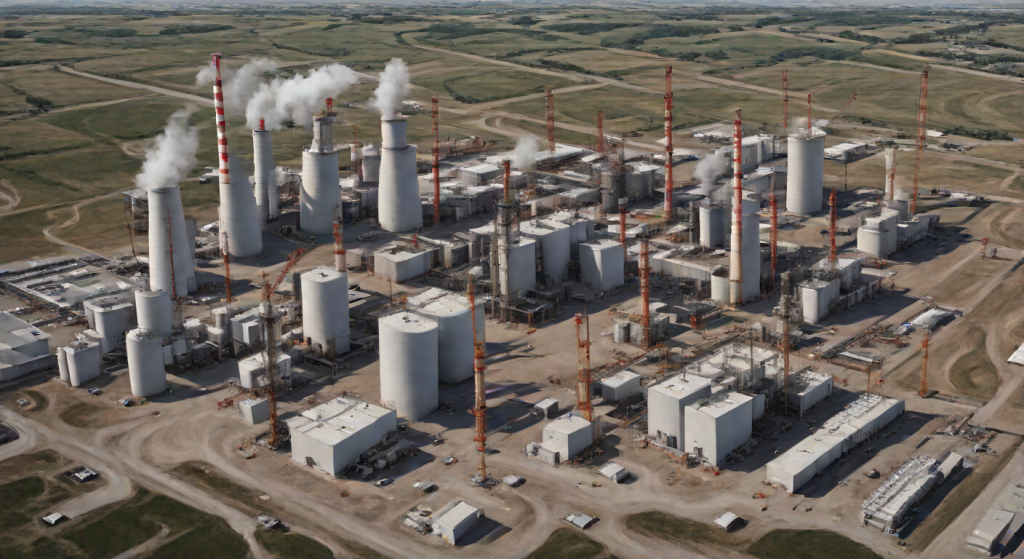
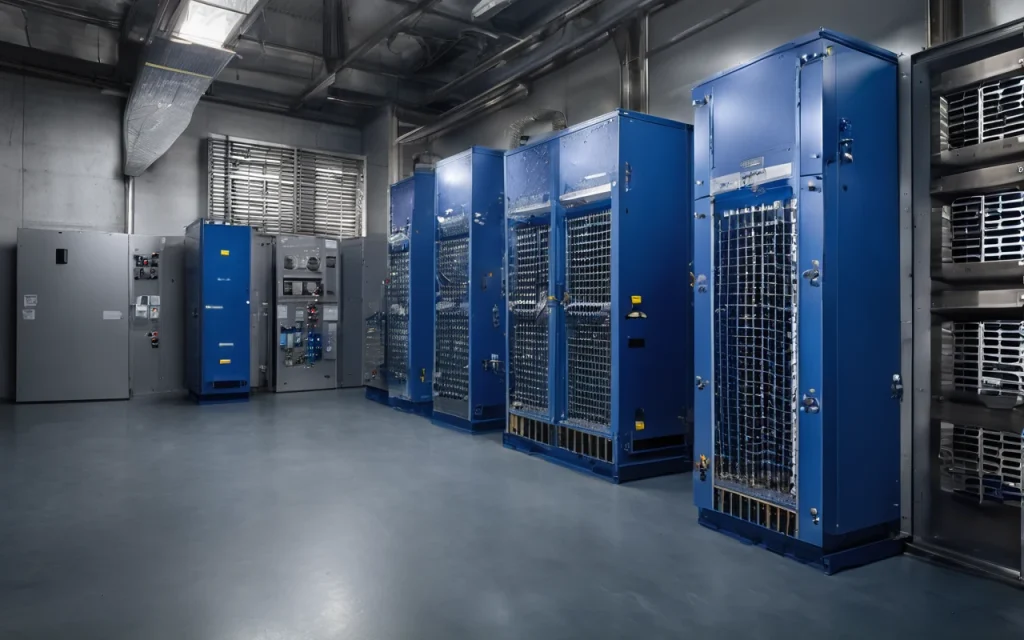
TenneT Germany and Siemens Energy commissioned the world’s first supercapacitor-powered STATCOM at the site of a decommissioned coal plant in Mehrum, Lower Saxony, in mid-December 2025. The SVC PLUS FS system combines a 300 MVA modular multilevel converter with supercapacitor banks capable of injecting or absorbing up to 200 MW of active power within milliseconds, delivering both voltage and frequency stabilization to Germany’s wind-heavy northern grid.
What Was Built
The E-STATCOM at Mehrum is the first reactive power compensation system to integrate supercapacitors for active power response. Unlike conventional battery storage, supercapacitors store electricity directly and discharge in milliseconds, creating artificial inertia that replaces the mechanical stabilization previously provided by coal and nuclear generators. The system occupies one-third the footprint of equivalent battery installations.
The Mehrum facility is one of three grid stabilization systems TenneT ordered from Siemens Energy. The other two are synchronous condensers — generator-flywheel combinations storing kinetic energy — installed at Grosskreutzenburg in Hesse and Wuergassen in North Rhine-Westphalia. All three systems entered commissioning in 2025.
Critical Analysis
The 300 MVA SVC PLUS FS modular multilevel converter (MMC) at Mehrum is a direct power quality asset providing dynamic reactive compensation on Germany’s 380 kV transmission grid, where IEEE 519-2022 Table 1 limits THDv to 1.5% at voltages above 161 kV. The Mehrum STATCOM relieves rather than stresses the grid by providing 300 MVA of dynamic reactive compensation and 200 MW of fast active power response to TenneT’s 380 kV northern transmission corridor.
5-Year Projection
By 2031, operational data from facilities like this will become the standard requirement for securing interconnection agreements, as ISOs prioritize proven E-STATCOM (SVC PLUS FS) profiles.
Critical Perspective
The Mehrum facility, equipped with a 300 MVA modular multilevel converter, is a significant step in grid stabilization, offering 200 MW of active power response within milliseconds. However, it’s worth considering how this compares to other projects, such as the synchronous condensers in Hesse and North Rhine-Westphalia, which also aim to provide kinetic energy storage but with different technologies. Historically, the introduction of new technologies like the Alstom Grid STATCOM in New York in 2008 faced challenges in meeting the high expectations of grid support. Will the Mehrum project, with its supercapacitor technology, avoid the pitfalls of past projects and truly revolutionize grid stability?
Why It Matters
Lower Saxony produces more onshore wind energy than any other German state, creating persistent voltage regulation challenges as intermittent generation replaces dispatchable thermal plants. The retirement of conventional generators removes the spinning mass that historically absorbed grid fluctuations, leaving transmission operators without adequate reactive power sources.
The E-STATCOM addresses this gap by providing continuously variable reactive power compensation alongside active power injection during frequency events. Florian Martin, TenneT Germany’s Director of Asset Management, stated the technology helps “mitigate key challenges in the grid and ultimately help to prevent power outages.”
TenneT estimates approximately 30 similar E-STATCOM facilities are needed across Germany. Across all four German transmission system operators — TenneT, Amprion, 50Hertz, and TransnetBW — assessments indicate 70 STATCOMs will be required over the next decade to maintain grid stability during the energy transition. Siemens Energy reports international interest from utilities in the United States, Canada, and Australia seeking to replicate the Mehrum deployment.