Tesla Brings 7.4 MW Powercore to RE+ 2026 With U.S. Production Planned
- AI Energy Demand Medium-Voltage Switchgear News Solid State Transformers
Marin Holt
- 0
- 7 minutes read
- Continuous rating at 34.5 kV AC: 7.4 MW
- Top of DC voltage range: 2,000 V
- Fault clearing time: 100 microseconds
- Peak efficiency listed by Tesla: 98.86%
- DC output to data center servers: 800 V
- Conventional transformer lead times: four years
Tesla introduced Powercore, a medium-voltage power electronics platform, at RE+ 2026 this week at the Las Vegas Convention Center in Nevada, pv magazine USA reported on Nov. 17. The platform delivers up to 7.4 MW (9 MVA) at 34.5 kV AC. Tesla plans to manufacture Powercore at its U.S. facilities and have it in operation in 2027.
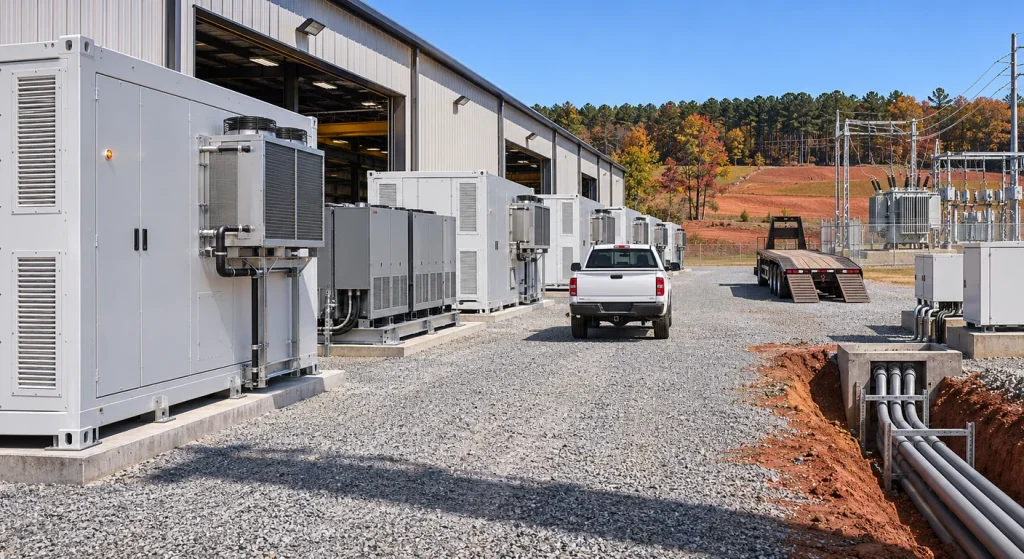
Powercore puts a solid-state transformer, switchgear and an inverter in a single enclosure. Its nominal DC voltage range runs from 800 V to 2,000 V. On the AC side, it covers 10 kV to 34.5 kV. Dealroom reports that the 7.4 MW figure is a continuous rating at 34.5 kV AC.
Tesla is building the product on years of power conversion work. “We’ve done 3 terawatts of power converters at Tesla,” said AJ Booth, the company’s head of energy and charging, in an interview with pv magazine USA.
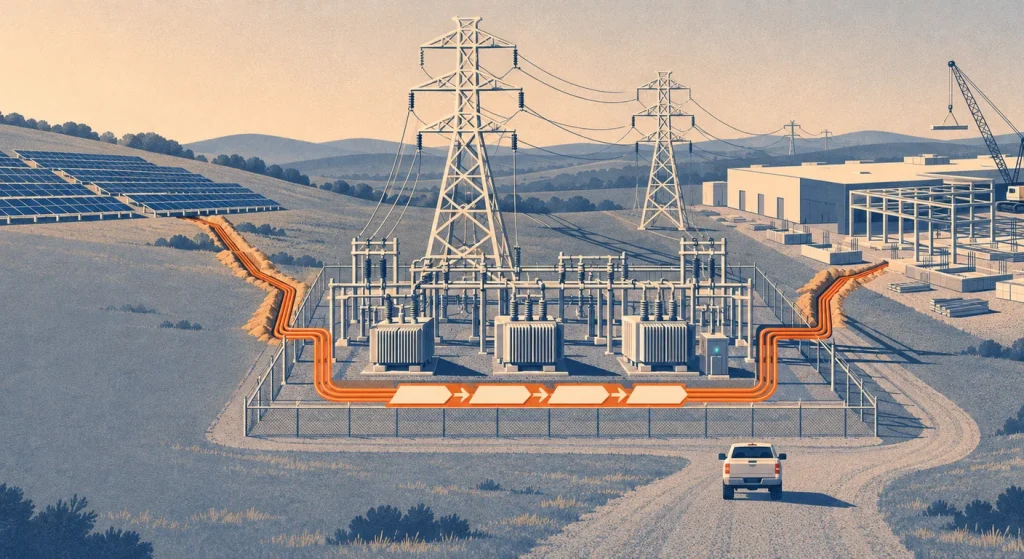
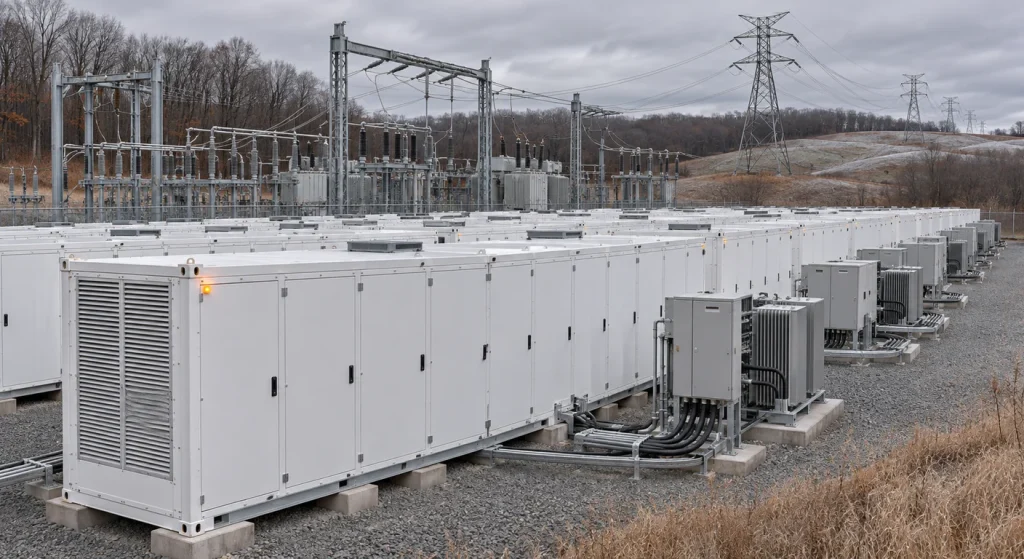
Tesla says the hardware natively supports existing 1,500 V DC solar plants and emerging 2,000 V DC designs. On the storage side, Tesla designed Powercore to connect to its Megapack batteries through DC bus connectors.
When paired with Megapack storage on the grid, the platform uses Tesla’s grid-forming controls to provide synthetic inertia and reactive power support. Dealroom reports grid-forming support of up to 10 MVA of peak power. Tesla lists peak efficiency of 98.86% and a warranty of up to 25 years, according to Dealroom.
Protection is another part of the design. Tesla says the system clears electrical faults in 100 microseconds. The company says that is far faster than conventional transformer-fed protection.
Powercore also targets data centers. Today, grid voltage steps down through multiple stages before it reaches server racks. Tesla designed Powercore to cut that process to a single step. The platform takes power from the grid feeder and delivers 800 V DC to the servers.
Tesla says it is working with NVIDIA to certify Powercore for the DSX Ready Program. That program validates equipment that meets standards for integration with next-generation data centers. Tesla will make Powercore in the U.S., and Dealroom reports that the first units will be operating in 2027.
Why It Matters
Shortages of key manufacturing inputs have pushed conventional transformer lead times to as long as four years, according to pv magazine USA. That wait has created a bottleneck in grid modernization and renewable energy deployment. Powercore combines the transformer, switchgear and inverter in one enclosure, and Tesla plans to build it at U.S. facilities.
For solar and storage developers, the 2027 operating target sets the earliest window for projects to use the platform. Developers will also need to match it to the plant’s DC voltage and to a grid connection between 10 kV and 34.5 kV. Plants built at 1,500 V DC and newer 2,000 V DC designs both fall inside the range Tesla lists.
For data center teams weighing a move to 800 V DC, the feeder-to-server design puts voltage conversion in one step. Teams planning next-generation facilities should track Powercore’s certification in NVIDIA’s DSX Ready Program alongside Tesla’s 2027 operating schedule.
Critical Perspective
Tesla plans to manufacture Powercore at its U.S. facilities and have it in operation in 2027, which leaves developers stranded with current multi-year procurement delays. Dealroom reports that the 7.4 MW figure is a continuous rating at 34.5 kV AC, but combining a solid-state transformer, switchgear and an inverter in a single enclosure concentrates operating risk into that shared assembly. Tesla says the system clears electrical faults in 100 microseconds, though rapid fault clearance cannot prevent an entire solar or storage block from shutting down if the central unit fails. Can Tesla achieve full certification under the DSX Ready Program and ramp domestic factory lines quickly enough to meet its targeted operational launch?