Fervo’s First Power at Cape Station Is One 33 MW Block of a 100 MW Phase I, Not a Plant Going Live
- AI Energy Demand Data Centers News
Marin Holt
- 0
- 7 minutes read
- First Power block: 33 MW
- Phase I capacity: 100 MW
- Contracted offtake: 900 MW
- Google offtake: 396 MW
- Project cost: $2 billion
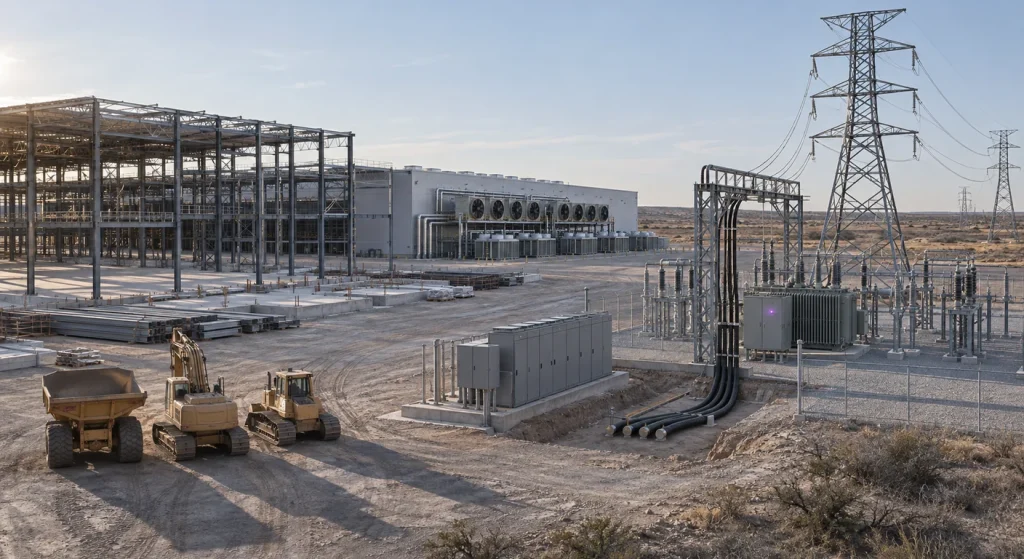
Fervo Energy said on September 24, 2026 that Cape Station, its enhanced geothermal development in Beaver County, Utah, reached First Power. The milestone covers one 33 MW GeoBlock. Cape Station Phase I is an approximately 100 MW installation built as three of those blocks. Fervo expects the first block to reach its contractual commercial operation date by October 1, 2026, and the other two by January 1, 2027. Canary Media put the total project cost at $2 billion.
First Power and commercial operation are not the same event. First Power means the unit sent electricity to the grid. The contractual date is when the offtaker starts paying for it under the power purchase agreement. On the day Fervo announced, that date was still a week away.
Why It Matters
Data-center buyers signing geothermal contracts are buying a delivery schedule, not a groundbreaking. Google’s 396 MW does not arrive because one 33 MW block spun up in Utah. Track the contractual dates written into the offtake agreements rather than the press milestones, because those are the dates that carry a penalty. The number worth watching next is not another First Power announcement. It is whether GeoBlocks two and three hit January 1, 2027.
Critical Perspective
Fervo’s First Power covers one 33 MW GeoBlock, a third of a Phase I the company itself puts at roughly 100 MW. Google’s 396 MW contract, and the option that would carry it near 1 GW by June 2030, rests on a 400 MW phase whose commercial operation date is 2028 rather than on anything energized this week. Fervo’s own Project Red pilot in Nevada was 3.5 MW in late 2023, so the company has climbed one order of magnitude in three years and needs another to cover its book. At $7,000 per kW for Phase 1 against the $2,157 per kW Canary Media gives for a 2025 gas plant, what happens to those contracts if Phase 2 misses its $5,500 target?
What Was Actually Energized
An enhanced geothermal system injects water into hot subsurface rock, then pulls the heated water back up to run a turbine. It does not need a natural underground reservoir of hot water, which is what confines conventional geothermal to a short list of sites. Fervo proved the approach at Project Red in Nevada, a 3.5 MW pilot that came online in late 2023. Cape Station is the first time a utility-scale enhanced geothermal development has reached First Power anywhere.
Set the 33 MW against the order book and the gap is wide. Fervo says about 900 MW of Cape Station offtake is fully contracted. Power Engineering puts that at the equivalent of nearly 1 million US homes a year. Google signed a 396 MW agreement earlier in September. It also holds an option to expand that offtake by roughly 600 MW, reaching close to 1 GW by June 2030. Shell Energy North America and Southern California Edison hold further contracts, and an expanded Clean Power Alliance deal adds 18 MW. A separate 400 MW phase is under construction with an expected commercial operation date in 2028.
“First Power is proof the science works,” said Jack Norbeck, Fervo’s chief technology officer and co-founder. Proof that the science works is a different claim from proof that the cost curve works. Fervo told Canary Media that Phase 1 is set to deliver power at $7,000 per kilowatt. Phase 2 should come in at $5,500 per kW. Canary put the average cost of building a natural gas fired plant at $2,157 per kW in 2025. The Phase 2 figure is a target on a phase that is not finished.
The headlines ran ahead of the bodies. Canary Media titled its piece on a next-generation geothermal plant going live at utility scale. Inside the article it wrote that Fervo will officially begin commercial operations on Thursday. Thursday is October 1. Fervo’s own release is narrower and names both contractual dates. The company itself describes Cape Station as the first megawatts of a development it puts at more than 4 GW of capacity.