Army Awards $54.3 Million Contract
- Microgrids Military & Defense News
Marin Holt
- 0
- 9 minutes read
- U.S. Army Corps of Engineers awarded a $54.3M ERCIP contract to David Boland, Inc. in January 2024
- Microgrid at Fort Stewart-Hunter Army Airfield combines 10 MW new natural gas generation with existing 10 MW solar array
- Project includes underground gas pipeline, substation upgrades, fiber optic controls, and new relay/feeder breakers
- Microgrid control system enables islanded operation during grid outages to support critical airfield operations
- Fort Stewart, Georgia is in Georgia Power service territory within SERC reliability region
The U.S. Army Corps of Engineers awarded a $54.3 million firm-fixed-price contract to David Boland, Inc. for the construction of a 10 MW natural gas power plant and advanced microgrid control system at Fort Stewart-Hunter Army Airfield in Georgia. The project represents one of the largest single military microgrid investments under the Energy Resilience and Conservation Investment Program (ERCIP).
What Is Being Built
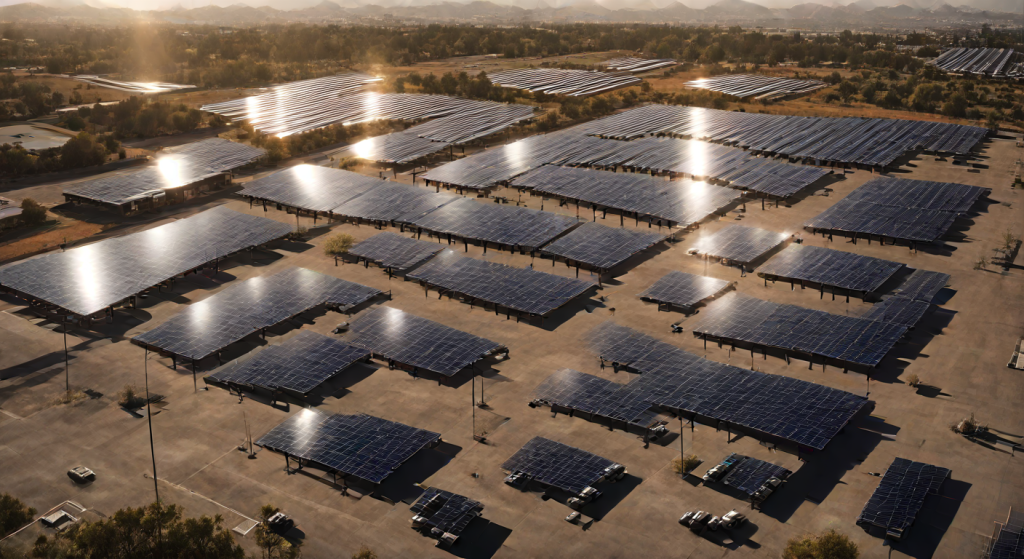
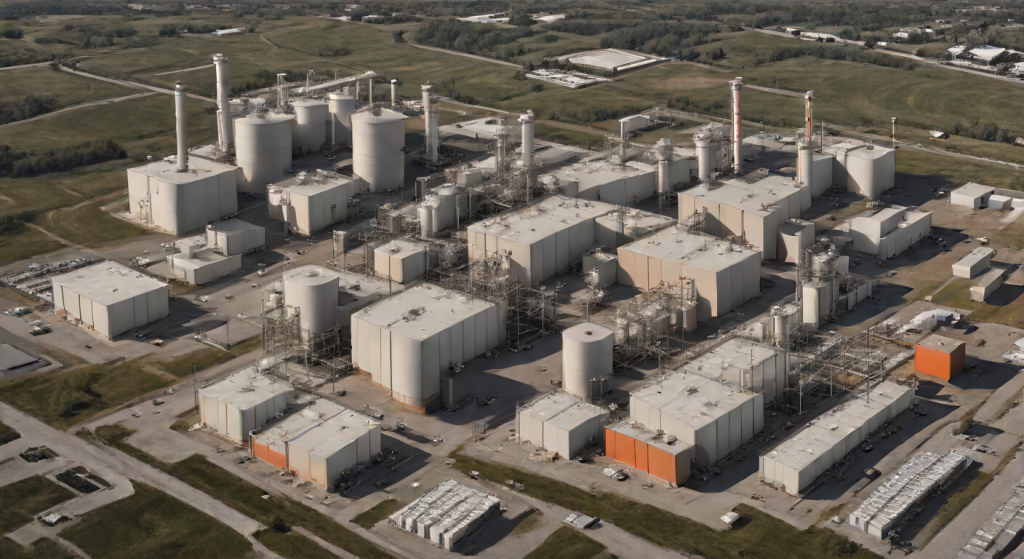
The scope includes a new 10 MW natural gas generation facility, underground gas pipeline installation, substation upgrades with new relays and feeder breakers, and fiber optic communication links. The microgrid control system will coordinate the new plant alongside existing natural gas generators and the installation’s approximately 10 MW solar array, giving Fort Stewart roughly 20 MW of controllable on-site generation capacity.
The system operates in dual mode: grid-parallel during normal conditions and fully islanded during utility outages. Transfer switches and interface relays match mission-critical facility loads with available supply in both configurations. The design also accommodates future battery energy storage and additional solar capacity.
Why Fort Stewart
Fort Stewart is the largest Army installation east of the Mississippi River, located approximately 40 miles southwest of Savannah, Georgia. It serves as home to the 3rd Infantry Division and supports over 25,000 military and civilian personnel. An airfield microgrid at this scale addresses a direct operational requirement: maintaining flight operations and mission readiness during prolonged grid outages.
The 14-day islanding mandate for critical military installations makes this project a necessity, not an option. Without reliable on-site generation and coordinated control, a sustained grid disruption at a base this size directly degrades combat readiness.
The Broader Pattern
Fort Stewart joins a growing list of military microgrid projects funded through ERCIP. The Army’s 2023 climate strategy targets a microgrid at every installation by 2034. Current projects span Fort Bliss and Laughlin Air Force Base in Texas, Joint Base Lewis-McChord in Washington, Aberdeen Proving Ground in Maryland, and Ebbing Air National Guard Base in Arkansas.
The FY2026 defense budget requested over $500 million for ERCIP, focused on cyber-secure microgrids with on-site generation and energy storage. At $54.3 million, the Fort Stewart contract ranks among the program’s largest individual awards and signals the scale at which DOD is deploying distributed energy infrastructure.
Implementation Details Worth Noting
Three technical decisions stand out. First, the choice of natural gas as the primary generation fuel rather than diesel. Natural gas provides lower operating costs and cleaner emissions while maintaining the high availability required for military operations. Second, the integration with an existing 10 MW solar array creates a hybrid system that reduces fuel dependence during peacetime grid-parallel operation. Third, the fiber optic communication backbone ensures the microgrid controller has low-latency, cyber-hardened connectivity to all generation assets and switchgear.
The expected operational date is 2029, a three-year construction timeline that reflects the complexity of integrating new generation, controls, and substation upgrades into a live military airfield without disrupting ongoing operations.
What This Means for the Industry
Military microgrid contracts provide a reliable demand signal for the distributed energy industry. DOD procurement cycles are long but funded. Contractors who demonstrate performance on ERCIP projects build a track record that opens doors to subsequent base installations. With dozens of Army, Navy, and Air Force installations still awaiting microgrid upgrades, the pipeline extends well into the next decade.
For the broader microgrid market, the Fort Stewart project validates the 10+ MW scale as commercially viable for institutional applications. The hybrid natural gas and solar architecture with future storage integration represents a template other large facilities, including hospitals, water treatment plants, and industrial campuses, are likely to follow.
Source: Microgrid Knowledge
Critical Analysis
Coordinating 10 MW of inverter-based solar with 10 MW of synchronous gas generation at Fort Stewart-Hunter Airfield PCC creates harmonic interaction governed by both IEEE 519-2022 and IEEE 1547-2018. Fort Stewart 20 MW on-site generation removes the installation full load from Georgia Power distribution during outages; substation upgrades with new relays and feeder breakers required by the microgrid also improve distribution-level protection coordination that benefits the civilian grid infrastructure serving the surrounding Hinesville, GA area.
5-Year Projection
Over the next 5 years, early adopters of Natural Gas Generators will set regional cost benchmarks, forcing secondary markets to standardize deployment protocols or risk stranded assets.
Critical Perspective
At $54.3 million for a 10 MW natural gas generation plant and microgrid controller, Fort Stewart’s ERCIP investment prices at $5,430 per installed kilowatt — a premium reflecting military hardening requirements, but still 4 to 5 times the $1,100-1,400 per kilowatt cost of commercial simple-cycle peakers procured through competitive utility markets in 2024. The 10 x 1 MW modular configuration provides operational redundancy but creates 10 independent maintenance schedules and fuel control systems — each a potential single point of failure for the black-start capability that makes 14-day islanding achievable. DoD ERCIP projects of comparable scale have historically required 18-24 months from contract award to commissioning, placing Fort Stewart’s operational readiness date in late 2027 at the earliest — 3 hurricane seasons away. The question ERCIP program planners have not addressed publicly: at $5,430 per kilowatt for a gas asset with a 20-year life, what is the levelized cost of resilience compared to the solar-plus-storage configuration that would qualify the installation toward DoD’s own net-zero targets?