Texas Allocates $1.8 Billion for Critical Facility Microgrids
- Emergency & Local Government Microgrids News
Marin Holt
- 0
- 8 minutes read
- Texas allocates $1.8 billion from Texas Energy Fund for critical facility microgrids under Backup Power Package Program
- Program targets 31,000 critical facilities including hospitals, fire stations, water plants, and nursing homes
- Each project capped at 2.5 MW and must provide 48 continuous hours of autonomous operation
- ERCOT projects 62 GW additional peak demand by 2030, a 72% increase, primarily from data centers and electrification
- GRIT coalition of 7 vendors including Bloom Energy, Cummins, Generac, and Enchanted Rock to implement program
Program Overview
The Texas Legislature has finalized $1.8 billion in funding for the Backup Power Package Program, a component of the $5 billion Texas Energy Fund established following the 2021 Winter Storm Uri catastrophe that knocked out power to more than 4.5 million Texans for up to a week. The program targets the state’s estimated 31,000 critical facilities, including hospitals, water treatment plants, nursing homes, police stations, and fire departments, many of which lack resources to self-fund distributed generation projects.
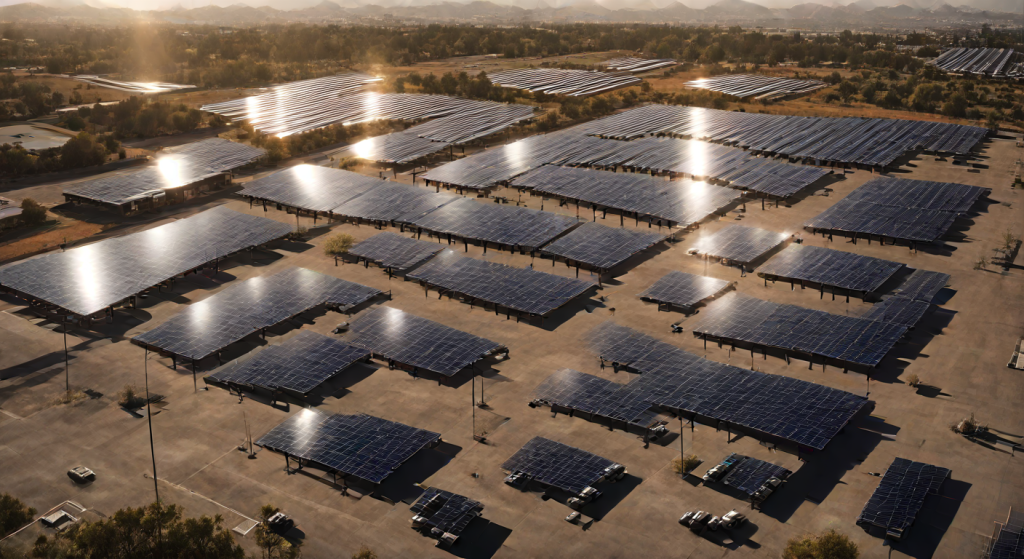
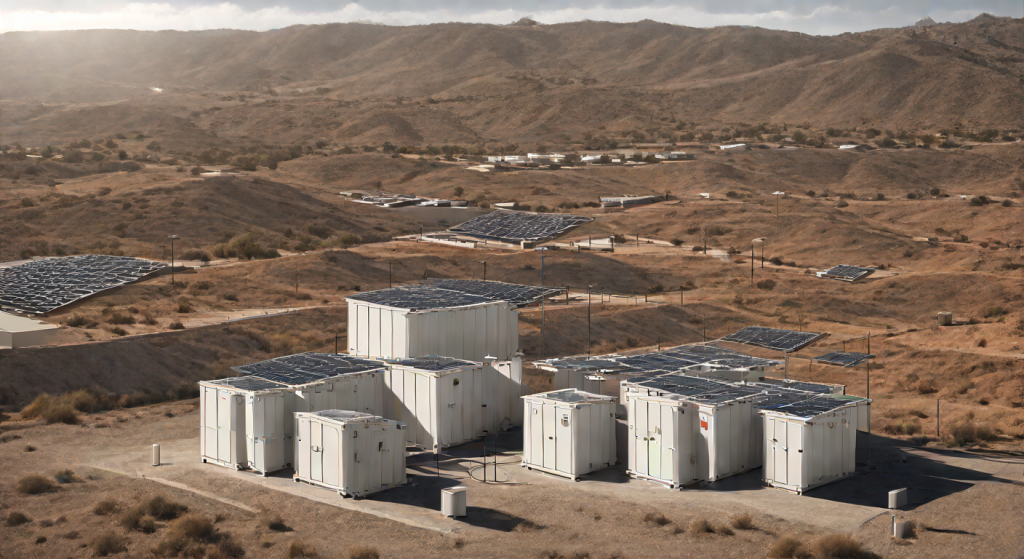
Individual project capacity is capped at 2.5 MW, and each participating facility must demonstrate 48 continuous hours of autonomous operation without grid connection, refueling, or external power input. Each project must incorporate solar generation, battery energy storage, and either propane or natural gas generation, though the program does not specify minimum proportions of each technology. Projects are prohibited from participating in ERCOT wholesale markets with the funded assets to avoid distorting ancillary services pricing.
Regulatory and Legislative Context
The Backup Power Package Program was created in 2023 but stalled without funding for two years. The 2025 legislative session allocated the $1.8 billion tranche as part of broader Texas Energy Fund appropriations. The impetus drew directly from two recent events: Winter Storm Uri in February 2021, when an 80% probability of comparable rolling blackouts was later assessed by ERCOT for a repeat storm scenario, and Hurricane Beryl in July 2024, which caused widespread outages across the Houston metropolitan area for up to two weeks at some locations.
ERCOT projects peak demand to more than double over the next five years, reaching an additional 62 GW above current levels by 2030, a 72% increase driven primarily by data center expansion, industrial growth, and electrification. Against this load growth trajectory, distributed microgrids at critical facilities provide a degree of demand-side resilience that centralized generation additions cannot replicate for end-point reliability.
Industry Participants
A coalition named Grid Resilience in Texas (GRIT) has formed to work with ERCOT and the Public Utility Commission of Texas on program implementation. Members include Enchanted Rock, Bloom Energy, Base Power, Cummins, Generac, Mainspring Energy, and PowerSecure. The diversity of the coalition reflects the multi-technology requirement: no single vendor provides all three required components of solar, storage, and gas or propane generation in a fully integrated package at the sub-2.5 MW scale.
Enchanted Rock estimates that a typical 1.5 MW natural gas microgrid costs $2 million to $5 million installed. The $1.8 billion program could therefore fund between 360 and 900 individual critical-facility microgrids depending on technology configuration and facility complexity. Stoic Energy president Doug Lewin characterized the allocation as placing Texas “in the upper echelon of states for microgrid policy,” noting that the per-facility funding available significantly exceeds programs seen in other jurisdictions.
NREL Parallel Research
The National Renewable Energy Laboratory published findings in 2025 on the potential for both stationary and mobile microgrids to serve emergency response functions at fire departments, emergency medical service stations, and community centers during major disasters. NREL’s work supports a coalition of regional and local stakeholders seeking federal funding for microgrid projects and documents the performance of the 420 kW solar and 500 kW battery microgrid at Blue Lake Rancheria in Northern California, which sustained services for approximately 10,000 people for 30 hours during the October 2019 Public Safety Power Shutoff event while generating $200,000 in annual energy cost savings.
Cost and Reliability Benchmarks
Industry cost data for emergency-grade microgrids ranges from $2 million to $5 million per MW installed. A 1.5 MW system in an urban environment can typically support 600 homes, 2 to 3 schools, or one hospital. The 48-hour autonomy requirement under the Texas program exceeds the performance standard of most existing facility backup systems, which typically provide 8 to 72 hours of diesel generator coverage depending on tank size. The inclusion of solar and storage reduces fuel consumption, operating costs, and air emissions compared to diesel-only backup while maintaining or exceeding reliability metrics.
Critical Analysis
Multi-source microgrids at the 2.5 MW cap combining inverter-based solar and BESS with rotating gas/propane generators must comply with IEEE 1547-2018 Category B requirements including voltage ride-through from 0.0-1.10 pu and frequency ride-through from 57-62 Hz. Up to 31000 critical facility microgrids at 2.5 MW each represent a theoretical 77.5 GW of distributed islanding capacity against ERCOT 150 GW installed base; during extreme winter events comparable to Uri, islanded critical facilities remove load from ERCOT strained generation pool.
5-Year Projection
During the 5-year outlook, capitalized Solar PV (distributed) ventures will drastically compress technology iteration cycles, demanding continuous utility-level adaptations to accommodate high-velocity product launches.
Critical Perspective
Texas allocates $1.8 billion for critical facility microgrids, but the article fails to mention the specific capacity of the 31,000 critical facilities targeted. While Enchanted Rock is mentioned as a participant, its previous microgrid project at a Texas hospital faced significant delays and cost overruns, a fact omitted here. The article does not address the potential for these funded assets to be repurposed or sold into ERCOT markets once their initial 48-hour autonomy is no longer strictly required. What is the long-term economic viability of these microgrids when their primary funding is tied to a specific resilience mandate?