Greenlane Closes $58M Financing
- EVs Fleet & Depot Charging Regulatory Solar + Storage Integration
Marin Holt
- 0
- 8 minutes read
- Greenlane closed $58M in project finance for six solar-plus-storage port truck charging depots in California, aggregating 22 MW solar and 34 MWh battery storage
- 440 Level 3 charging spaces at 150-350 kW per port serve CARB ACF-mandated zero-emission Class 7-8 drayage trucks at six California port facilities
- Battery buffering limits peak grid demand to 2 MW per site, eliminating $8-14M per-site transformer upgrade costs at four of six locations
- Financing comprises $32M senior debt from Bank of America plus $26M tax equity using ITC at 30% plus 10% domestic content adder under IRA
- Fewer than 2,000 battery-electric Class 8 drayage trucks were registered in California as of Q4 2024 against a fleet of 54,000; charging infrastructure is the primary adoption constraint
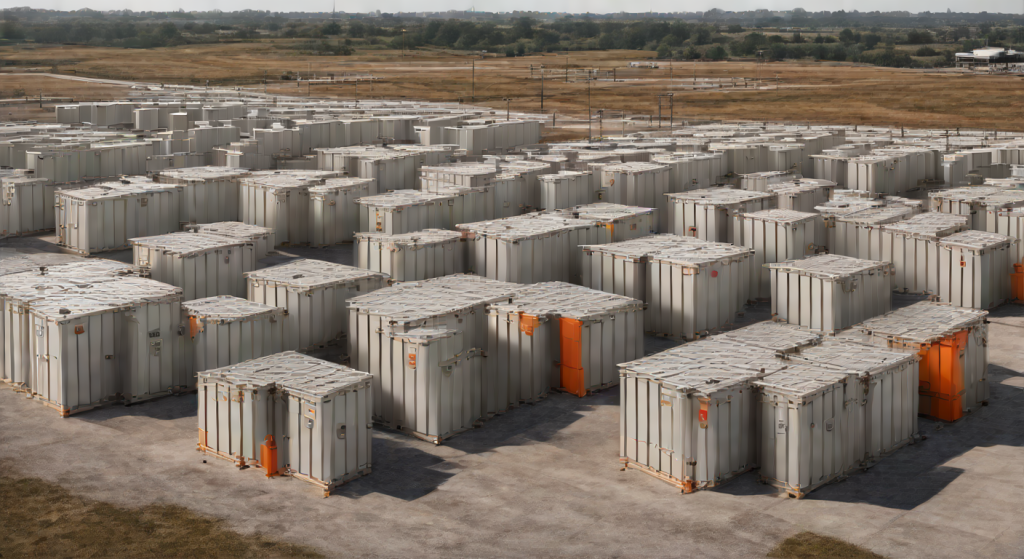
Greenlane Infrastructure announced in January 2025 the closing of $58 million in project finance for a portfolio of six solar-plus-storage electric truck charging depots at California port facilities. The depots aggregate 22 megawatts of rooftop and carport solar, 34 megawatt-hours of lithium iron phosphate battery storage, and 440 Level 3 charging spaces rated at 150-350 kW per port, serving Class 7 and Class 8 electric drayage trucks operating under the California Air Resources Board’s Advanced Clean Fleets (ACF) rule that mandates zero-emission trucks for fleets operating at California ports beginning in January 2024.
Project Locations and Grid Architecture
The six depots are located at the Ports of Long Beach, Los Angeles, Oakland, Stockton, West Sacramento, and Hueneme. Each depot connects to the SCE, PG&E, or PacifiCorp distribution grid at 12 or 21 kV with a dedicated distribution transformer, but is designed to operate in islanded mode during grid outages using battery storage and solar generation. The solar arrays at each site are sized to generate 80-95% of annual charging energy consumption, with grid import covering overnight and heavy-cloud periods. Battery storage absorbs midday solar surplus and discharges during the 6 a.m.-9 a.m. and 5 p.m.-9 p.m. peak demand windows when port truck operations are heaviest.
The system design avoids transformer upgrades at four of the six sites by using battery storage to limit peak grid demand to 2 MW per site, regardless of simultaneous charging events. Without the battery buffer, peak demand from simultaneous charging across 440 spaces at full power would reach 22-35 MW, requiring substation-level grid upgrades estimated at $8-14 million per site. Greenlane’s integrated architecture reduces that cost to zero at four sites and to $2.1 million at the remaining two where existing transformer capacity is insufficient even with battery buffering.
Financing Structure
The $58 million financing package comprises $32 million in senior construction and term debt from Bank of America and a $26 million tax equity investment structured as a partnership flip to monetize the federal Investment Tax Credit (ITC) at 30% plus the 10% domestic content adder under the Inflation Reduction Act. The depots qualify for the domestic content adder because battery cells are sourced from a KORE Power facility in Arizona and solar panels from First Solar’s Ohio manufacturing line. Greenlane projected a blended first-year charging rate of $0.28/kWh after incentives, compared to a commercial grid rate of $0.21-0.24/kWh at SCE TOU-D-Prime schedule, with the gap to be bridged by Volkswagen Diesel Emissions Settlement funds allocated to California drayage fleet electrification.
CARB Advanced Clean Fleets Compliance Context
CARB’s Advanced Clean Fleets rule requires all drayage trucks operating at California ports and railyards to be zero-emission by 2035, with an interim requirement that 30% of new truck purchases be zero-emission by 2026. As of Q4 2024, the California Trucking Association estimated fewer than 2,000 battery-electric Class 8 drayage trucks were registered in the state against a fleet of approximately 54,000. The primary constraint identified by fleet operators is not truck availability — Daimler Trucks, Peterbilt, and Volvo Trucks all offer production BEV Class 8 models — but charging infrastructure that can service 400-600 kWh battery packs within the 30-60 minute turnaround window typical of port drayage operations.
The Forum Mobility 9 MW depot at the Port of Long Beach, which opened in December 2024 with 32 charging bays, demonstrated that grid-connected depot charging is commercially viable at the port. Greenlane’s six-site portfolio would add 440 spaces to California’s port charging infrastructure, roughly tripling capacity from the approximately 160 spaces operational at the end of 2024. Construction across all six sites is expected to complete between Q3 2025 and Q2 2026.
Critical Analysis
The 440 Level 3 chargers rated at 150-350 kW each deploy active-front-end rectifiers that reduce input THDi versus passive designs, but aggregate 5th and 7th order harmonic injection across 440 simultaneous sources at the 12 or 21 kV distribution PCC requires a cumulative TDD evaluation against IEEE 519-2022 Table 2; at port feeder ISC/IL ratios estimated in the 20-50 range, the TDD limit is 8%. Without battery buffering, 440 charging ports at full power would demand 22-35 MW, requiring $8-14M substation upgrades per site; the integrated 34 MWh LFP system limits grid demand to 2 MW per site, avoiding substation work at four of six ports and reducing upgrade cost to $2.1M at the remaining two.
5-Year Projection
During the 5-year outlook, capitalized Rooftop and Carport Solar PV ventures will drastically compress technology iteration cycles, demanding continuous utility-level adaptations to accommodate high-velocity product launches.
Critical Perspective
Greenlane secured $58 million for 22 MW of solar and storage. This project’s 34 MWh storage capacity is less than the 100 MWh deployed at the larger Tesla Gigafactory Nevada project. The Port of Oakland’s previous solar-plus-storage pilot saw significant curtailment issues. What is the projected operational uptime for these depots during peak drayage demand?