Nucor’s 50 MW Battery Array Shows Industrial Demand Charge
- Demand Charge Reduction Energy Storage News
Marin Holt
- 0
- 7 minutes read
- 50 MW / 200 MWh BESS using 58 Tesla Megapack 2XL units achieved commercial operation at Nucor Kingman bar mill in October 2025; largest behind-the-meter storage project in Arizona
- Ameresco designed, built, and operates the system under a long-term energy-as-a-service agreement; Ameresco retains asset ownership while Nucor pays for energy services
- Electric arc furnace demand spikes create 50+ MW peaks that generate substantial demand charges under UniSource Energy industrial tariffs; BESS flattens the 15-minute measurement window
- System participates in WECC ancillary services market when not actively managing demand, generating additional revenue streams
- Project payback is driven by demand charge avoidance estimated at several million dollars annually under applicable industrial rate schedules
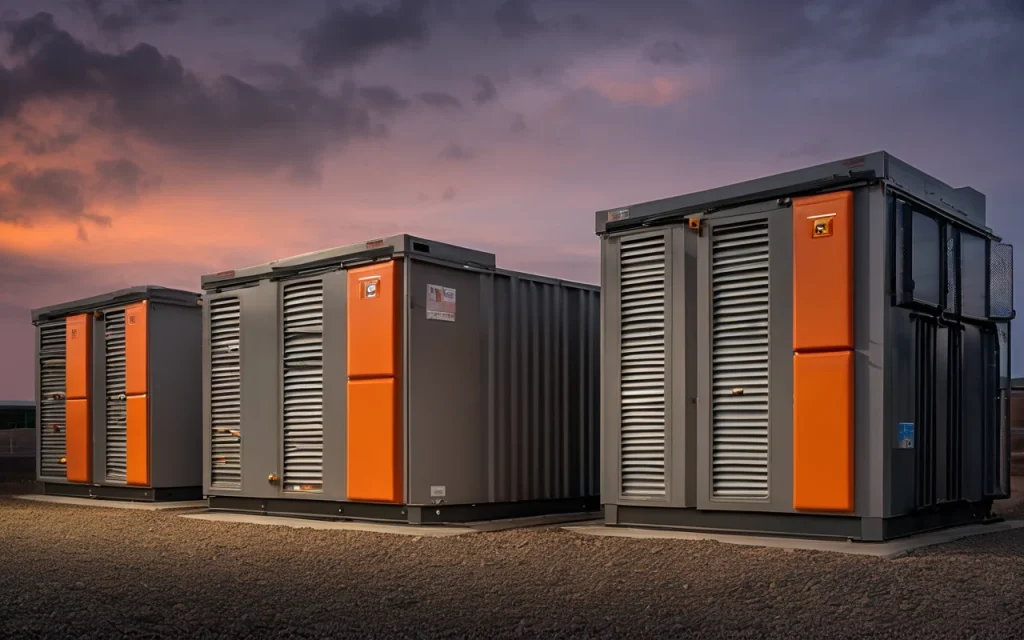
Nucor Corporation completed a 50 MW/200 MWh battery storage array at its steel mill in Kingman, Arizona in October 2025. Built by Ameresco using Tesla Megapack systems, the installation is the largest behind-the-meter storage project in Arizona and anchors the mill’s strategy to flatten peak demand from its electric arc furnace.
How the System Cuts Demand Charges
Electric arc furnaces draw massive, irregular power loads that spike demand charges. A single furnace heat cycle pulls hundreds of megawatts for minutes at a time, and utilities bill industrial customers based on the highest 15-minute demand interval each month. Those charges represent 30% to 70% of a commercial electricity bill.
The 200 MWh battery array absorbs those spikes. During peak furnace operation, the system discharges to shave grid draw below contracted thresholds. During off-peak periods, it recharges at lower rates. Nucor also plans a 25 MW solar farm at the same site for 2026, which will further offset daytime energy costs and reduce grid dependence.
Why This Matters for Industrial Operators
The U.S. behind-the-meter battery market hit 8 GWh of installations in 2025, with commercial and industrial deployments growing 23% annually through 2029. Total U.S. battery storage installations reached 28 GW/57 GWh in 2025, a 29% increase year over year. The sector is projected to reach 35 GW/70 GWh in 2026.
NREL research shows over 25% of commercial customers nationwide benefit from battery storage to manage peak demand. Approximately 5 million commercial accounts face demand charges of $15 or more per kilowatt, the threshold where storage economics become favorable. Commercial lithium battery systems now cost $180 to $300 per kWh for containerized units above 100 kWh, down 40% from 2022 prices.
Implementation Realities
The Nucor project demonstrates the scale required for heavy industry. A 50 MW/200 MWh system provides four hours of discharge at full rated power. For smaller commercial facilities, systems in the 125 kW to 5 MW range target demand reductions of 20% to 30%, with payback periods of three to five years depending on local utility tariff structures.
The federal Investment Tax Credit covers 30% of system costs through 2032. Manufacturers and data center operators drove record behind-the-meter deployments in 2025, with 4.5 GW installed in Q3 alone, a 24.5% increase over the same quarter in 2024. Cumulative installed capacity reached 41.5 GW entering Q4 2025.
Source: S&P Global via Ameresco
Critical Analysis
Electric arc furnaces produce power quality disturbances beyond demand spikes: rapid arc impedance fluctuations at 2-10 Hz create flicker (Pst > 1.0 per IEC 61000-3-7 planning level) and inject non-characteristic interharmonic currents that IEEE 519-2022 integer-harmonic TDD limits do not fully capture. Electric arc furnaces are among the most severe harmonic and flicker sources in industrial power systems; without mitigation, the 50 MW EAF at Nucor Kingman would create voltage fluctuations of 2-5% at the 69 kV utility PCC, propagating flicker to adjacent customers.
5-Year Projection
By 2031, operational data from facilities like this will become the standard requirement for securing interconnection agreements, as ISOs prioritize proven Tesla Megapack 2XL profiles.
Critical Perspective
Nucor’s 50 MW battery array, while substantial, represents a mere fraction of the 28 GW total U.S. battery storage installed in 2025. This project’s stated goal of flattening demand charges mirrors the strategy pursued by many industrial facilities, yet the actual cost savings remain opaque. Given the 40% drop in battery costs since 2022, is this 50 MW installation truly a strategic imperative or simply a prudent, albeit delayed, adoption of falling technology prices?