PJM Capacity Prices Near 10x Jump Forces C&I Demand Action

- PJM 2026/2027 Base Residual Auction cleared at $329.17/MW-day across the entire PJM footprint, the highest clearing price in auction history and nearly 10x the $34.13/MW-day from 2023/2024
- A manufacturing facility with a 1-MW peak load contribution faces approximately $120,000 in new annual capacity charges above energy, transmission, and distribution costs
- Price spike reflects a supply-demand imbalance driven by generation retirements outpacing new entry; PJM identified a reliability shortfall of approximately 3.4 GW
- Demand response resources cleared approximately 8 GW in the auction, underscoring the role of load flexibility as a substitute for new generation in capacity markets
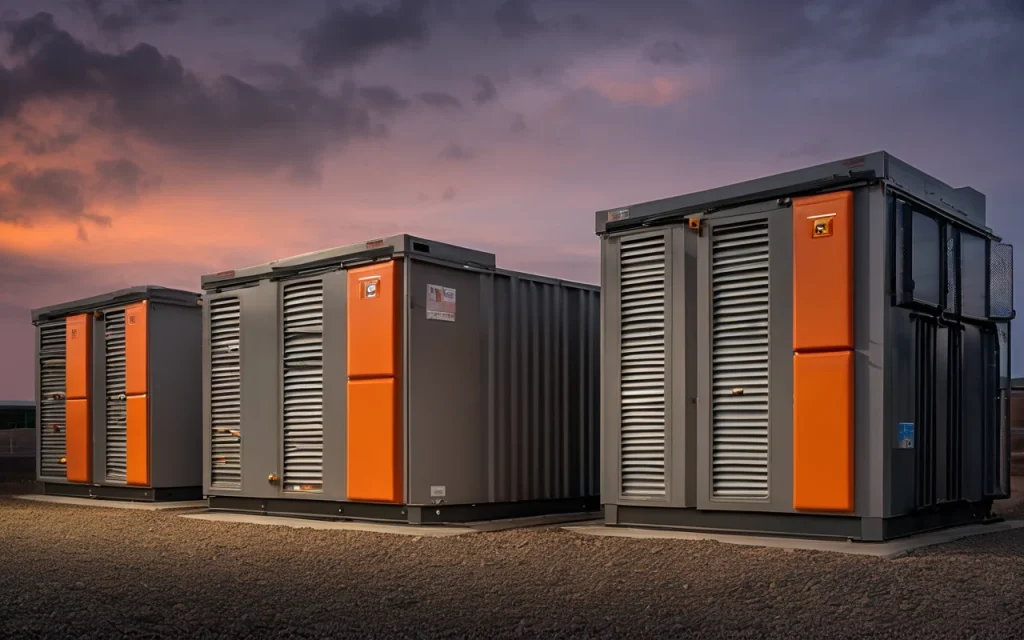
- Industrial customers in PJM territory are accelerating behind-the-meter battery storage and demand response enrollment to reduce capacity tag exposure under new pricing
PJM Interconnection’s capacity auction for the 2026/2027 delivery year cleared at $329.17/MW-day across its entire service territory, nearly 10 times the $34/MW-day rate from 2023/2024. For a manufacturing facility with a 1-MW peak load contribution, that translates to roughly $120,000 in annual capacity charges added to the electricity bill, above and beyond energy and transmission costs. Commercial and industrial customers in the 13-state PJM region now face the same question: reduce peak demand or absorb the cost.
How PJM Capacity Charges Work
PJM runs annual auctions to ensure enough generation capacity exists to meet peak demand three years out. The cost of that reserved capacity passes through to utility customers as a line item on their bills. For large commercial and industrial accounts, the charge is calculated based on a customer’s Peak Load Contribution (PLC): the average demand measured during PJM’s five highest-load hours of the prior summer. Customers with high demand during those five hours pay more. Customers who successfully reduce load during those hours pay less. Capacity charges now represent 20 to 30 percent of total electricity costs for many industrial users in Ohio, Pennsylvania, Virginia, New Jersey, and the seven other PJM states. The 2026/2027 clearing price of $329/MW-day hit the price cap set by FERC after the previous auction already shocked the market at $269/MW-day. The 2027/2028 auction cleared at the same $333/MW-day cap.
Why Prices Jumped
Data centers drove 63% of the capacity price increase in the 2025/2026 auction alone, adding $9.3 billion in costs to the regional electricity market. AI computing infrastructure in Northern Virginia, the highest-density data center corridor in the world, requires guaranteed power at all hours and at scales that strain the regional generation fleet. Coal retirements tightened available capacity further. PJM’s interconnection queue held over 1,400 GW of proposed generation projects at the end of 2025, but only a fraction clear permitting and grid studies within a useful timeframe. The result: a supply-constrained capacity market bidding against a rapidly expanding demand base.
What Industrial Customers Are Doing
The direct response to PLC exposure is load reduction during PJM’s peak hours. Battery energy storage systems charged during overnight off-peak periods and discharged during the five critical summer afternoons reduce a facility’s measured PLC for the following year’s auction. An industrial site cutting its peak from 1 MW to 800 kW saves approximately $24,000 annually at current capacity prices. Demand response enrollment in PJM — where facilities contract to reduce load on short notice during grid stress events — reached approximately 8 GW in the 2026/2027 auction. That figure held steady from the prior year despite higher participation incentives, reflecting the operational difficulty of curtailing production on demand. Battery storage, by contrast, operates automatically without interrupting production. Behind-the-meter storage deployments in PJM’s service territory accelerated in 2025 alongside record-setting utility-scale storage additions nationally. The economics shifted: payback periods for commercial BESS systems dropped below five years in many PJM utility service territories for the first time.
Sources: Clean Grid Alliance, IEEFA
Critical Analysis
Battery BESS inverters and VFDs deployed to cut PJM Peak Load Contributions introduce 5th and 7th order current harmonics at industrial PCCs; 6-pulse VFDs produce h5 approximately 20% I1 and h7 approximately 14% I1, and IEEE 519-2022 Table 2 at ISC/IL 20-50 limits h<11 to 7% of IL and TDD to 8%. PJM 2026/2027 clearing at $329.17/MW-day (10x the 2023/2024 $34/MW-day) reflects structural capacity scarcity: data centers drove 63% of the 2025/2026 auction price increase, adding $9.3B in regional electricity costs.
5-Year Projection
The 5-year trajectory indicates severe supply chain bottlenecks for Demand Response Programs, pushing developers toward alternative topologies and domestic manufacturing pipelines.
Critical Perspective
PJM capacity prices reached $329.17/MW-day. This is a stark contrast to the $10/MW-day paid by some customers in ERCOT during its 2021 winter storm. We saw a similar price spike in the New England capacity market in 2014, which led to prolonged customer hardship. Given the persistent supply constraints, how long can the current generation fleet sustain these price levels?