Valley Children”’s CHARGES Microgrid Advances
- Healthcare Facilities Microgrids News
Marin Holt
- 0
- 6 minutes read
- Phase 1 integrates 1.3 MW solar, 2.2 MW Bloom fuel cell, and 1.4 MWh short-duration battery with 2026 completion target
- Phase 2 specifies 34.4 MWh zinc-bromine flow battery from Redflow for 18-hour minimum islanding during natural disasters
- DOE rescinded $30M LDES grant; California Energy Commission approved $4M with potential $28M backstop for Phase 2
- Microgrid delivers 80% of hospital energy demand and projects $15M savings over 25 years with 50% utility demand cost reduction
- Redflow ceased operations October 2024 before delivering flow batteries, leaving Phase 2 LDES technology unresolved
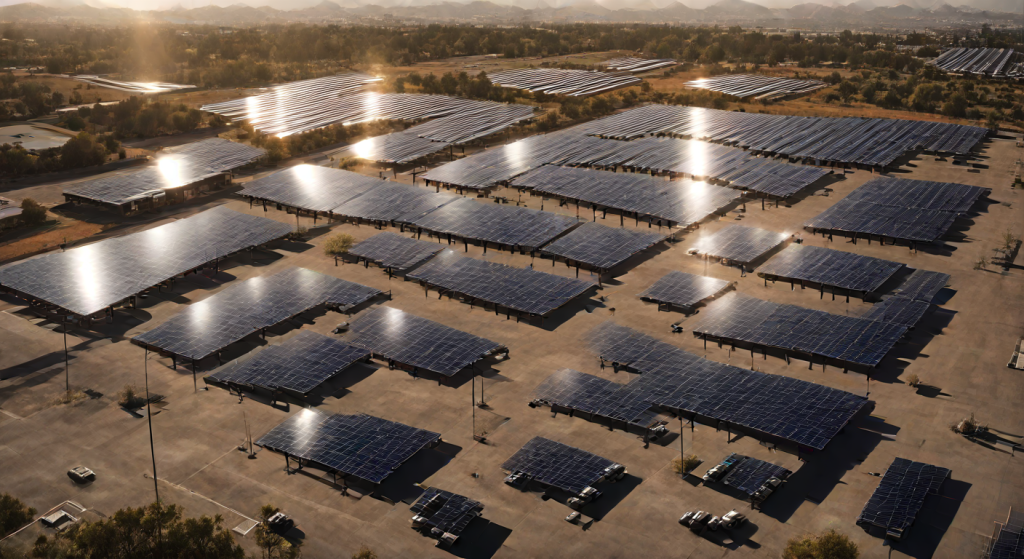
Valley Children’s Hospital in Madera, California is advancing its CHARGES microgrid project toward a 2026 launch after the Trump administration rescinded a $30 million Department of Energy grant for long-duration battery storage. Phase 1 — covering solar panels, fuel cells, and short-duration battery storage — remains fully funded and under construction, with the California Energy Commission stepping in to backstop Phase 2 funding of up to $28 million.
What Is Being Built
CHARGES stands for Children’s Hospital Resilient Grid with Energy Storage. The system is designed to replace diesel backup generators at Valley Children’s — the Central Valley’s only full-service pediatric hospital — with a renewable microgrid capable of sustaining operations during prolonged grid outages. Phase 1 integrates on-site solar panels, hydrogen fuel cells, and short-duration battery storage. Phase 2 adds 34.4 MWh of long-duration energy storage, originally specified as zinc-bromine flow batteries from Australian manufacturer Redflow. Redflow ceased operations in October 2024 before delivery, making the LDES technology for Phase 2 uncertain. Faraday Microgrids is the developer; Mazzetti, a California engineering firm, designed the system architecture. When fully operational, the microgrid will supply 80% of the hospital’s energy and cut campus carbon emissions by 50%.
Critical Analysis
The CHARGES microgrid operates as an all-inverter-based island during outages with 2.2 MW fuel cell and 1.3 MW solar feeding through DC-AC converters. Valley Children’s draws approximately 3-4 MW peak from PG&E in CAISO Zone SP15, where PSPS events and wildfire-related outages affected Central Valley hospitals 12 times between 2019-2024.
5-Year Projection
During the 5-year outlook, capitalized Solar PV ventures will drastically compress technology iteration cycles, demanding continuous utility-level adaptations to accommodate high-velocity product launches.
Critical Perspective
The project plans for 34.4 MWh of long-duration storage. Redflow, the original supplier, went bankrupt. The California Public Utilities Commission’s 2017 decision to allow utilities to recover costs for battery storage did not prevent supplier failures. Will the CEC’s $28 million backstop prevent a repeat of the Redflow collapse?
Why It Matters
Madera County faces repeated risk of prolonged public safety power shutoffs driven by wildfire conditions. A children’s hospital that loses grid power for 48 or 72 hours must keep life-safety systems, surgical suites, and neonatal ICUs running without interruption. The CHARGES project serves as a replicable blueprint for clean microgrid backup at acute care facilities across high-outage-risk regions. The DOE selected it as one of 15 projects nationally from its $325 million Long-Duration Energy Storage Demonstration Program, reflecting federal recognition of hospitals as critical resilience sites. The loss of that federal grant, combined with Redflow’s bankruptcy, adds urgency to the CEC’s role as a fallback funder for long-duration storage at healthcare facilities.
Funding and Timeline
The DOE awarded $30 million to Faraday Microgrids in October 2023 for Phase 2 LDES deployment. Federal budget cuts in 2025 rescinded that grant before construction began. The California Energy Commission approved $4 million in February 2025 and holds authority to award up to $28 million for an alternative LDES solution for Phase 2. Phase 1 construction continues on schedule. Hospital leadership confirmed in October 2025 that neither the federal grant loss nor Redflow’s bankruptcy has disrupted Phase 1’s 2026 launch target.