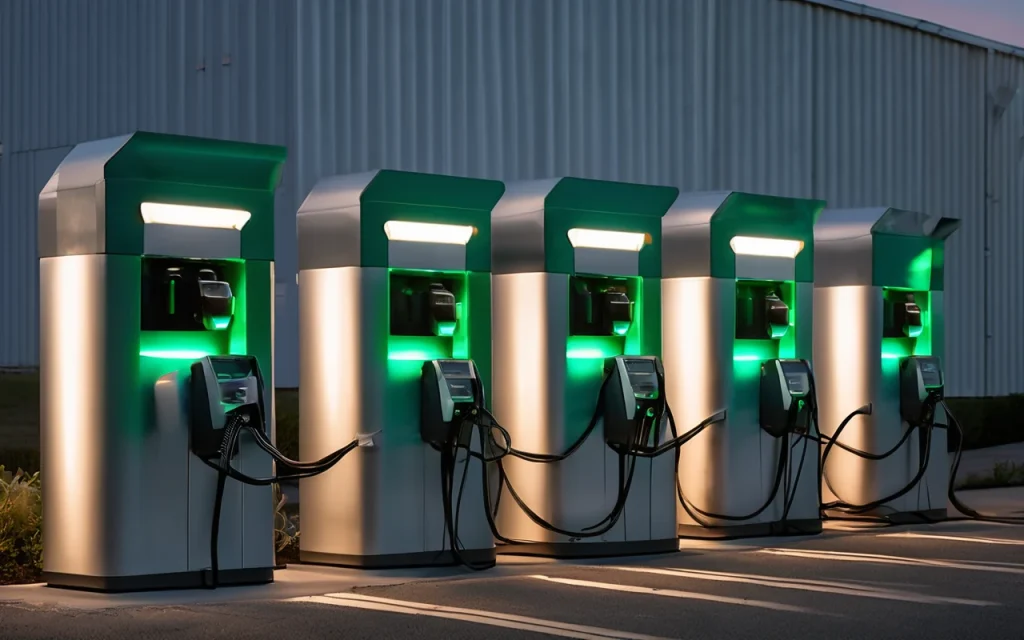
MTA Deploys 53 Overhead Chargers for 470-Bus Electric Fleet
- EVs Fleet & Depot Charging News
Marin Holt
- 0
- 7 minutes read
- 53 overhead pantograph chargers are being installed across 5 MTA bus depots in Manhattan, Queens, Brooklyn, and the Bronx as part of a $54M infrastructure buildout
- The system will charge 470 zero-emission buses scheduled to arrive through 2025 and 2026, making NYC one of the largest overhead bus charging networks in North America
- Overhead pantograph charging delivers power at rates up to 450 kW per bus, recharging during layovers rather than requiring overnight depot-only charging
- Each depot installation required utility service upgrades with Con Edison to handle the concentrated load from simultaneous pantograph charging events
- Project is part of the MTA Clean Bus Program targeting 100% zero-emission bus fleet by 2040 under New York State mandate
New York’s Metropolitan Transportation Authority is deploying 53 overhead pantograph electric bus chargers across five depots in four boroughs, part of a $54 million infrastructure buildout that prepares the transit system for 470 zero-emission buses scheduled to arrive through 2025 and 2026. The project makes New York City’s bus charging network one of the largest overhead-pantograph deployments in the United States.
What Is Being Built
The infrastructure spans five locations: 17 pantograph chargers at Grand Avenue Bus Depot in Queens, 14 at the Herkimer lot in East New York, Brooklyn, 32 at Kingsbridge Depot in Manhattan and the Charleston facility on Staten Island, and one on-street charger beneath the Williamsburg Bridge Plaza in Brooklyn. A total of 67 overhead and cabled dispensers are planned across all sites. Each charging arm descends automatically from the ceiling onto a roof-mounted receiver on the bus without requiring a driver to handle a cable. The 40-foot battery-electric buses each recover up to 90% of braking energy through regenerative systems, extending range between charges. The New York Power Authority is overseeing design, permitting, procurement, and commissioning for all depot locations.
Why This Matters
The MTA operates 5,800 buses serving 2.1 million riders on average weekdays, the largest transit bus fleet in the United States. Converting that fleet from diesel to electric requires not just new buses, but charging infrastructure at every major depot before buses arrive. The MTA’s existing procurement covers 470 zero-emission buses arriving through 2025 and 2026, with 265 optional buses planned for 2027. The agency stops buying diesel buses after 2029 and targets a fully zero-emission fleet by 2040. A 2025 National Renewable Energy Laboratory study of MTA’s Kingsbridge Depot found that pairing behind-the-meter battery storage with on-site solar generation reduces total electricity costs by 35% annually and saves $2.08 million per year in utility charges. Deploying that model across all 11 electrified depots carries substantial long-term bill reduction potential for the MTA.
Implementation Details
The $54 million project draws on nearly $70 million in Federal Transit Administration formula funds and approximately $20 million from the Bipartisan Infrastructure Law. Phase two of the full electrification program, covering infrastructure for the remaining 9 depots across all five boroughs, carries a separate $188 million allocation. Con Edison is partnering with the MTA on distribution upgrades at each depot site to handle the increased electrical load. The overhead pantograph approach was selected over floor-mounted plug-in systems for its faster per-bus cycle times and reduced driver labor, both critical factors for a high-frequency operation running buses on tight turnaround schedules. The 53 chargers now under construction bring the MTA from 15 electric buses in service to a fleet capable of supporting well over 500 zero-emission vehicles.
Source: Office of Governor Kathy Hochul
Critical Analysis
Simultaneous 450 kW pantograph charging events at transit depots create significant harmonic injection and reactive power demand that must be managed at the utility. MTA’s fleet depot concentrates multi-megawatt charging demand at a single distribution service point, typically requiring dedicated transformer infrastructure.
5-Year Projection
By 2031, operational data from facilities like this will become the standard requirement for securing interconnection agreements, as ISOs prioritize proven Overhead Pantograph Chargers profiles.
Critical Perspective
The MTA is deploying 53 overhead chargers as part of a $54 million infrastructure buildout. This project is presented as a significant step, yet it omits the projected operational costs and the grid’s capacity to handle this scale of charging. The Los Angeles Metro’s earlier electric bus pilot program, which faced significant delays and cost overruns, offers a cautionary tale. What is the actual cost per bus charged annually once the full fleet is operational?