Con Edison Energizes New York State’s Largest Electric School Bus
- EVs Fleet & Depot Charging News
Marin Holt
- 0
- 6 minutes read
- Electric Buses: 45
- Depot Chargers: 23 dual-port
- Con Edison Make-Ready Incentive: $450,000
- Annual CO2 Avoided: 1 million pounds
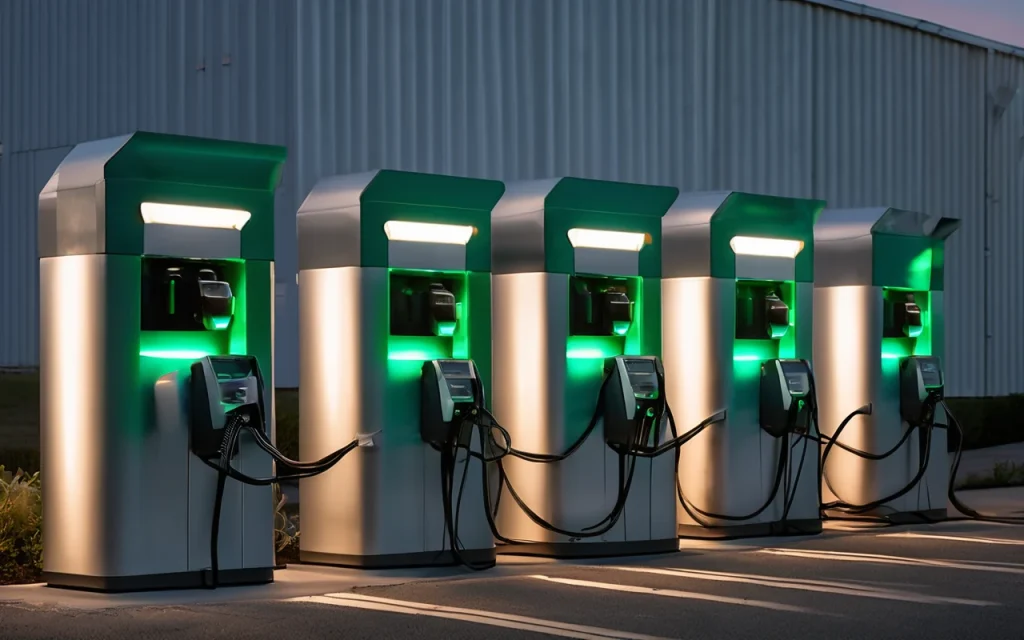
Con Edison energized New York State’s largest electric school bus fleet on June 17, 2026, bringing online 45 electric buses operated by GVC, a family-owned company that has carried Bronx students for more than 30 years. GVC installed 23 dual-port chargers at its South Bronx depot to replace diesel buses that move roughly 800 children on about 4,100 trips each school week. Con Edison contributed a $450,000 make-ready incentive through its Medium- and Heavy-Duty (MHD) Make-Ready pilot, while the New York School Bus Incentive Program (NYSBIP), administered by NYSERDA, funded 20 of the buses and the depot chargers.
The fleet is expected to prevent about 1 million pounds of carbon emissions each year, roughly the equivalent of 3,800 barrels of oil. Con Edison sited the project in the South Bronx, where childhood asthma rates run more than twice the national average, making the fleet conversion as much a public-health measure as an emissions one.
How the financing stacked up
School bus electrification rarely pencils out for a small operator on its own. GVC’s fleet came together through a layered stack: NYSBIP covered 20 buses and the 23 dual-port chargers, and Con Edison’s MHD Make-Ready pilot paid $450,000 toward the depot’s electrical infrastructure: the transformers, panels, and service upgrades that tie chargers to the grid. The make-ready structure moves the heaviest up-front grid costs off the fleet operator, the barrier that has stalled many depot conversions.
Critical Perspective
The $450,000 Con Edison make-ready incentive covered the depot’s grid-side upgrades, but NYSERDA’s incentive program still had to fund 20 of the 45 buses for the project to pencil out for a single family operator. That layered subsidy stack is the quiet condition the announcement understates: without two separate programs stacking, the conversion does not happen. New York City’s own mandate requires an all-electric school bus fleet by 2035, yet most of the city’s roughly 10,000 buses remain diesel precisely because few operators can assemble funding like this. If a 45-bus depot needs both a state vehicle grant and a utility make-ready tariff to move forward, what happens to the far larger operators that cannot stack incentives before the 2035 deadline?
Why It Matters
For operators weighing electrification, the GVC project shows the combination that makes a depot conversion viable today: a state vehicle-incentive program to defray bus purchases and a utility make-ready tariff to absorb behind-the-meter grid upgrades. Con Edison’s MHD Make-Ready pilot is the lever to watch. Utilities across the Northeast are standing up similar programs, and the size of the make-ready contribution often decides whether a depot project moves forward. Operators planning conversions should lock in both a vehicle-incentive slot and a make-ready commitment before ordering buses, because charger installation and service upgrades are the long-lead items. The 23-charger depot also concentrates demand at predictable overnight hours, giving Con Edison a managed-charging asset to shape around grid peaks. The make-ready contribution that made GVC’s numbers work came through a pilot, not a standing tariff, so operators planning conversions should confirm whether Con Edison carries the program forward before counting on that support.
Sources
- Con Edison — Con Edison Energizes Largest Electric School Bus Fleet in NYS (June 17, 2026)
- PR Newswire — Con Edison Energizes Largest Electric School Bus Fleet in NYS for Student Transport Company GVC
- News 12 Bronx — Electric School Buses Roll Into The Bronx
- StockTitan — Con Edison Powers NYS’s Largest E-School Bus Fleet