DOE Funds 68M Truck Charging Hubs Freight Corridors
- EVs Infrastructure & Grid Connection News
Marin Holt
- 0
- 4 minutes read
- DOE investing $68M across three SuperTruck Charge projects for Class 5-8 EV charging
- Greenlane (Daimler) building 10+ MW facility in Barstow, CA on I-15 ($26M)
- Terawatt Infrastructure building 10-stall MCS facility on I-10 in Arizona ($20M)
- Utah State SUPERCHARGE: 9 MW concurrent charging drawing only 4.5 MW from grid ($22M)
- Federal 30C charging infrastructure tax credit expires June 30, 2026
Listen to this article
The U.S. Department of Energy announced $68 million in January 2025 for three SuperTruck Charge projects to design and demonstrate large-scale charging facilities for medium- and heavy-duty electric vehicles near ports, distribution hubs, and major freight corridors. The projects target Class 5-8 commercial vehicles traveling more than 500 miles per day.
What Is Being Built
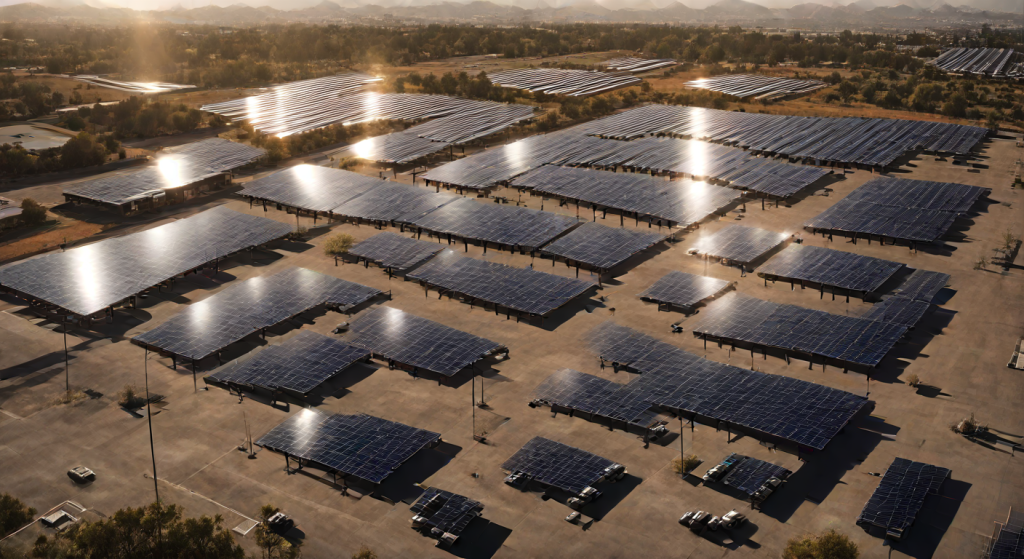
Greenlane Infrastructure, a Daimler consortium, received $26 million for a 10-plus megawatt charging facility in Barstow, California along Interstate 15. The site integrates solar arrays and battery storage to buffer grid demand. Pearl Street Property Co. received $20 million for a facility along Interstate 10 in Arizona featuring 10 pull-through truck charging stalls with Megawatt Charging System compatible chargers, solar canopies, and battery storage. Utah State University’s SUPERCHARGE project received $22 million to demonstrate 9 megawatts of concurrent charging with 12 megawatts of installed equipment while drawing less than 4.5 megawatts from the grid, using on-site generation and storage to cut grid draw by more than 60 percent.
Why It Matters
Charging infrastructure is the leading barrier to fleet electrification, according to DOE. A single Class 8 electric truck battery at 200 to 600 kilowatt-hours draws the same power as a big-box retail store during a charging session. Scaling to 10 or more vehicles at a depot requires multiple megawatts of capacity that most commercial sites lack without major grid upgrades. The SuperTruck Charge projects address this by integrating on-site solar and storage to reduce grid draw. Grid upgrades, utility coordination, and permitting for megawatt-scale charging sites typically take 12 to 18 months. The federal 30C charging infrastructure tax credit expires June 30, 2026, pressing near-term deployment decisions.
Critical Perspective
The three projects cover distinct freight corridor segments but none has disclosed final construction costs, binding utility interconnection agreements, or a commercial operation timeline beyond the DOE award announcement. Greenlane’s Barstow site sits in a Southern California Edison service area already facing industrial interconnection backlogs from warehouse and logistics development. Pearl Street Property Co. has no prior megawatt-scale public charging deployments in its disclosed track record. The 30C tax credit expiration in June 2026 creates a hard deadline for federal funding of replication beyond these three demonstration sites, with no follow-on program authorized.