ABB Deploys HiPerGuard Medium-Voltage UPS at 700 MW AI Data
- Data Centers Grid Connection & Reliability Product
Marin Holt
- 0
- 6 minutes read
- ABB HiPerGuard is first commercial medium-voltage static UPS for data centers, operating at up to 24 kV
- 98% efficiency with up to 90% reduction in copper cabling requirements vs. low-voltage architectures
- Deployed at Applied Digital's 400 MW Polaris Forge 1 (Ellendale) and 300 MW Polaris Forge 2 (Harwood) in North Dakota
- CoreWeave signed 250 MW lease at Ellendale; first 100 MW online Q4 2025, 150 MW mid-2026
- 1,245-ton CO2e reduction projected per installation over 15-year lifespan
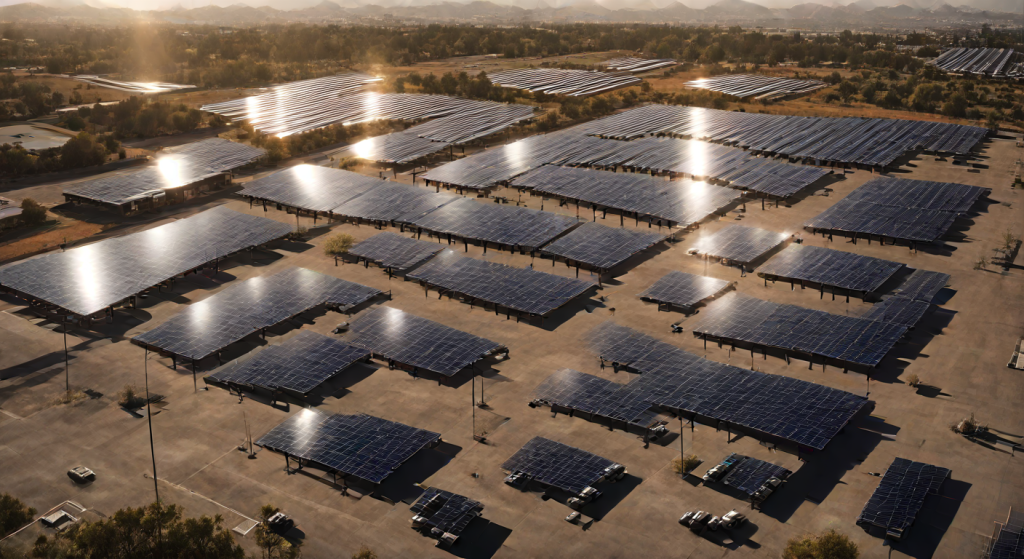
ABB has deployed its HiPerGuard medium-voltage static UPS at Applied Digital’s 400 MW AI data center campus in Ellendale, North Dakota, marking the first commercial installation of the technology. The system operates at up to 24 kV with 98% efficiency, enabling data centers to scale power distribution in 25 MW blocks while reducing copper cabling requirements by up to 90%. Applied Digital has since ordered HiPerGuard for a second 300 MW campus near Harwood, North Dakota, with combined capacity across both sites reaching 700 MW.
Critical Perspective
ABB claims up to 90% copper reduction, a bold assertion that mirrors the initial promises of early 5G small cell deployments which ultimately required extensive fiber backhaul. Consider the ill-fated “smart grid” initiatives of the early 2010s, which promised efficiency gains but were plagued by integration issues and cost overruns. The projected 1,245-ton CO2 reduction per installation, while appealing, fails to account for the embodied carbon in manufacturing the complex medium-voltage equipment itself. Will this 700 MW deployment truly deliver on its efficiency claims when faced with the unpredictable demands of AI workloads and the inherent complexities of grid integration?
How HiPerGuard Works
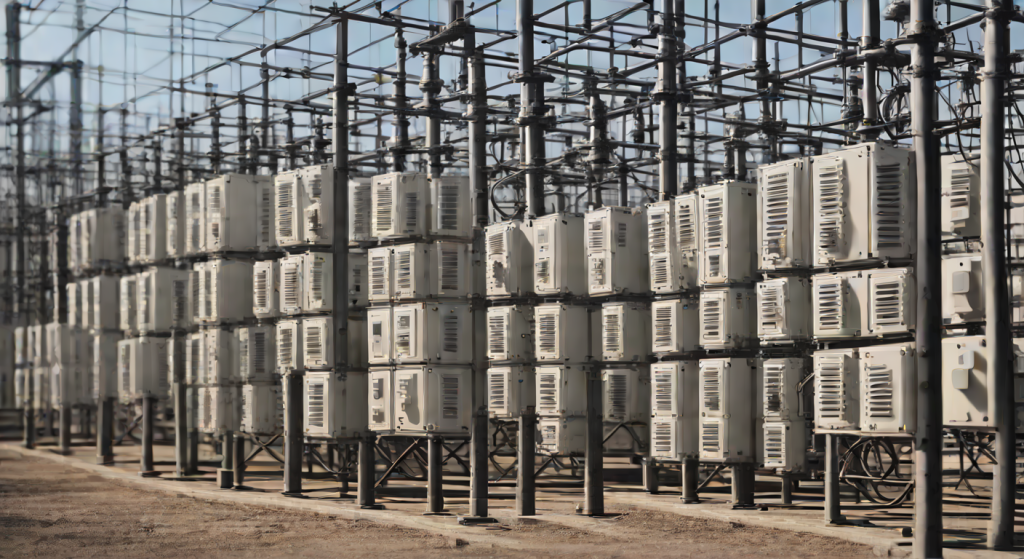
Traditional data center power architectures step down from medium voltage at the utility connection to low voltage for distribution, then back through individual UPS systems at each rack or row. HiPerGuard eliminates intermediate conversion stages by maintaining medium voltage from grid interconnection through the UPS, stepping down to low voltage only at the point of use. This reduces the number of power conversion stages, cuts energy losses, and improves power density across the facility.
At medium voltage, currents are significantly lower for the same power delivery, which directly reduces conductor sizing requirements. ABB estimates copper savings of up to 90% compared to equivalent low-voltage architectures. The system projects a 1,245-ton reduction in CO2 equivalent emissions over a typical 15-year lifespan per installation.
Applied Digital Deployment
Applied Digital’s Polaris Forge 1 campus in Ellendale hosts a 250 MW lease to CoreWeave, the Nvidia-backed AI cloud provider, with the first 100 MW facility expected online in Q4 2025 and a second 150 MW facility in mid-2026. The Polaris Forge 2 campus near Harwood adds 300 MW across two buildings scheduled for 2026 and 2027. Both campuses use HiPerGuard as the primary power protection architecture, with first orders booked in Q4 2024 and Q1 2025.
Why It Matters
AI workloads create extreme power density and load variability challenges, with next-generation GPU racks projected to reach 300+ kW per rack in 2026. Medium-voltage UPS architectures like HiPerGuard address the load balancing challenge at scale by distributing power more efficiently across data halls, enabling operators to dynamically allocate capacity without hitting distribution ceilings. The technology competes with approaches from Schneider Electric and Eaton in a data center UPS market projected to reach $12.47 billion by 2030.