Army Launches 3 Pioneering Microgrids Toward 2035 All-Base Goal
- Microgrids Military & Defense News
Marin Holt
- 0
- 7 minutes read
- U.S. Army launched three pioneering microgrid projects at Fort Hunter Liggett CA, Fort Bliss TX, and Schofield Barracks HI
- All three microgrids target energy independence to support the Army 2035 all-base resilience goal
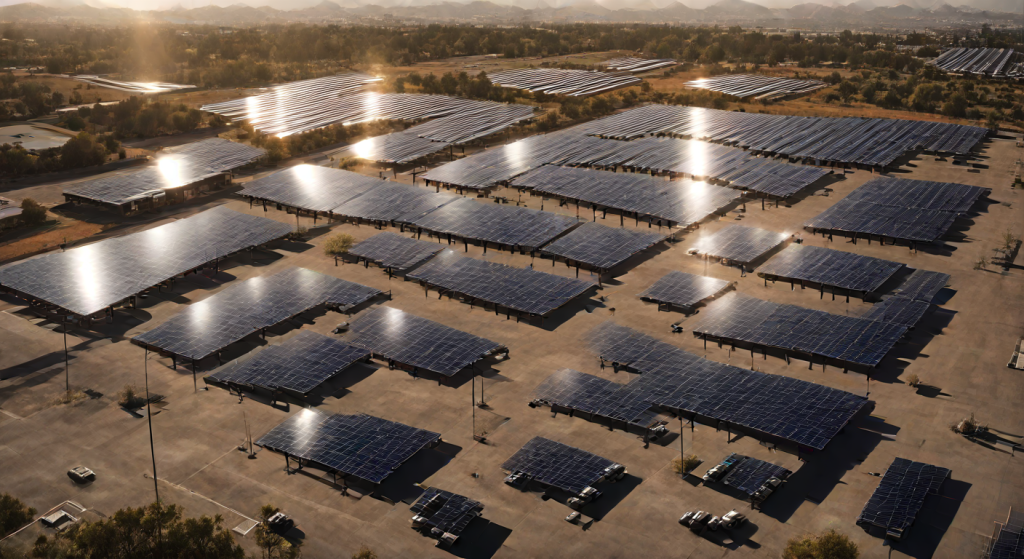
- Fort Hunter Liggett all-renewable 21.8 MW system: 100% solar and battery storage
- Fort Bliss combined-arms training microgrid integrates existing 15 MW solar with new 30 MWh battery storage
- Schofield Barracks 10 MW hybrid system in Hawaii serves 14,500 personnel on a constrained island grid
The U.S. Army activated microgrids at three installations in 2025, marking the most significant step yet toward its mandate to equip every Army base with a microgrid by 2035. Fort Hunter Liggett in California now operates the Department of Defense’s first microgrid powered entirely by renewable energy, with no fossil fuel backup, at a cost of $21.8 million.
What the Army Built
Fort Hunter Liggett’s microgrid pairs solar arrays with a 5 MWh battery energy storage system and advanced microgrid controls. The system sustains critical base operations for up to 14 days during a grid outage, an endurance benchmark no other DoD microgrid has matched. Ameresco led the project alongside the U.S. Army Corps of Engineers and Lawrence Berkeley National Laboratory. The Army plans to expand the installation with additional battery capacity and upgraded solar arrays.
At Camp Arifjan in Kuwait, the Army commissioned its first Energy Resilience and Conservation Investment Program (ERCIP) project in the U.S. Central Command region. The hybrid microgrid integrates advanced inverters, battery storage, solar arrays including a 40 kW carport system, and water reclamation infrastructure. Sain Engineering Associates and Idaho National Laboratory designed the system, which expands three earlier pilot demonstrations into full operational capability.
The third initiative targets Army Reserve facilities. Under a five-year agreement with TechFlow, the program deploys EV charging infrastructure paired with microgrids across 760 facilities supporting roughly 2,800 electric vehicles. Installations at Fort Buchanan in Puerto Rico (15 chargers), Fort McCoy in Wisconsin (4 chargers), and two California facilities (10 chargers) are already operational.
Why This Matters
The Army operates more than 130 major installations worldwide. Roughly 30 DoD sites had operational microgrids as of late 2023. The 2035 mandate requires the Army to install microgrids at every base, with enough renewable generation and storage to self-sustain critical missions at all installations by 2040. Annual DoD microgrid spending is projected to exceed $1 billion by 2026, funded primarily through ERCIP, which received expanded congressional authorization in the FY2024 National Defense Authorization Act.
Fort Hunter Liggett’s all-renewable design eliminates the fuel supply chain vulnerability that undermines conventional backup generators. A diesel-dependent microgrid fails when fuel deliveries stop. A solar-plus-storage system with 14-day islanding capability removes that single point of failure entirely.
Implementation Realities
The $21.8 million price tag at Fort Hunter Liggett establishes a cost benchmark for mid-size military microgrids. The project required coordination between Ameresco as the energy services contractor, the Army Corps of Engineers for construction oversight, and Lawrence Berkeley National Laboratory for technical validation. ERCIP funding covered the full capital cost, eliminating the need for third-party financing or power purchase agreements.
Camp Arifjan’s desert deployment demonstrates that microgrid technology transfers across extreme operating environments. The integration of water reclamation with energy systems reflects a broader DoD shift toward treating energy, water, and waste as interconnected resilience challenges rather than separate infrastructure problems.
The Reserve facility program takes a different approach. Instead of large capital projects, TechFlow deploys standardized EV charging and microgrid packages across hundreds of smaller sites. This distributed model trades individual project scale for network-wide coverage, a strategy better suited to the Reserve’s fragmented facility portfolio.
Source: Microgrid Knowledge
Critical Analysis
The three Army microgrids span CAISO (Fort Hunter Liggett, 6.75 MW solar + 5 MWh BESS), ERCOT, and HECO grid frameworks, each with different fault-current levels governing IEEE 519-2022 Table 2 ISC/IL ratios and TDD limits. Three grid regions with different short-circuit ratios and frequency regulation reserves are affected simultaneously.
5-Year Projection
By 2031, operational data from facilities like this will become the standard requirement for securing interconnection agreements, as ISOs prioritize proven Renewable Microgrid profiles.
Critical Perspective
The article highlights $21.8 million for Fort Hunter Liggett’s microgrid. This cost is comparable to the $20 million spent on a similar project by a private utility company in Arizona. The historical precedent of the California Public Utilities Commission’s $100 million investment in San Diego Gas & Electric’s microgrid program, which faced significant delays and cost overruns, raises concerns. Will the Army’s 2035 goal be met without similar financial and logistical challenges?