Redwood Will Collect Retired Rivian Packs for Storage or Recycling, Building on 10 MWh at the Normal, Illinois Plant
- C&I Storage Energy Storage News
Marin Holt
- 0
- 7 minutes read
- Existing second-life storage at Normal: 10 MWh
- Normal plant output, Q3 2026 (Argus): 19,751 vehicles
- Redwood metal recovery claim: exceeding 95 percent
- Financial terms: not disclosed
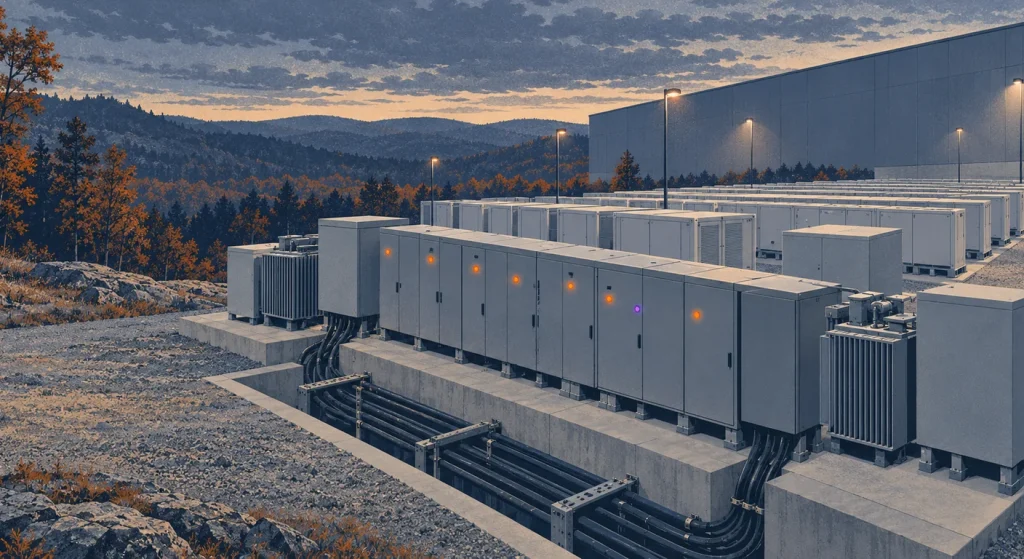
Rivian and Redwood Materials expanded their battery partnership on Oct. 14, 2026. Redwood will collect retired Rivian EV battery packs through the Rivian network of US service centers. It will then reuse each pack as stationary energy storage or recycle it. Redwood will also recycle battery scrap from Rivian factories. The deal builds on an April 2026 project at the Rivian plant in Normal, Illinois. That project uses repurposed Rivian packs for 10 MWh of battery energy storage.
What the Deal Covers
Redwood collects a Rivian pack when it is no longer suitable for in-vehicle use, the release says. Redwood then evaluates each pack. A pack that passes goes into energy storage, at Rivian manufacturing facilities or at other locations. A pack that fails goes to recycling.
The new scope adds the scrap from Rivian manufacturing operations. Argus Media reported that the deal also covers energy storage systems at the Normal plant. That plant produced 19,751 vehicles in the third quarter, Argus said.
Why It Matters
Retired EV packs become a supply of stationary storage for factories. The release ties the deal to slow grid access. It says grid connections take years to secure and conventional infrastructure remains supply-constrained.
JB Straubel is the founder and CEO of Redwood. He called every returned Rivian pack “a potential source of domestic grid energy storage in addition to critical materials.” Rivian CEO RJ Scaringe said the goal is to “make the grid more reliable and lower energy costs for everyone.”
The deal also shows where Redwood is going. Electrive reported that Redwood shifted its strategic focus in 2025. Since then it has put more money into stationary battery storage systems. Argus said Redwood also deploys storage systems for data centers and the grid.
What the Release Leaves Out
The release sets no new storage target. The only capacity figure is still the 10 MWh project at Normal from April. It gives no pack volumes and no timeline. Argus reported that financial terms were not disclosed.
The recycling figure is Redwood’s own. The release says Redwood recovers lithium, nickel, cobalt and copper at rates exceeding 95 percent. The release also does not say how many Rivian packs have reached the end of their vehicle life so far.
Critical Perspective
The deal gives no pack volume, so the storage side has no size yet. MGRID reported in April that the 10 MWh Normal system used more than 100 retired packs. The Normal plant built 19,751 vehicles in the third quarter alone, Argus said. Each of those packs has to wear out in a vehicle before it enters this program. The release also gives no date for a new storage build. Until then, factory scrap is the part of the deal with a steady supply. Redwood gives the 95 percent recovery rate itself, and the release names no outside audit. How many retired Rivian packs does Redwood expect to collect, and by when?
Sources
- Rivian and Redwood Materials release (Business Wire, via Waste360): Rivian and Redwood Materials Expand Partnership to Span the Lifecycle of the Battery (2026-10-14)
- Argus Media: Rivian, Redwood expand battery recycling deal (2026-10-14)
- electrive: Redwood to repurpose end-of-life batteries from Rivian vehicles (2026-10-17)