ChargePoint Launches Next-Gen DC Fast Charging
- Megawatt Charging & Power Conversion Power Electronics Product
Marin Holt
- 0
- 6 minutes read
- Passenger vehicle output: 600 kW
- Heavy-duty truck output: 3.75 MW
- Location: United States
- Announced: January 2025
- Architecture: Next-gen DC fast charging with MCS standard support
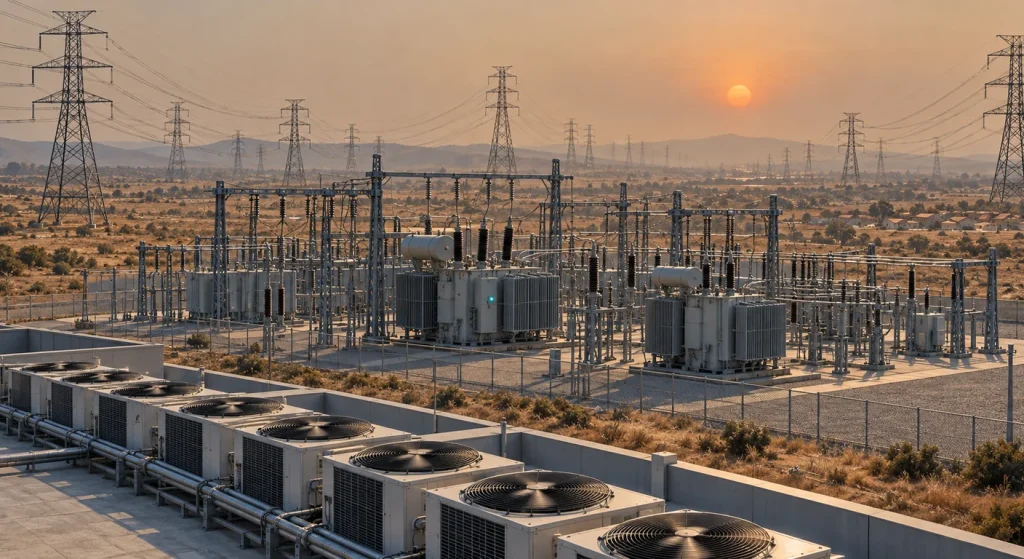
ChargePoint announced it is ramping up the power for its next-generation DC fast charging architecture in January 2025, targeting 600 kW for passenger vehicles and up to 3.75 MW for heavy-duty trucks, in the United States. The company’s new architecture is designed to support the growing demand for high-power charging, particularly for fleet vehicles and long-haul trucking. With this new architecture, ChargePoint aims to provide faster and more efficient charging solutions for vehicles, reducing charging times and increasing the adoption of electric vehicles. The new architecture will be available in various locations across the US, including California and other regions with high demand for electric vehicle charging. The exact cost of the new architecture has not been disclosed, but it is expected to be competitive with other high-power charging solutions on the market. ChargePoint’s announcement comes as the US government continues to invest in electric vehicle infrastructure, with a focus on high-power charging corridors along major highways.
ChargePoint’s next-generation DC fast charging architecture is designed to support the growing demand for high-power charging, particularly for fleet vehicles and long-haul trucking. The company’s new architecture can deliver up to 3.75 MW of power, making it suitable for charging heavy-duty trucks and other large vehicles. This is a significant increase in power output compared to previous generations of DC fast charging technology, which typically topped out at around 350 kW. The increased power output will enable faster charging times, reducing the time it takes to charge a vehicle from hours to minutes. ChargePoint’s new architecture is also designed to be highly efficient, with a high power density and a compact design that makes it easier to install and maintain.
The new architecture is also designed to support the growing demand for electric vehicle charging in the US. As more consumers and fleets adopt electric vehicles, there is a growing need for high-power charging infrastructure that can support the increased demand. ChargePoint’s new architecture is designed to meet this demand, providing fast and efficient charging for vehicles of all sizes. The company’s announcement comes as the US government continues to invest in electric vehicle infrastructure, with a focus on high-power charging corridors along major highways. ChargePoint’s new architecture is well-positioned to support this initiative, providing the high-power charging infrastructure needed to support the growth of electric vehicles in the US.
Why It Matters
ChargePoint’s next-generation DC fast charging architecture has significant implications for the US grid and electric vehicle infrastructure. The increased power output and efficiency of the new architecture will enable faster charging times, reducing the time it takes to charge a vehicle and increasing the adoption of electric vehicles. This, in turn, will help to reduce greenhouse gas emissions and support the growth of renewable energy in the US. As the US government continues to invest in electric vehicle infrastructure, ChargePoint’s new architecture is well-positioned to support this initiative, providing the high-power charging infrastructure needed to support the growth of electric vehicles in the US.
Sources
https://www.facebook.com/verge/posts/chargepoint-is-ramping-up-the-power-for-its-next-generation-dc-fast-charging-arc/1160685339254271/ – Facebook
Critical Perspective
Series context: This post is part of MGRID’s Megawatt Charging System (MCS) industry coverage. The MCS spec was ratified by CharIN in 2023 and SAE in early 2024, and the 18 months since have produced a steady wave of vendor announcements, fleet pilots, and lab demonstrations. Readers should distinguish three distinct claim tiers in MCS coverage: (1) spec compliance, which most products credibly claim because the spec is settled; (2) production shipments, which reduces to ABB MCS1200 plus a handful of pre-production units from other vendors as of mid-2026; and (3) field-deployed truck refuels at MCS-rated power, which is measured in single digits globally. Coverage that conflates these tiers overstates commercial maturity. Field availability of MCS-spec chargers will scale through 2027 as Heliox, Kempower, ChargePoint, Tritium, and others move past prototype builds. For each product cited in this post, readers should verify the deployment tier (lab / pilot / commercial pilot / general availability) before assuming operational readiness.