Bloom Energy’s 1 Gigawatt AEP Fuel Cell Deal and Why Solid-State Transformers Are the Natural Interface

- Bloom Energy + AEP: up to 1 GW solid-oxide fuel cell purchase agreement (late 2025) — largest single fuel-cell transaction
- Bloom SOFC: ceramic materials, no precious metals, operates at >800u00b0C, native DC output
- Deployment speed: 50 MW in 90 days, 100 MW in 120 days when gas supply + permits in place
- Conventional Bloom = DC-AC inverter to facility distribution; SST integration = direct DC-to-800VDC for AI data center
- Bloom 400+ MW fuel cells deployed in data centers globally as of 2025; SST opportunity at fuel-cell interface plausibly $500M+/yr by 2028
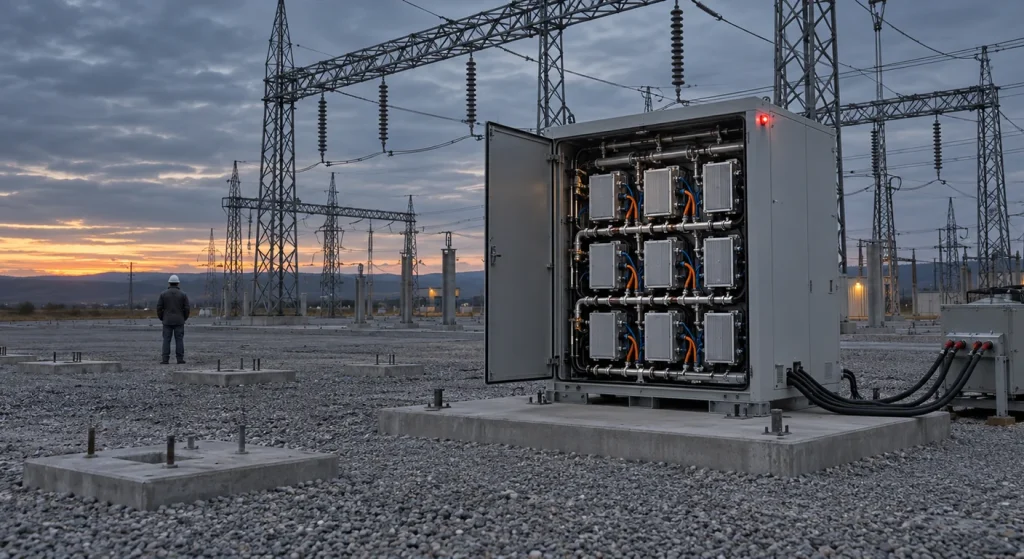
Bloom Energy announced an agreement with American Electric Power (AEP) in late 2025 for AEP to purchase up to 1 gigawatt of Bloom solid-oxide fuel cells, the largest single fuel-cell commercial transaction announced to date. The deal is part of a broader trend visible through 2025 and 2026: AI data center developers turning to on-site fuel-cell generation as a faster path to power than waiting for the conventional utility-interconnect process. Solid-state transformers (SSTs) sit naturally at the interface between solid-oxide fuel cell DC output and the AC or DC distribution system.
Bloom Energy’s solid-oxide fuel cell technology, developed over two decades, uses lower-cost ceramic materials with no precious metals and operates at temperatures above 800 degrees Celsius. The fuel cell stack produces DC power natively. Conventional Bloom Energy installations have used a low-frequency inverter to convert DC to AC for facility distribution, but this approach is increasingly mismatched with the 800-volt DC AI Factory distribution architecture that AI data centers now deploy.
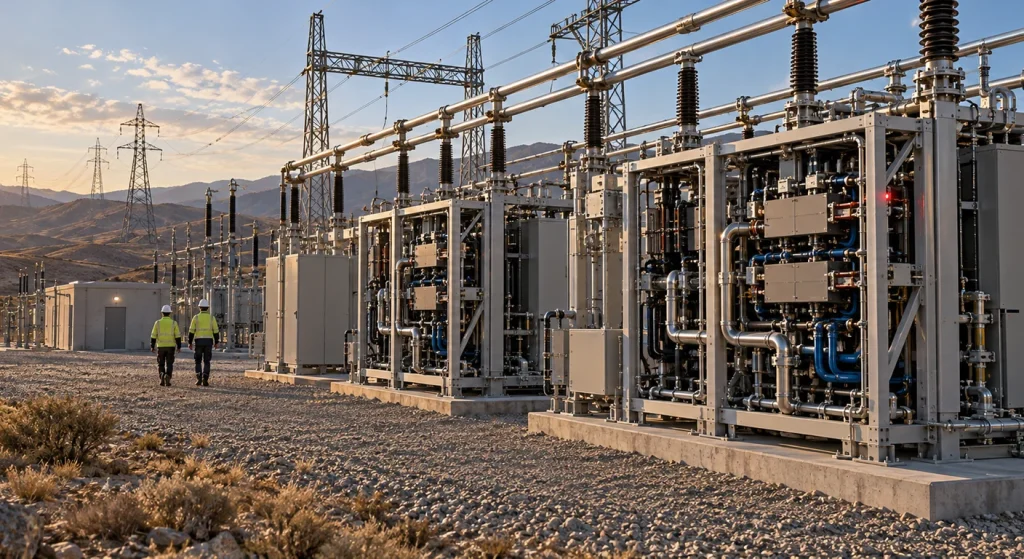
An SST at the fuel-cell-to-distribution interface achieves several functional benefits simultaneously. First, the DC intermediate bus of the SST can be the same 800 VDC level the rest of the facility distributes at, eliminating the conventional DC-AC-DC conversion chain. Second, the SST’s grid-forming control can supply isolated facility loads during a utility-grid outage, providing the high-reliability availability (99.9 to 99.999 percent) that data center operators specify. Third, the SST can interface a parallel battery storage system to absorb the fuel-cell output during low-demand periods and discharge during peak-demand periods.
Bloom Energy can deliver 50 megawatts of fuel cells in as little as 90 days and 100 megawatts in 120 days when gas supply and permits are in place. The combined fuel-cell-plus-SST deployment timeline is therefore substantially faster than the 18-to-36-month timeline for a utility-interconnect upgrade. For AI data center developers facing power-bottlenecked project schedules, the fuel-cell-plus-SST architecture is increasingly attractive even at a capital-cost premium.
The strategic implication for the SST industry is concrete: the Bloom Energy fuel-cell-plus-SST architectural pattern, if it scales as projected, represents a major commercial opportunity that the SST industry has not historically pursued. Bloom Energy is supplying over 400 megawatts of fuel-cell power generation to data centers worldwide as of 2025. If the AEP 1 gigawatt deal is followed by additional gigawatt-scale fuel-cell commitments — and the trade-press coverage of 2026 data-center power suggests it will be — the SST opportunity at the fuel-cell interface alone could plausibly reach $500 million per year by 2028.
Why It Matters
For data-center developers, Bloom Energy’s up-to-1 GW fuel-cell deal with AEP is the largest single fuel-cell transaction disclosed and a marker of how far on-site generation is running ahead of utility interconnection queues. The SST sits at the fuel cell’s DC output, so the same on-site-power trend that bypasses the grid also creates SST demand, tying two of the site’s fastest-moving procurement decisions together.
Critical Perspective
Editorial correction: This post is part of MGRID’s Solid-State Transformer industry coverage. As of May 2026, that body of work systematically framed manufacturer announcements, funding rounds, and laboratory demonstrations as commercial deployments. The reality is that field-deployed commercial-class SST in revenue service globally is measured in single digits, and almost every product cited in this series is at “announced” or “funded” stage, not “operational.” Readers should treat the specific claims in this post against the standards documented in our [SST Industry Reality Check](/?p=9044) (the per-claim audit table maps marketing language to verifiable deployment status). The corrective article is the canonical reference for SST industry reality; this post remains published with its original framing so the editorial drift is traceable.
Related Coverage
Bloom 400+ MW fuel cells deployed in data centers globally as of 2025; SST opportunity at fuel-cell interface plausibly $500M+/yr by 2028