Power Factor Correction Market to Reach $4.2B by 2035
- Analysis Power Factor Power Quality
Marin Holt
- 0
- 5 minutes read
- Global PFC market valued at $2.1B in 2025, projected to reach $4.2B by 2035 at 7.0% CAGR
- North America holds largest regional share driven by utility penalty structures for low power factor
- Industrial facility at 0.80 PF faces 25% increase in billed demand charges vs 0.95 target
- Data center power consumption expected to reach 1,000 TWh by 2026 from 460 TWh in 2022
- Active and hybrid PFC systems gaining share over passive capacitor banks in harmonic-heavy environments
The global power factor correction market reached $2.1 billion in 2025 and is projected to grow at a 7.0% compound annual growth rate to reach $4.2 billion by 2035, driven by rising industrial electrification, data center expansion, and tightening utility penalty structures for reactive power consumption.
Market Drivers and Segmentation
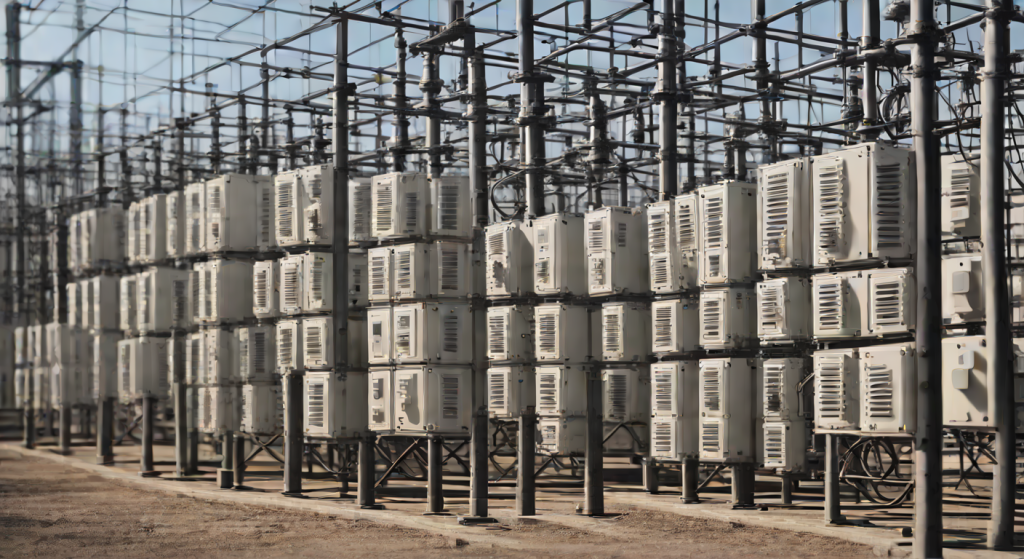
North America holds the largest regional share, supported by utility tariff structures that impose demand charge penalties when facility power factor falls below 0.85 to 0.95 thresholds. A typical 1,000 kW industrial facility operating at 0.80 power factor faces billing adjustments that effectively increase demand charges by 25%. Automatic switched capacitor banks from manufacturers like Eaton and Schneider Electric raise power factor from 0.68 to 0.99 and deliver payback periods under 12 months.
The market segments into passive, active, and hybrid correction solutions. Active PFC systems are gaining traction in data centers and semiconductor facilities where nonlinear loads from UPS systems and variable-frequency drives create harmonic distortion that traditional capacitor banks cannot address alone. Detuned filter reactors and D-STATCOM systems are increasingly deployed alongside fixed capacitor banks to handle dynamic reactive power compensation.
Critical Perspective
A 7.0% CAGR from $2.1 billion to $4.2 billion by 2035 is plausible in a market driven by tightening utility penalty structures — but those penalty structures have moved at a 2-3% annual adoption rate historically, not the pace the forecast implies. Automatic switched capacitor banks face a specific displacement threat: active harmonic filters now correct both power factor and harmonics simultaneously for a 15-20% cost premium, eliminating the need for separate capacitor installations in VFD-heavy facilities. The European automatic power factor correction segment — the largest regional market through 2023 — saw a 12% demand decline in 2024 as new industrial facilities specified active filtration from commissioning rather than retrofitting passive correction. The question the forecast does not address: at what VFD penetration rate does passive capacitor correction become structurally obsolete in new industrial builds, and is that threshold five years away or already past?
Why It Matters
Data center power consumption is expected to reach 1,000 TWh by 2026, up from 460 TWh in 2022, placing unprecedented reactive power demands on distribution systems. Key vendors including Schneider Electric, ABB, Siemens, Eaton, and GE Grid Solutions are expanding their PFC product lines with IoT-enabled controllers, predictive analytics, and smart grid integration. Asia-Pacific is the fastest-growing region as rapid industrialization and expanding data center footprints drive demand for scalable correction solutions.