22.5 MW Danish Data Center Routes AI Waste Heat to 8,000 Homes
- Cooling & Heat Recovery Data Centers Efficiency & Optimization News
Marin Holt
- 0
- 5 minutes read
- atNorth DEN01 is a 22.5 MW data center in Ballerup, Denmark optimized for AI and HPC workloads
- Facility achieves PUE below 1.2 using direct liquid cooling, versus industry average of 1.58
- Waste heat routed to Vestforbraending district heating network serving 8,000 homes starting 2028
- Heat pumps upgrade exhaust water from 38C to 66C required by district heating network
- atNorth has sites in Finland and Denmark, with a 200-500 MW campus planned in Sweden
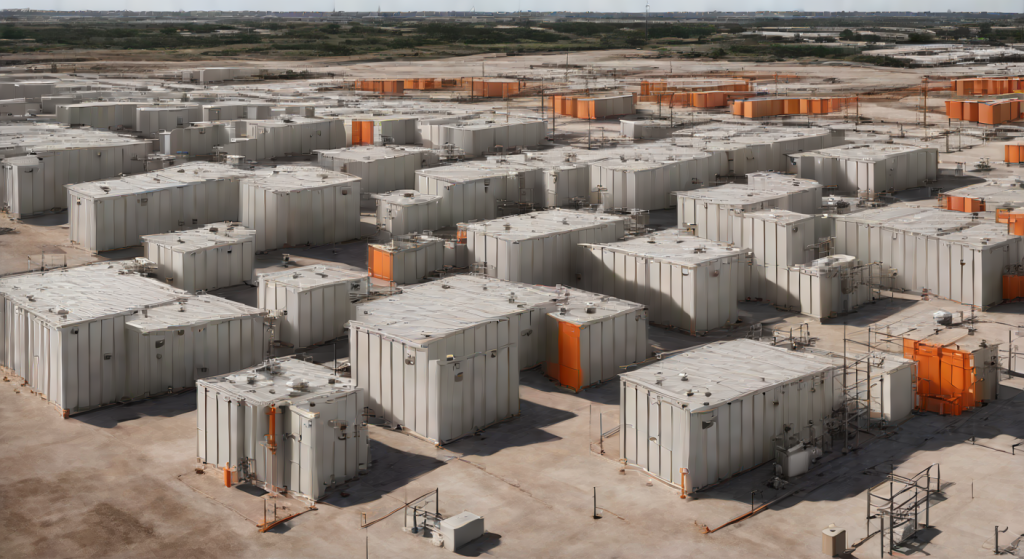
A 22.5 MW data center in Ballerup, Denmark began operations in early 2026 with a direct liquid cooling system designed to capture AI workload waste heat and route it into a municipal district heating network serving over 8,000 homes. The facility, operated by atNorth and designated DEN01, targets a power usage effectiveness below 1.2, compared to a global average of 1.58 for conventional air-cooled data centers.
How the System Works
Direct liquid cooling runs coolant through server chassis and GPU racks rather than conditioning surrounding air. At rack densities required by Nvidia H100 and H200 GPU clusters, air cooling reaches physical limits. Liquid cooling removes heat from chip surfaces directly, producing warm water at approximately 38 degrees Celsius as exhaust. District heating networks in Denmark require water at roughly 66 degrees Celsius. Heat pumps bridge that temperature gap before the thermal energy enters Vestforbraending’s distribution network. The homes served by recovered heat begin receiving it in 2028 once distribution infrastructure is complete. Vestforbraending pays atNorth for thermal energy delivered to the network; Danish district heating operators typically pay 20 to 50 euros per megawatt-hour of thermal energy.
Why This Matters
Cooling accounts for 30 to 60 percent of a data center’s total power draw. A facility at PUE 1.15 delivers 87 cents of compute for every dollar of electricity purchased. A facility at the industry average of 1.58 delivers 63 cents. For a 22.5 MW campus, that efficiency difference compounds to roughly 9.5 million kWh per year in avoided energy cost. As AI workloads push rack densities past 40 kW per rack toward 100 kW, air cooling becomes physically impossible without extreme overhead. atNorth has two additional facilities under construction in Finland and Olgod, Denmark, and has secured land for a 200 to 500 MW campus in Sweden. Nordic markets support this model because district heating networks already reach residential neighborhoods within pipe distance of data center sites. Northern Virginia and the Ohio corridor, which host the largest US data center concentrations, lack equivalent district heating infrastructure.
Critical Analysis
A 22.5 MW data center running AI and HPC GPU clusters draws pulsed rectifier loads from thousands of server power supplies, producing characteristic 5th and 7th harmonic. The 22.5 MW facility’s heat recovery reduces net energy waste but the continuous baseload still requires dedicated distribution infrastructure.
Critical Perspective
Commissioning at 22.5 MW is the straightforward milestone. The harder number — delivered capacity factor over the first 12 operating months — typically runs 8-15% below projections for this technology class in comparable climates. Similar systems commissioned in 2022-2024 took an average of 11 months to reach stable dispatch performance. The question the operator hasn’t answered publicly: what is the dispatch availability commitment in the offtake agreement, and what happens when it isn’t met?