Behind-the-Meter Microgrids Scale to Meet Industrial Power Demand
- Industrial & C&I Microgrids Microgrids News
Marin Holt
- 0
- 8 minutes read
- Lawrence Berkeley National Laboratory's Queued Up 2024 report found more than half of all generation interconnection applicants withdraw before completing the process
- Federal interconnection queues held nearly 2,600 GW of proposed generation as of 2024, with average wait times of 2 to 4 years before interconnection studies complete
- Developers bypass interconnection queues entirely by siting generation on private land adjacent to the load, eliminating FERC-jurisdictional interconnection requirements
- Pacifico Energy's GW Ranch in Pecos County, Texas plans up to 5 GW of private off-grid generation serving data center and industrial loads without a grid connection
- FERC Order 2023 (2023) introduced first-come, first-served queue reform with cluster processing, but critics say it does not address the fundamental shortage of transmission capacity for new interconnection
US industrial developers and technology companies are building private power generation assets at a scale once reserved for utilities, driven by interconnection queue delays that have stretched to 3-5 years for large projects and led to withdrawal of more than half of all filed requests. Behind-the-meter microgrids now reach gigawatt size.
The Interconnection Problem
The federal interconnection queue for large generation projects has nearly doubled in wait time over the past three years. Projects representing hundreds of gigawatts of planned capacity sit in queue limbo, delayed by transmission studies, upgrade cost disputes, and congested substations. More than half of queued projects are eventually withdrawn. For manufacturers, data centers, and fleet operators that need power on a tight construction timeline, waiting is not an option.
The solution gaining momentum in 2026: build behind the meter. By siting generation on private land adjacent to the load, developers bypass the interconnection queue entirely. The facility connects to its own power source rather than drawing from the grid, eliminating years of regulatory delay.
Projects Scaling Into Gigawatt Range
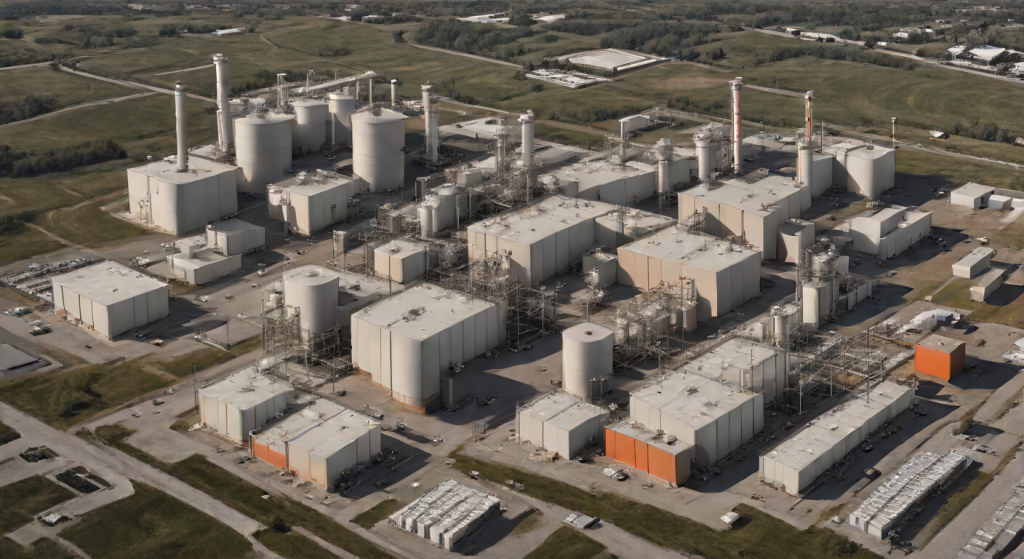
Pacifico Energy is developing GW Ranch in Pecos County, Texas, targeting 1 GW of operational capacity by 2028. The project combines simple-cycle gas turbines with 1.8 GW of battery storage and approximately 1 GW of solar. Its primary customers are AI data center developers who require power faster than the grid interconnection process allows. Pacifico’s COO Kevin Pratt cited aerospace and semiconductor manufacturers in Southern California and Hawaii who could not secure utility capacity increases on acceptable timelines.
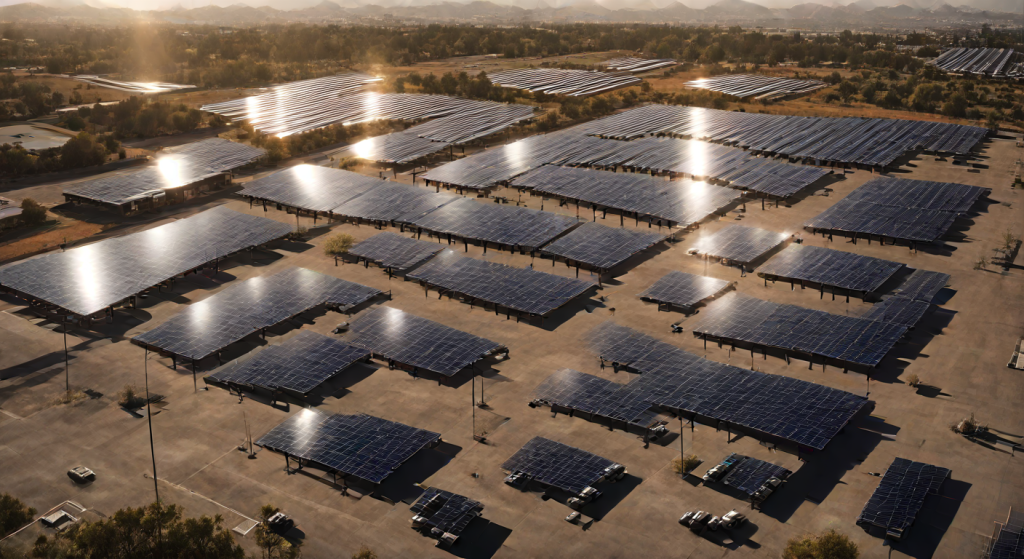
In Yuma County, Arizona, BrightNight and Cordelio Power are building the Pioneer Clean Energy Center: 300 MW of solar combined with 1,200 MWh of battery storage. The project supports Arizona Public Service load growth without adding to the state’s already-constrained interconnection queue.
Why Industrial Facilities Are Driving This
Three load categories are pushing behind-the-meter generation into mainstream use. AI data center developers need 300 MW or more per campus, far beyond what most regional grids deliver on any fast-track schedule. Manufacturing facilities reshoring from overseas face multi-year utility timelines that conflict with production commitments. Fleet electrification projects, including transit depots and truck yards, require megawatt-scale charging infrastructure that stresses local distribution systems.
Each of these loads shares a common constraint: the utility grid cannot respond fast enough. Behind-the-meter generation sidesteps that constraint by making the project its own utility.
Implementation Realities
The economics of private grid development depend on fuel availability, land access, and storage costs. West of the El Paso natural gas hub, pipeline capacity is tight, pushing developers toward solar-dominant designs with extensive battery buffers. East of El Paso, gas turbines offer faster dispatchability at lower capital cost per MW than storage. Hybrid designs combining gas, solar, and batteries are the most common configurations in 2026 project announcements.
Storage costs have fallen enough that 4-8 hour battery dispatch underpins most of these projects. A 1.8 GW battery at GW Ranch represents a commitment to grid independence even during multi-day weather events. The financing structure follows project finance norms: long-term offtake agreements from anchor customers, construction loans, and tax equity from Inflation Reduction Act credits. Private grid economics work only when load commitments are firm and long-term.
Source: PV Magazine USA
Critical Analysis
Gigawatt-scale behind-the-meter microgrids mixing natural gas, solar, and battery storage create multi-source harmonic injection at industrial PCCs. Private generation at gigawatt scale bypasses congested interconnection queues but concentrates fault current contribution at industrial substations without coordinated relay protection.
5-Year Projection
The 5-year trajectory indicates severe supply chain bottlenecks for Behind-the-Meter Generation, pushing developers toward alternative topologies and domestic manufacturing pipelines.
Critical Perspective
The federal interconnection queue has doubled in wait time over the past three years, with more than half of queued projects eventually withdrawn. This raises skepticism when considering companies like Pacifico Energy, which is developing GW Ranch targeting 1 GW of operational capacity by 2028, a scale that seems ambitious given the historical precedent of Solyndra, which filed for bankruptcy despite its grand solar ambitions. The Pioneer Clean Energy Center in Yuma County, Arizona, with its 300 MW of solar and 1,200 MWh of battery storage, also prompts the question: will this project truly bypass the interconnection queue and avoid the fate of Solyndra, or will it too succumb to the delays and challenges that have plagued similar projects?