North Carolina Invests M in Emergency Microgrids After Hurricane
- Emergency & Local Government Microgrids News
Marin Holt
- 0
- 6 minutes read
- NC DEQ investing $5M from $10.4M federal IIJA allocation for microgrid deployment
- Up to 24 stationary microgrids across six Helene-affected counties plus two mobile Beehive hubs
- Hot Springs Microgrid provided 8 days of emergency power after Hurricane Helene destroyed substation
- Five microgrid sites selected by December 2025; project completion targeted June 2027
- Colorado has invested $15.4M in 28 microgrid resilience projects since 2022 for comparison
The North Carolina Department of Environmental Quality (DEQ) State Energy Office announced a $5 million investment in August 2025 to deploy up to 24 stationary microgrids and two mobile microgrid hubs across the state. The initiative, funded through $10.4 million in federal Infrastructure Investment and Jobs Act allocations, directly responds to Hurricane Helene, which left an estimated one million western North Carolinians without power in 2024.
What Is Being Built
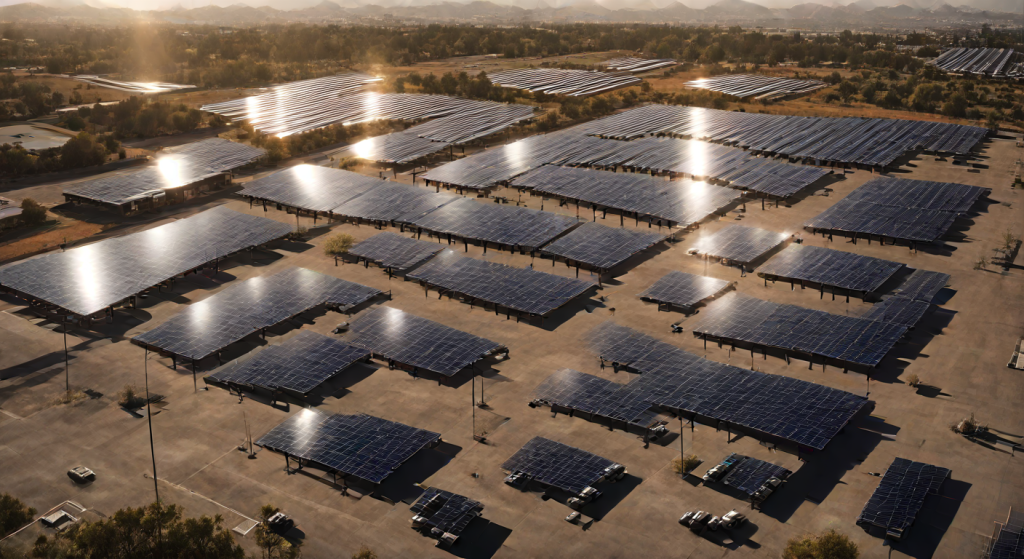
Up to 24 permanent solar-plus-battery microgrids will be installed across six Helene-affected counties, providing backup power to critical community facilities including fire stations, emergency shelters, and water treatment plants. Two mobile “Beehive” microgrid hubs will serve the entire state as lending libraries for solar and battery equipment, one based in western North Carolina and one in the eastern part of the state. The project is a collaboration between DEQ, the Land of Sky Regional Council, NC Sustainable Energy Association, and Footprint Project, with more than $1 million in donated clean tech equipment supplementing the federal funding.
Site selection began in fall 2025, with five sites chosen by December 2025. Project completion is targeted for June 2027. The existing Hot Springs Microgrid in Madison County proved the concept during Helene, providing the town with power for eight days after a large substation was destroyed and feeder lines washed away.
Critical Analysis
24 microgrids must maintain stable voltage and frequency during islanding events; seamless transfer between grid-tied and standalone modes is critical for emergency operations. Hurricane Helene destroyed substations and feeder lines across western NC, leaving 1M without power; microgrids provide localized resilience against centralized grid failures.
5-Year Projection
During the 5-year outlook, capitalized Solar PV + Battery Microgrids ventures will drastically compress technology iteration cycles, demanding continuous utility-level adaptations to accommodate high-velocity product launches.
Critical Perspective
North Carolina plans to deploy 24 microgrids with $5 million in state funds. Colorado has already funded 28 microgrid projects totaling $15.4 million since 2022. California’s 2019 wildfire microgrid mandates resulted in significant cost overruns and delays. Will these 24 microgrids actually provide reliable power when the grid fails?
Why It Matters
Hurricane Helene exposed critical vulnerabilities in centralized grid infrastructure across the Southeast. North Carolina’s initiative is one of several state-level programs responding to increasing disaster frequency. Colorado has invested $15.4 million in 28 microgrid projects since 2022 through its Microgrids for Community Resilience program. NREL research following Helene documented how fire stations serving as community resource hubs were limited to single diesel generators, while microgrids could have powered multiple critical facilities simultaneously. The mobile Beehive model is particularly notable: rather than permanent installations at fixed sites, it creates shared infrastructure accessible to any community organization during emergencies.