Active Harmonic Filter Market Projected to Reach $1.1B by 2030
- Analysis Harmonics (THD) Power Quality
Marin Holt
- 0
- 6 minutes read
- Active harmonic filter market projected to reach $1.11 billion by 2030 from $760M in 2025
- 62% of industrial plants report THD exceeding 5% voltage limit
- Harmonic distortion causes average equipment downtime of 31+ hours per facility annually
- MTE SyntriX AHF achieves 99%+ efficiency with sub-50-microsecond response time
- Power quality monitoring market reached $370 million in 2026, growing at 4.6% CAGR
The global active harmonic filter market is projected to grow from $760 million in 2025 to $1.11 billion by 2030 at a 7.8% compound annual rate, driven by tightening IEEE 519-2022 enforcement and the proliferation of non-linear loads across manufacturing, data centers, and renewable energy installations. The broader harmonic filter market — including passive solutions — reached $6.95 billion in 2024 and is forecast to hit $10.76 billion by 2031, as nearly 62% of industrial plants now report total harmonic distortion exceeding the 5% voltage THD limit.
Technical Details
IEEE 519-2022 brought key revisions that affect compliance calculations: total demand distortion now uses Itotal rather than Iharm, slightly lowering TDD percentages, and the standard now explicitly recognizes active front-end rectifiers and active harmonic filters alongside traditional phase-shifting transformer approaches. For medium voltage systems (601V to 69 kV), the voltage THD limit remains 5%, while low voltage systems must stay below 8%.
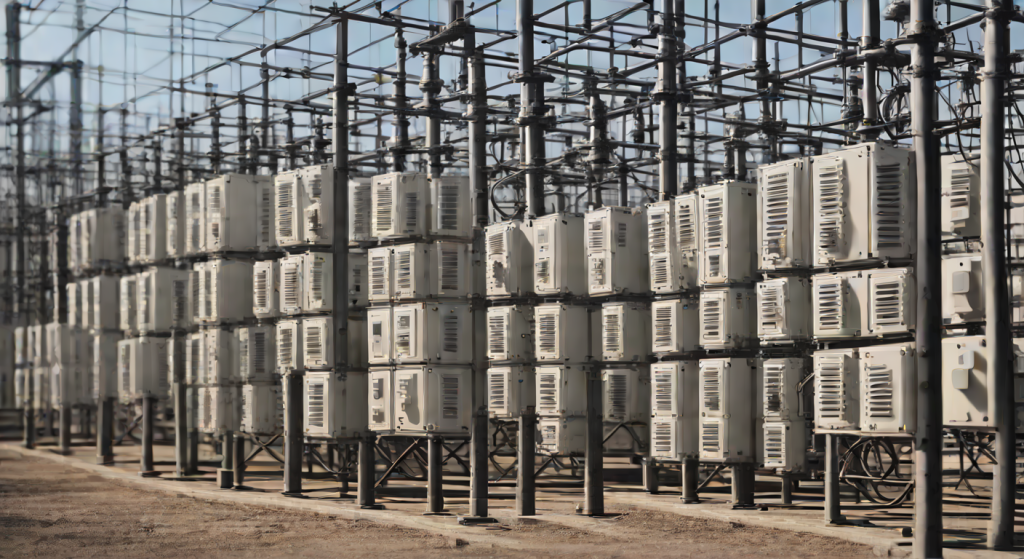
MTE Corporation launched its SyntriX active harmonic filter in September 2025, featuring silicon carbide power electronics that achieve over 99% efficiency with sub-50-microsecond response time, mitigating harmonics up to the 50th order. The modular design scales from 50A to 450A-plus in a footprint 30% smaller than prior generations. Case studies from industrial deployments show active harmonic filters reducing current THD from 24% to below 5%, eliminating capacitor bank failures and extending transformer life. In one metallurgy facility, excessive harmonics destroyed three transformers rated 1,500 to 2,500 kVA within a single year, with each production interruption costing an estimated $22,000 per hour.
Critical Analysis
Active harmonic filters directly address THD compliance under IEEE 519-2022, reducing current harmonics from 24% to below 5% and eliminating capacitor failures in industrial facilities. 62% of industrial plants exceed 5% THD limits.
5-Year Projection
The 5-year trajectory indicates severe supply chain bottlenecks for Active Harmonic Filters (AHF), pushing developers toward alternative topologies and domestic manufacturing pipelines.
Critical Perspective
The active harmonic filter market is projected to reach $1.1 billion by 2030. This growth outpaces the 4.6% annual expansion of the broader power quality monitoring market, which reached $370 million in 2026. The 2019 implementation of the EU’s Ecodesign directive for industrial motors, which mandated higher efficiency, did not prevent a significant increase in motor failures due to power quality issues. Will this projected market growth truly address the root causes of harmonic distortion or simply treat the symptoms?
Why It Matters
Harmonic distortion accounts for 32% of monitored power quality events and causes average equipment downtime exceeding 31 hours per facility annually. The power quality monitoring products market reached $370 million in 2026 and is growing at 4.6% annually. As variable frequency drives, EV chargers, and inverter-based renewable generation add non-linear loads to industrial and commercial power systems, active harmonic filtering is shifting from an optional power quality measure to a baseline requirement for IEEE 519 compliance and equipment protection.