Williams Builds 400 MW Off-Grid Gas Plant
- AI Energy Demand Data Centers Grid Capacity News
Marin Holt
- 0
- 6 minutes read
- Ohio Power Siting Board approved Williams Companies' Socrates project June 9, 2025 for Meta's New Albany campus
- 400 MW total (two 200 MW facilities) with combined turbines: 3 Solar Titan 250, 9 PGM 130, 3 Siemens SGT400, 15 Caterpillar 3520 engines
- Plant operates entirely off-grid with no physical connection to the electric grid; natural gas supplied via two 24-inch pipelines
- Construction began Q3 2025; target completion Q3-Q4 2026; total investment exceeds $2 billion
- Bypasses 5-year utility interconnection queue by delivering power directly behind Meta's campus fence
Williams Companies received Ohio Power Siting Board approval on June 9, 2025 to construct 400 megawatts of dedicated natural gas generation for Meta’s 740-acre data center campus in New Albany, Ohio. The Socrates plant will not connect to the public electric grid. It delivers power entirely behind the meter, bypassing the interconnection queue that now averages five years for large industrial loads.
What Is Being Built
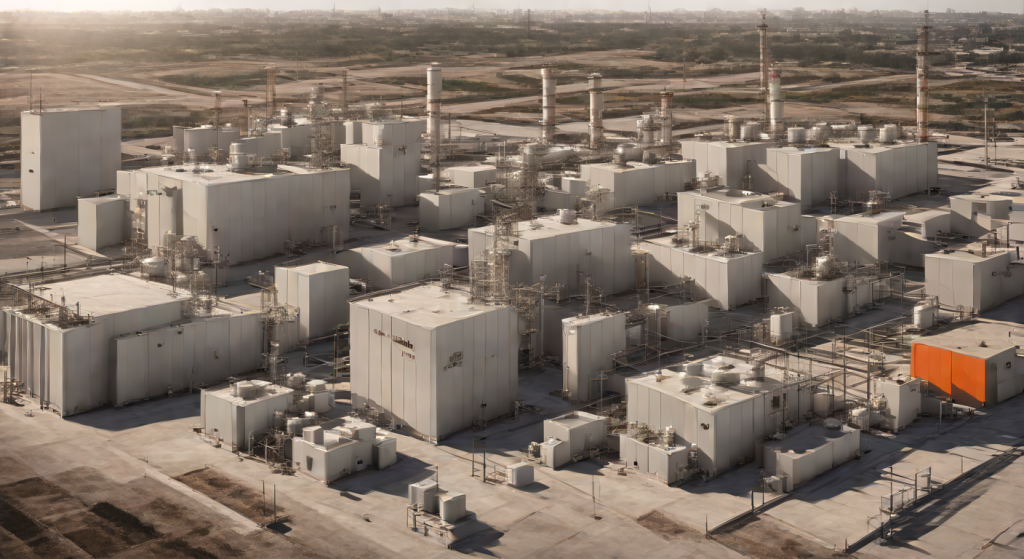
Socrates consists of two 200 MW generation facilities on separate 20-acre plots within the New Albany Business Park. Combined equipment across both sites includes three Solar Turbines Titan 250 combustion turbines, nine Solar Turbines PGM 130 units, three Siemens Energy SGT400 turbines, and 15 Caterpillar 3520 reciprocating engines. Eight Caterpillar C15 diesel generators rated 500 kW each provide black-start capability. Natural gas supply arrives via two dedicated 24-inch diameter pipelines with firm third-party delivery contracts. Ohio Power Siting Board classified the project as a qualifying power generating facility. The data center electricity consumer in OPSB filings is Sidecat, LLC, an affiliate of Meta.
Why the Off-Grid Model Changes the Industry
The Socrates plant sends no power across transmission lines. Every kilowatt-hour stays inside the campus fence. Williams delivers pipeline gas; the data center converts it to electricity on site. This arrangement eliminates the interconnection study process, the transformer procurement timeline that now runs 128 weeks for large substation equipment, and the capacity auction costs that hit $16.4 billion in PJM’s December 2025 cycle. For Meta’s Prometheus AI supercluster development, on-site gas generation compresses the timeline from interconnection request to operational power from five or more years to under 18 months. Williams reported in its 2026 investor briefings that the Socrates model would be replicated for other hyperscale customers as its Power Innovation business grows. ERCOT’s interconnection queue holds 226 GW of pending data center load; the U.S. national queue totals 1,400 GW. On-site generation at the scale Williams is building targets this backlog directly.
Critical Analysis
Four hundred megawatts of mixed combustion turbine and reciprocating engine generation operating as an isolated island must maintain IEEE C37.95 voltage and frequency. The 400 MW installation in New Albany, OH reduces grid-facing load but requires interconnection engineering to manage backfeed and protection coordination.
Timeline and Investment
Construction on the first 200 MW Socrates South facility began in Q3 2025. Completion targets Q3 to Q4 2026. The second facility follows the same schedule. Total project investment exceeds $2 billion across both sites. Williams funded construction through its project finance subsidiary Will-Power OH. The Ohio Power Siting Board approved the project under expedited review criteria applicable to facilities that serve a single customer’s load and do not export to the grid.
Critical Perspective
The article highlights a 400 MW off-grid gas plant for Meta’s data center. This project bypasses the five-year interconnection queue, unlike projects such as the proposed offshore wind farms that face significant grid connection delays. The Tennessee Valley Authority’s Kingston Fossil Plant, a coal-fired facility, was decommissioned due to environmental and economic factors, demonstrating the challenges of large-scale, long-term energy infrastructure. Will this off-grid model truly reduce overall emissions when it relies on natural gas for a facility that could otherwise be powered by renewable sources?