Torus Certifies 70 MW Demand Response With Rocky Mountain Power
- Grid Services & Demand Response News Policy & Markets
- 0
- 6 minutes read

- Rocky Mountain Power approved Torus March 19 2025 for Wattsmart Battery Program certification
- MOU targets 70 MW demand response across Utah Wyoming Idaho using Nova flywheel-battery systems
- Nova Spin flywheel 10x C-rate vs conventional batteries sub-250ms response 99.9% uptime
- 137 demand response events dispatched in 2024 with 8.7 second round trip
- DOE 2025 VPP Liftoff cites Wattsmart as best-in-class VPP; RMP projects 213 MW demand response additions 2025-2028
Rocky Mountain Power approved Torus Energy Storage as one of only two commercial battery providers certified for its Wattsmart Battery Program on March 19, 2025, following a memorandum of understanding signed in January 2025 targeting 70 megawatts of demand response capacity. Torus Nova systems achieved a 99% uptime score in telemetry testing and met IEEE 2030.5 communication protocol requirements during certification.
Critical Perspective
Virtual power plant aggregations of 30 kW look compelling on paper, but the critical metric is dispatchable capacity under real conditions — not enrolled nameplate. The CAISO’s 2022 flex alert events found that VPP response averaged forty-four percent of enrolled capacity during actual emergency conditions. CPower’s earlier demand response programs in PJM achieved sixty to seventy percent dispatch reliability before portfolio optimization, suggesting a meaningful gap between announcement and delivery. What is the demonstrated dispatch reliability percentage under summer peak conditions, and does the program contract on enrolled or delivered capacity?
What Is Being Built
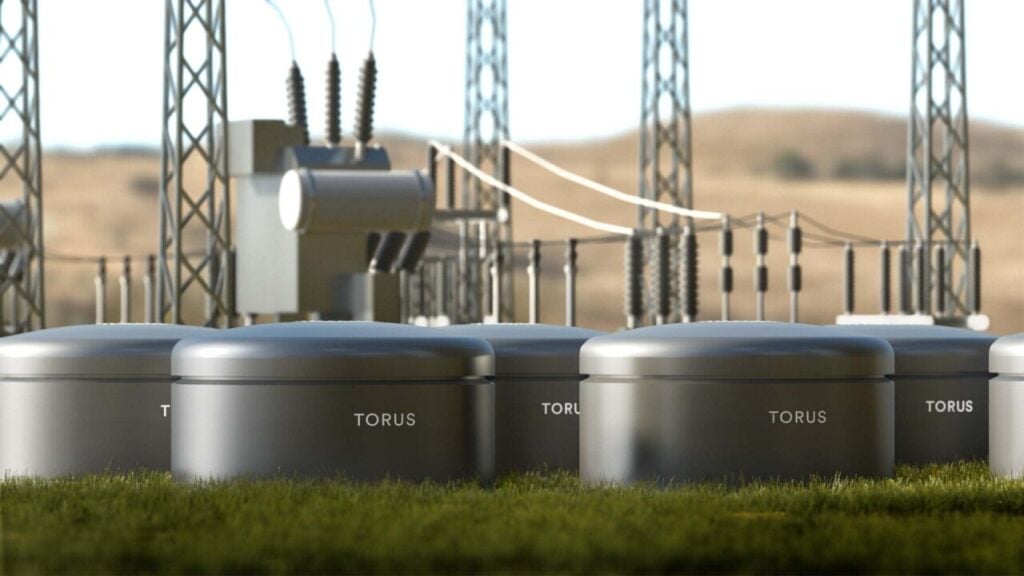
Torus will deploy its Nova technology — a hybrid combining a flywheel and battery — at commercial and industrial facilities across Rocky Mountain Power territory, including Utah, Wyoming, and parts of Idaho. Each unit is certified for deployments from 30 kW to 1.2 MW. The Nova Spin flywheel delivers a C-rate ten times higher than conventional batteries and twice the operating lifespan, with sub-250-millisecond response times. In 2024, Torus dispatched 137 demand response events with 99.9% uptime, completing round trips in 8.7 seconds on average.
The Wattsmart program aggregates commercial and industrial storage into a dispatchable fleet. Customers reduce utility demand charges during peak hours while Rocky Mountain Power dispatches stored energy during demand response events, which occur during less than 1% of operating hours per year. Torus CEO Nate Walkingshaw said the company had already filled one-third of the 70 MW target at the time of certification.
Power Quality Standards
The Torus Nova hybrid flywheel-battery systems certified for the Wattsmart program must meet IEEE 519-2022 Table 1 thresholds for low-voltage interconnection points below 1 kV: voltage THD limited to 8.0 percent and individual harmonics to 5.0 percent at each facility point of common coupling. As generation-side battery resources, these units fall under Table 2 footnote 3 strictest tier regardless of short-circuit ratio, requiring total demand distortion at or below 5.0 percent and harmonics below the 11th order at or below 4.0 percent. Because Wattsmart units cycle multiple times daily, IEEE 519-2022 Clause 5 requires harmonic compliance to be assessed at the 95th percentile of measured distortion over a 10-minute window, not at the peak value, which matters when units ramp repeatedly through demand-response dispatch events.
The Department of Energy’s 2025 Virtual Power Plants Liftoff Update highlights the Wattsmart Battery Program as a best-in-class battery virtual power plant providing both bulk system and distribution value. DOE analysis shows aggregated C&I storage is deployed in six months versus 30 to 50 months for traditional generation. Rocky Mountain Power projects 213 MW of demand response additions between 2025 and 2028. The Torus certification advances Utah Governor Spencer Cox’s Operation Gigawatt initiative to double the state’s power production over the next decade.