Foss & Company Backs Montgomery County’s 6.8 MW Transit Microgrid With $30 Million in Section 48 Tax Equity
- Industrial & C&I Microgrids Microgrids News
Marin Holt
- 0
- 7 minutes read
- Tax Equity Investment: $30 million
- Microgrid Capacity: 6.8 MW
- Solar Array: 4.8 MW
- Battery Storage: 2 MW / 6.9 MWh
- Annual Generation: 6,000 MWh
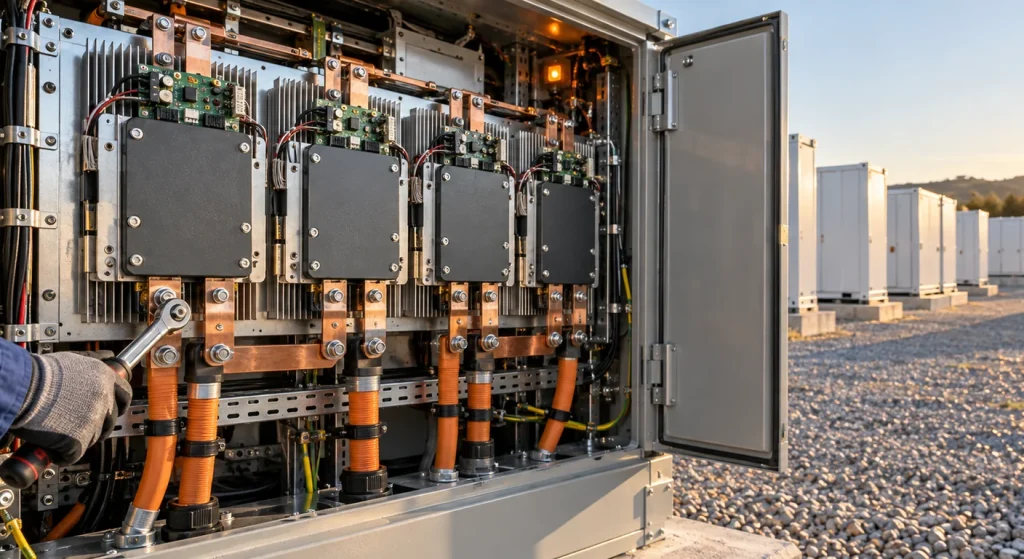
Foss & Company closed a roughly $30 million Section 48 tax equity investment in the 6.8 MW microgrid at Montgomery County, Maryland’s bus depot in Derwood. The San Francisco investor announced the deal on July 8, 2026. AlphaStruxure built and owns the system under an energy-as-a-service contract, and the microgrid reaches commercial operation this month.
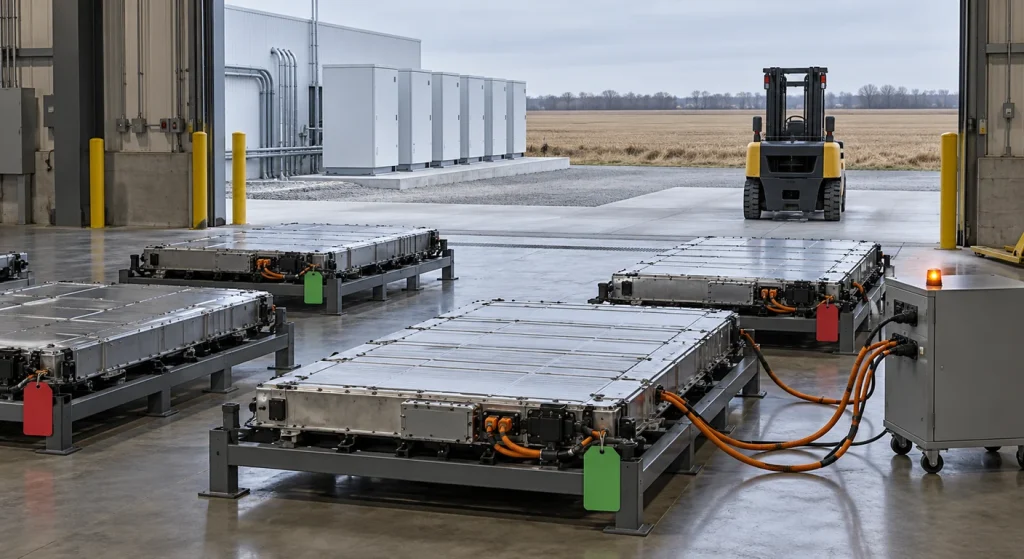
The system pairs a 4.8 MW solar array with a 2 MW, 6.9 MWh battery. It also carries 2.6 MW of electric bus charging. Montgomery County put 9,800 panels on 16 canopies over the David F. Bone Equipment Maintenance and Transit Operation Center. At full buildout the depot charges 200 Ride On buses and serves five buildings. The county expects more than 6,000 MWh of onsite generation a year.
The Maryland Energy Administration added $1.6 million through its Resilient Maryland grant program. County officials cut the ribbon in May 2026.
The county paid no capital cost. AlphaStruxure designs, builds, owns, operates and maintains the plant, and the county buys the energy service instead. That structure leaves the tax credits with the owner, not the taxpayer. So the project needs an investor with a large federal tax bill to turn them into cash. Foss & Company took that role. It supplies money up front, then collects the investment tax credit plus depreciation over a five to six year hold.
Foss & Company has deployed more than $11 billion since 1983. It built its renewables desk about nine years ago, mostly around distributed solar. This is its first microgrid deal and its first with AlphaStruxure.
Why It Matters
The deal size is the story. Bryen Alperin, a partner and managing director at Foss & Company, said the firm usually works above $20 million of tax credits and prefers $50 million to $100 million. A $30 million microgrid ticket sits at the bottom of that band. Alperin also said the largest banks still favor utility-scale solar, because a few big projects cost less to underwrite than many small ones.
That math is the real constraint on commercial and industrial microgrids. A 6.8 MW campus system generates a tax credit too small for the investors who clear utility-scale portfolios, and slightly too small for the specialists. Developers who cannot assemble a credit of that size either wait, bundle projects together, or give up the credit. Every microgrid that fails to monetize its ITC gets more expensive. The energy-as-a-service price the customer pays goes up with it.
Montgomery County now runs several microgrid sites. The transit depot is the one with a repeatable financing template attached. Whether that template travels depends less on the engineering than on how many tax equity desks decide a $30 million ticket is worth the paperwork.
Critical Perspective
Foss & Company committed about $30 million to a 6.8 MW microgrid, a ticket its own managing director places at the bottom of the firm’s preferred range. The announcement does not say who finances the next one, and AlphaStruxure has to repeat that search for every depot it builds, because Bryen Alperin said the largest banks still prefer utility-scale solar. Residential solar hit the same wall and got around it by pooling thousands of small systems into single funds, which is how Sunrun and SolarCity reached tax equity at all. No comparable aggregator exists for commercial microgrids, so which side is supposed to build one, the developers or the investors?
Sources
- Microgrid Knowledge (2026-08-05)
- Energy-Storage.News (2026-07-23)
- Foss & Company (PR Newswire) (2026-07-08)
- Mass Transit (2026-05-05)