Google to Fund $10.8 Million Ohio Power Transmission Upgrade to Speed Data Center Power
- Data Centers Grid Capacity News State & Local Regulation
Marin Holt
- 0
- 8 minutes read
- Google transmission spending: $10.8 million
- DOE estimated capacity gain from advanced conductors: 1.5 times
- Workforce and supply chain support: $1 million
Google plans to spend $10.8 million on advanced transmission technology in Columbus, Ohio, under a new arrangement with Ohio Power Company, according to Latitude Media. Ohio Power is a subsidiary of American Electric Power. The plan still needs approval from the Public Utilities Commission of Ohio and the Ohio Power Siting Board, DatacenterDynamics reported.
Google and Ohio Power plan to test a new way for the hyperscaler to pay for advanced transmission upgrades. Latitude Media reported that the arrangement aims to unlock faster access to power while shielding other customers from the costs. Google hopes other tech companies will adopt its model.
Google also committed $1 million in funding support for workforce and supply chain bottlenecks, according to DatacenterDynamics. That support targets lineworker training, apprenticeship pathways, and supply chain constraints in Ohio. The funding sits alongside the transmission upgrade in Columbus.
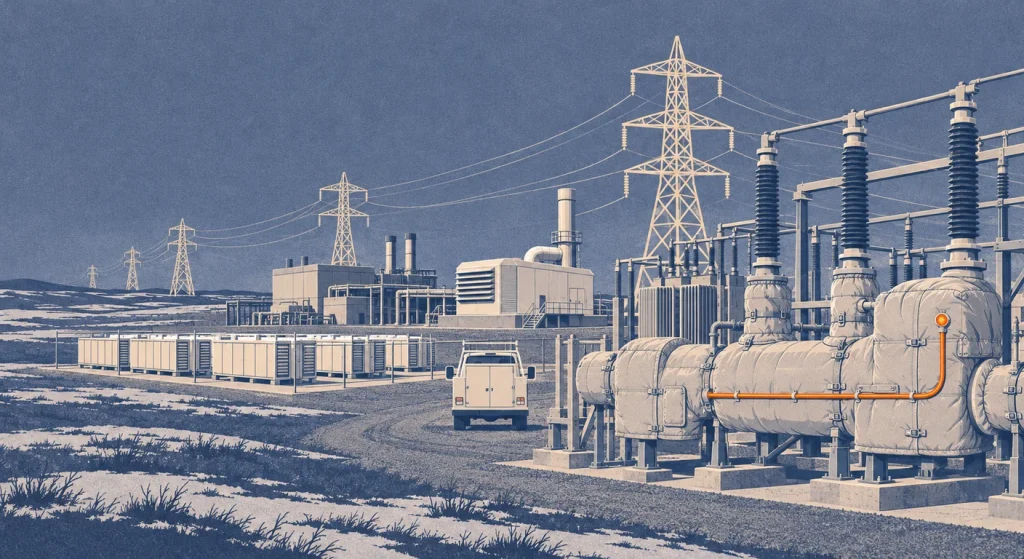
The upgrade centers on advanced conductors. DatacenterDynamics reported that these high-performance overhead power lines use lightweight composite cores rather than traditional steel. The conductors carry significantly more electricity than conventional lines while reducing line losses.
The U.S. Department of Energy estimates that advanced conductors increase line capacity by more than 1.5 times at a similar weight per foot, according to DatacenterDynamics. Latitude Media reported that advanced transmission technologies offer a faster and cheaper route than building new lines. The outlet added that these upgrades save ratepayers money over the long term and help deliver the speed-to-power that data center developers demand.
The Ohio deal builds on earlier work between Google and the utility. Zuckerman told Latitude Media that Google’s investment in advanced reconductors is an extension of its clean transition tariff work with AEP. Marc Reitter, Ohio Power Company president and CEO, pointed to the utility’s record. “American Electric Power has led the nation in transmission innovation for generations, and this collaboration with Google builds on that legacy here in Ohio,” Reitter said.
State policy helped set the stage for the agreement. Ohio passed a law encouraging partnerships between data center operators and electric utilities on grid assets. Latitude Media reported that the law is part of a broader push by state and federal policymakers to accelerate adoption of advanced transmission technologies.
The arrangement must clear two state bodies before work begins. DatacenterDynamics reported that the initiative depends on approval from the Public Utilities Commission of Ohio, known as PUCO, and the Ohio Power Siting Board.
Google wants other large power buyers to follow. Other tech companies including Amazon, Microsoft, and Anthropic could adopt a similar model, Paradise told Latitude Media. Those companies need fast access to electrical capacity for their own data center expansions.
Why It Matters
Data center developers want speed-to-power, and new transmission lines take years and large sums to build. Advanced conductors raise the capacity of existing corridors instead. Latitude Media reported that this route is faster and cheaper than new lines and saves ratepayers money over the long term.
The Ohio pilot also tests who pays for grid upgrades. Under the plan, Google funds the $10.8 million transmission work directly. The arrangement aims to shield other Ohio Power customers from those costs.
The next step sits with state regulators. PUCO and the Ohio Power Siting Board must both approve the plan. If they do, Amazon, Microsoft, and Anthropic could look to the same framework as they seek power for new data centers.
Critical Perspective
Google plans to spend $10.8 million on advanced transmission technology to accelerate power access for its Columbus data centers, according to Latitude Media, but the pilot still faces regulatory review from state officials. DatacenterDynamics reported that the initiative depends on approval from both the Public Utilities Commission of Ohio and the Ohio Power Siting Board before any physical installation can proceed. Google also committed $1 million in funding support for local workforce and supply chain bottlenecks, according to DatacenterDynamics, yet addressing labor constraints cannot guarantee that utilities will replicate this voluntary corporate funding structure elsewhere. Will state regulators approve an arrangement that allows a single hyperscaler to pay for grid upgrades without shifting unforeseen downstream maintenance costs onto ordinary ratepayers?