Doral Completes Indiana’s 1.3 GW Mammoth Solar, But the Utilities Buying Its 900 MW Are Still Unnamed
- Capacity & Wholesale Markets News Policy & Markets
Marin Holt
- 0
- 7 minutes read
- Final phases brought online: 900 MW
- Full site capacity: 1.3 GW
- Construction debt closed May 2025: US$1.3 billion
- Figure cited in completion coverage: $285 million
- Commercial operation date: October 6, 2026
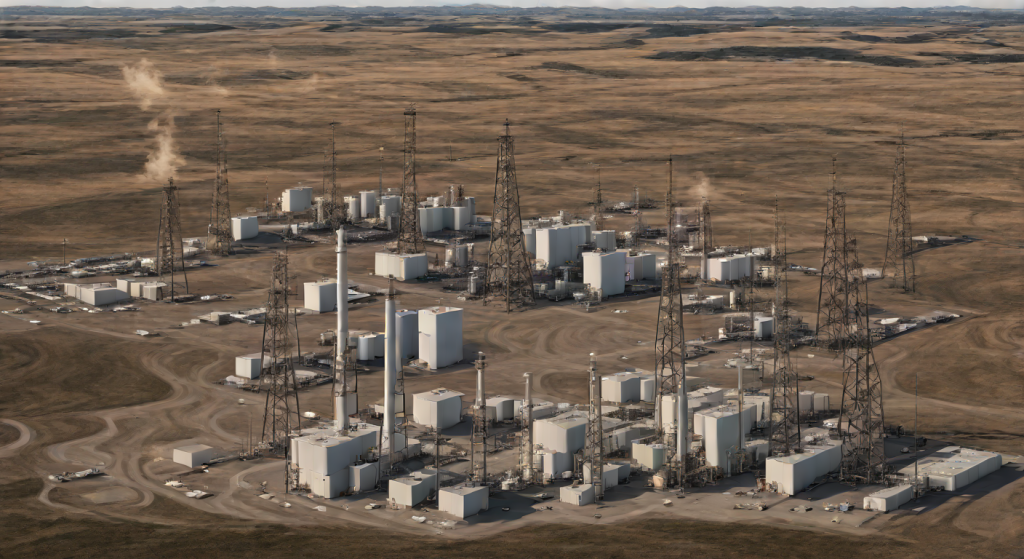
Doral Renewables started commercial operations at the last three phases of Mammoth Solar on October 6, 2026, completing a 1.3 GW site spread across Pulaski and Starke counties in northern Indiana. The three phases, Mammoth South, Mammoth Central I and Mammoth Central II, run 300 MW each for 900 MW in total. Bechtel built them in 18 months, with up to 1,800 workers on site a day at peak and up to 20,000 panels installed in a single day.
All three of those projects are backed by long-term power purchase agreements, according to coverage of the project financing. That coverage describes the counterparties only as “major utilities” and names none of them.
What Got Built
Mammoth Solar reached full output in stages, and the final three phases are the ones that completed the site. Those 900 MW closed a US$1.3 billion construction debt package in May 2025, arranged in three pieces: $412 million in construction-to-term loan facilities, $614 million in tax equity bridge loans and a $259 million letter of credit facility. KeyBanc Capital Markets, Banco Santander and HSBC Bank led the round. Truist took part in Doral’s first tax equity transaction. PV Tech describes the three phases as part of a US$1.5 billion Mammoth Solar facility.
Coverage of the October ceremony carries a different figure. Northwest Indiana Business Magazine reports that “the $285 million projects represent 900 megawatts of clean energy capacity.” No source states what that $285 million covers. It is not the build cost of those phases, because the same 900 MW carried $1.3 billion of construction debt when that financing closed in May 2025.
Who Buys the Power
This is the gap in the record. A 1.3 GW complex is now running in northern Indiana, and the identity of the utilities contracted to buy its output is not public. Nick Cohen, president and chief executive of Doral Renewables, framed the ceremony around the host county rather than the offtake. He called the day “the culmination of true partnership between the Pulaski County community and Doral.” Suzanne Jaworowski, Indiana Secretary of Energy, said the state needs “every electron we can get on the grid.”
Why It Matters
Unnamed offtake makes a project hard to price from the outside. An Indiana ratepayer cannot tell whether this power serves in-state load or leaves the state under contract, and a competing developer cannot read the market signal from a PPA it is unable to see. The disclosure that matters next is the counterparty list, not the ribbon cutting. Doral also says it is pursuing agrivoltaics on the site, with specialty crops and livestock grazing between the rows, which gives Pulaski County a second claim on land already under lease.
Critical Perspective
Doral finished the final 900 MW and the site’s full 1.3 GW without naming a single utility on the other side of the contracts. Bechtel, KeyBanc Capital Markets, Banco Santander and HSBC Bank are all named in the financing record, so the disclosure gap sits specifically on the offtake. The $285 million figure in the completion coverage cannot be the build cost, because the same 900 MW closed US$1.3 billion of construction debt in May 2025. Which utilities signed, and does any of that power stay inside Indiana?