DOE Backs Alaska’s $418 Million Beluga-Healy Line With Up to $150 Million, But Sets No In-Service Date
- FERC & Federal News Policy & Markets
Marin Holt
- 0
- 8 minutes read
- DPA funding: Up to $150 million
- Non-federal share: $268 million
- Total planned investment: $418 million
- New line: 223-mile overhead line
- Voltage: 230-kilovolt
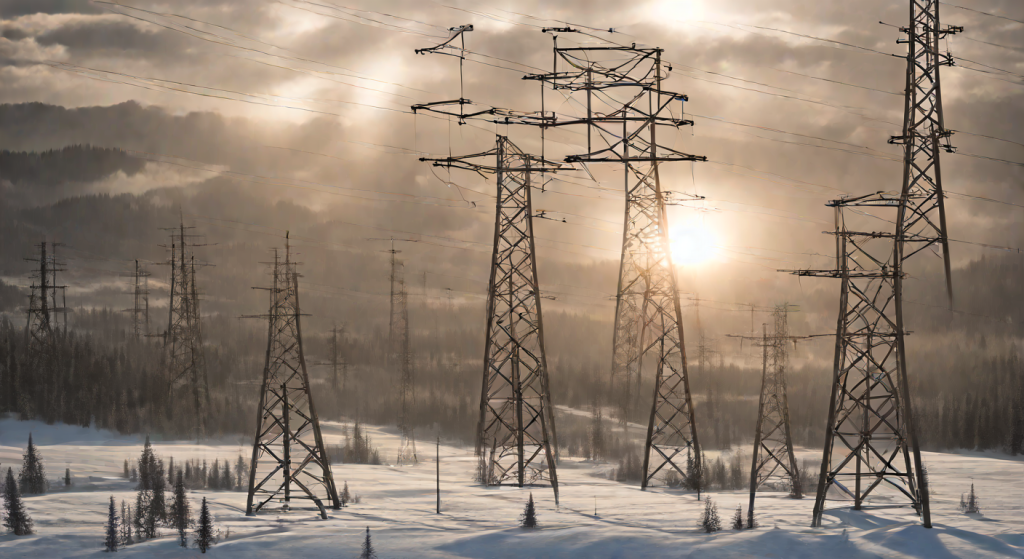
The U.S. Department of Energy said on October 5 that it intends to put up to $150 million of Defense Production Act money into the Alaska Energy Authority’s Beluga-Healy Transmission Project, a 223-mile line that would give Interior and Southcentral Alaska a second high-voltage tie. The federal share would sit alongside $268 million from non-federal sources, for a planned total of $418 million. DOE called that number a preliminary planning estimate. And it announced an intent, not a signed agreement.
The congressional delegation’s account is more specific about the design than DOE’s is. It describes a 223-mile, 230-kilovolt overhead line running from the Beluga substation through West Susitna, where a new substation would be built, then toward Willow and north to existing infrastructure at Healy. Built as described, the line would hand grid operators a second path between the state’s densest population centers and its largest military bases. DOE expects that to lower electricity costs and firm up reliability for roughly 75 percent of Alaska’s population.
Why It Matters
On a grid with one corridor, a second path is the difference between an outage and a reroute, so the engineering case here is not the interesting part. Sequencing is. An intent to deploy Defense Production Act funds opens a chain that still needs definitive agreements, a firm cost and a non-federal financing close, and a preliminary planning estimate will move as that work gets done. Two things are worth watching. Whether the Alaska Energy Authority converts the non-federal share into named, committed sources, and whether DOE’s stated intent becomes an executed agreement. Until both happen, the 223 miles are a plan.
What Is Driving the Load
The delegation ties the project to demand it expects on the Railbelt, including the $7 billion “Fighter Town USA” recapitalization planned for Joint Base Elmendorf-Richardson and expansions at Clear Space Force Station, Fort Wainwright and Eielson Air Force Base. Energy Secretary Chris Wright said the line “will not only support the major U.S. military expansion currently underway in Alaska, but also mining and other resource development critical to our national security.” Travis Million, president and chief executive of Golden Valley Electric Association, tied the case to the five military installations connected to the GVEA system.
The reliability argument rests on a single point of failure. “Today, the Railbelt relies on a single transmission corridor from Homer to Fairbanks, with limited ability to reroute power when a major transmission line is disrupted,” said Curtis W. Thayer, chief executive and executive director of the Alaska Energy Authority. He put the reach of the project at roughly 75 percent of Alaska’s population and seven military installations. Katie Jereza, assistant secretary for the Office of Electricity, was blunter: “Alaska’s weather is unforgiving, and its grid needs another way to keep power moving.”
What the Announcement Does Not Say
None of the three accounts carries a date. DOE’s release, the delegation’s statement and T&D World’s coverage all set out the scope and the money without naming a construction start, an in-service year or a completion timeline. DOE put the non-federal contribution at $268 million and the total at $418 million, which it called a preliminary planning estimate. Neither DOE nor the delegation says that the non-federal money is committed and closed, or names where it comes from.
The federal money comes out of $1 billion appropriated for energy projects deemed critical to national security under the Working Families Tax Cut. Presidential Determination No. 2026-10 named transmission lines and conductors, substations, and power-control and protection equipment as essential to national defense. The delegation also notes a separate Cook Inlet PowerLink project already in development between the Kenai Peninsula and Anchorage.
Critical Perspective
The federal piece is up to $150 million of a $418 million estimate, which leaves $268 million that none of the three announcements traces to a named source. The Alaska Energy Authority is at the same time advancing the separate Cook Inlet PowerLink between the Kenai Peninsula and Anchorage, so Beluga-Healy competes for the same in-state financing and construction capacity rather than arriving on an empty field. Curtis W. Thayer described the existing exposure precisely, a single corridor from Homer to Fairbanks with limited ability to reroute power when a major transmission line is disrupted, and that exposure holds for every year the second path stays unbuilt. If the $7 billion Fighter Town USA recapitalization at Joint Base Elmendorf-Richardson is the load that justifies the line, what carries those installations if the 223 miles are not energized before the base expansion is finished?
Sources
- U.S. Department of Energy, “Energy Department Announces Alaska Railbelt Transmission Project to Receive Defense Production Act Funding,” October 5, 2026
- Office of Sen. Dan Sullivan, “Alaska Delegation Welcomes $150M Investment in Beluga-Healy Transmission Project,” October 5, 2026
- T&D World, “DOE Announces Funding for Alaska Railbelt Transmission Project,” October 5, 2026