Siemens and FuelCell Energy Sign a Non-Binding MOU to Package 100 MW Fuel Cell Plants for Data Centers
- Industrial & C&I Microgrids Microgrids News
Marin Holt
- 0
- 7 minutes read
- Target project size: 100 MW or more
- Agreement type: Non-binding MOU signed July 9
- FuelCell Energy installed base: close to 1 GW
- Largest US reference site: 74 MW, Groton, Connecticut
Siemens and FuelCell Energy signed a memorandum of understanding on July 9 to sell on-site fuel cell power to data centers and industrial plants. They target commercial projects of at least 100 MW each. Siemens Smart Infrastructure USA will design and supply the electrical balance of plant, and FuelCell Energy supplies the fuel cell plants from Danbury, Connecticut. The agreement is non-binding. Neither company named a customer, a site or a contract value.
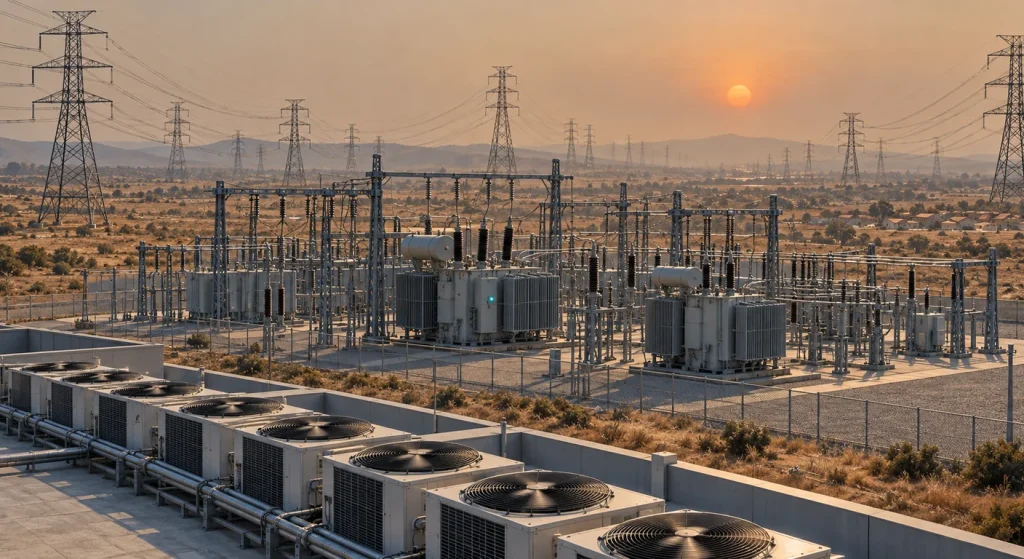
Electrical balance of plant covers the switchgear, transformers, protection and controls that move power from the generator to the load. The two companies also plan to develop systems that combine fuel cells, battery storage, microgrid controls and medium-voltage equipment. Their stated work items include medium-voltage DC delivery and modular electrical skids.
“By combining FuelCell Energy’s fuel cell technology with Siemens’ electrical infrastructure, service, and integration expertise, we can deliver scalable, on-site power solutions,” said Kevin Brown, head of sustainability solutions for electrification and automation at Siemens Smart Infrastructure USA.
The track record behind the announcement
FuelCell Energy puts its global installed base at close to 1 GW. Two U.S. reference sites carry the argument. A 74 MW fuel cell park serves Naval Submarine Base New London in Groton, Connecticut. Fuel cells also power a Toyota Logistics Services facility at the Port of Long Beach, California. Both predate this agreement.
The pitch is speed to power. Data center developers face multi-year interconnection queues, so they shop for generation they can site behind the meter. FuelCell Energy chief executive Jason Few calls that pressure a “bring your own power” requirement. Grid operators now use the same phrase when they tell large loads to arrive with their own supply.
Why It Matters
Read this as a supply-chain signal, not a sale. An MOU commits neither party to build anything, and the language in the companies’ own filings is to “assess” and “determine potential” applications. A buyer evaluating on-site generation should treat the 100 MW figure as a market-segment target, not backlog.
The part that does matter is which half of the package is scarce. Manufacturers build fuel cell stacks to order. Medium-voltage switchgear and substation transformers run on backlogs instead, and lead times still sit at two to four times pre-pandemic norms. A developer who secures fuel cells but waits 100 weeks for switchgear has bought nothing. Tying a generator vendor to a manufacturer that already builds the medium-voltage gear attacks the real constraint, if the partnership converts into orders.
One caution on economics. Carbonate fuel cells run on natural gas and need a firm gas supply plus an interconnection for export or backup. At 100 MW the gas delivery contract, not the stack, often sets the schedule. Ask for the gas commitment date before the equipment quote.
Critical Perspective
An MOU that names no customer, no site and no contract value is a marketing document until an order lands. FuelCell Energy’s global installed base sits near 1 GW, and its largest US reference is the 74 MW park at Groton. This agreement targets single projects of 100 MW or more, which is larger than anything in that reference set. Siemens supplies the medium-voltage switchgear, and that equipment already runs at two to four times pre-pandemic lead times. If both halves of the package are constrained, what exactly does pairing them shorten?
Sources
- Siemens (2026-07-09)
- Engineering.com (2026-07-10)
- Data Center Frontier (2026-07-14)
- Microgrid Knowledge (2026-08-03)