Qcells Completes EPC Work on 372 MWdc Atlas V and VI Solar Phases in Arizona’s La Paz County
- Energy Storage News Solar + Storage Integration
Marin Holt
- 0
- 4 minutes read
- Completed phases: 372 MWdc
- Atlas V: 237 MWdc
- Atlas VI: 135 MWdc
- Full park target by 2028: 2.8 GW solar, 5.7 GWh storage
- Offtaker: Southern California Edison
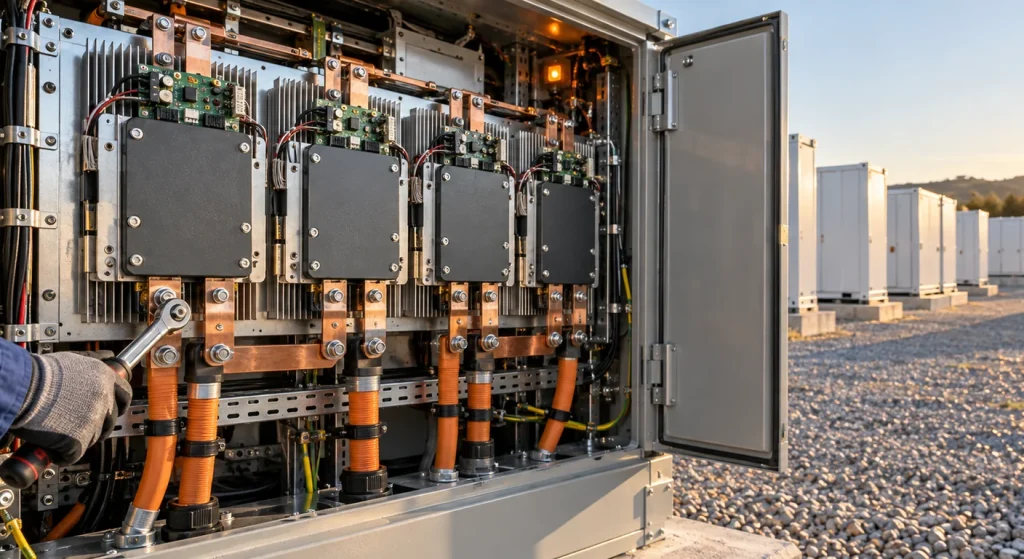
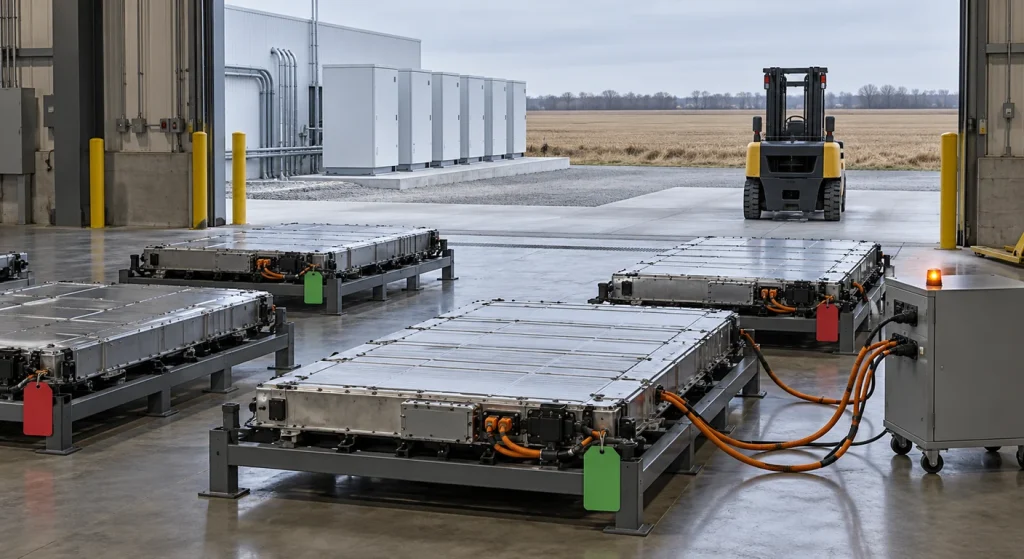
Qcells said on July 9, 2026 that it completed engineering, procurement, and construction work on the Atlas V (237 MWdc) and Atlas VI (135 MWdc) solar phases in La Paz County, Arizona, 372 MWdc in total. The two phases anchor Atlas Energy Park, planned to reach 2.8 GW of solar and 5.7 GWh of battery storage by 2028, with output contracted to Southern California Edison under long-term power purchase agreements.
One Company, Four Roles
Qcells developed the Atlas projects, divested them, and then built them through its self-perform EPC unit, using modules from its Georgia factory, FLEXRACK racking made in Ohio, and Michigan-built battery hardware from LG Energy Solution. The company stays on after completion as long-term asset manager, with performance tied to the owner’s internal rate of return. Ownership recently changed hands as well: Hanwha Renewables, a Qcells sister company, sold the projects to Chrysalis Renewables, a Morrison-backed vehicle. Qcells EPC chief executive Chris Hodrick called the phases a demonstration of integrated utility-scale delivery, and the company says the domestic supply chain preserves tax-credit value and shields delivery schedules from import uncertainty.
Why It Matters
Atlas is the Arizona-to-California trade in physical form: La Paz County land and insolation on one side, Southern California Edison load on the other. The 5.7 GWh of planned storage is what makes desert solar saleable to a California buyer, shifting midday energy into the evening window that resource-adequacy contracts actually price. The domestic-content chain, Georgia modules, Ohio racking, Michigan batteries, is equally strategic: with module import policy in constant motion, an EPC sourcing from its own U.S. factory offers schedule certainty that open-market buyers struggle to match, and it captures the tax-credit value that increasingly separates viable project economics from marginal ones.
Critical Perspective
“One of the largest combined solar and storage energy projects in the U.S.” is developer framing that deserves a scale check: the completed 372 MWdc is roughly 13 percent of the 2.8 GW the park is supposed to reach by 2028, so most of Atlas still exists on paper. The announcements describe finished EPC work and equipment deliveries, not commercial operation dates, and no storage phase has been declared complete; the 5.7 GWh remains a plan with named hardware. The vertical integration cuts both ways too: a developer-builder-supplier-asset-manager captures margin at every layer, while the owner inherits concentration risk in a single counterparty. Chrysalis is betting that the company which sold, built, and supplied the plant will also grade its own performance honestly.