Noon Energy’s 1 GW/100 GWh Storage for AI Data Centers
- Data Centers Grid Connection & Reliability News
Marin Holt
- 3
- 6 minutes read
- Reservation: 1 GW / 100 GWh
- First phase: 25 MW / 2.5 GWh by 2028
- Duration: 100+ hours
- Target cost: $20 per kWh
PJM’s capacity auction cleared at $269.92/MW-day for delivery year 2026/27, up from $164.07 the prior year. This result tightens reliability margins. ISO data shows 2.3 GW of new generation cleared against 4.1 GW of retirements. The gap is concerning, even before factoring in load growth from data centers.
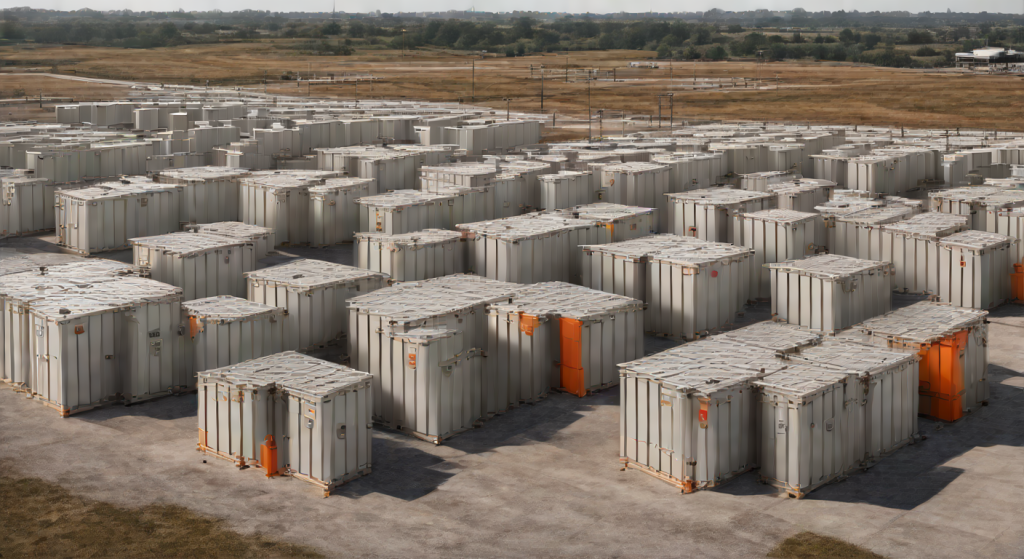
Noon Energy announced an agreement with Meta Platforms, Inc. on April 21, 2026, to reserve up to 1 GW / 100 GWh of energy storage capacity. The initial phase involves a 25 MW / 2.5 GWh project. This raises questions about its technical feasibility and cost-effectiveness compared to existing technologies.
Noon Energy’s technology uses a modular, reversible solid oxide fuel cell system for storing and discharging energy over 100 hours. The company claims three times the energy density of lithium-ion batteries at $20/kWh, compared to lithium-ion’s $300/kWh. However, skeptics question its real-world performance and economic viability.
The agreement with Meta is a significant step for the energy storage industry. It enables round-the-clock renewable power for energy-intensive applications like AI data centers. However, the reliability of this technology in practical applications remains uncertain. Providing firm, baseload clean energy from renewables is critical for grid resilience and decarbonization.
Chris Graves, co-founder and CEO of Noon Energy, said data centers are one of the best applications for their battery system. The partnership will involve building production capacity and an ultra-LDES supply chain. Nat Sahlstrom, VP of Energy and Sustainability at Meta, emphasized that the agreement advances Meta’s goal of bringing data centers online faster through reliable energy sources and storage technology.
Noon Energy’s cost and performance targets are compelling, but scalability and manufacturing readiness are key concerns. Transitioning from a 25 MW / 2.5 GWh pilot project to a 1 GW / 100 GWh deployment requires technological validation and establishing a supply chain. Scaling production to meet demand while maintaining a $20/kWh cost point poses significant risks.
Sources: GlobeNewswire, Energy Storage News, PV Magazine USA, Power Magazine.
What’s Being Built
Why It Matters
Critical Perspective
Competitive Context
Noon Energy’s 1 GW / 100 GWh storage agreement with Meta is ambitious but unproven. Form Energy’s iron-air battery offers a 100-hour duration at an estimated $20/kWh, with its first commercial deployment set for 2025 in Minnesota. Antora Energy’s thermal storage in carbon blocks targets industrial heat off-takers and has raised $150M. ESS Inc. faces financial challenges, reporting a Q4 2025 loss of $63.4M and deployments running below guidance.
Sources
- https://www.globenewswire.com/news-release/2026/04/21/3278062/0/en/Noon-Energy-and-Meta-Announce-Plans-for-Up-to-1-GW-of-100-Hour-Energy-Storage-for-Data-Centers.html
- https://www.energy-storage.news/meta-reserves-up-to-100gwh-of-us-multi-day-energy-storage-startup-noon-energys-technology/
- https://pv-magazine-usa.com/2026/04/21/meta-signs-100-gwh-supply-agreement-for-noon-energys-ultra-long-duration-storage/
- https://www.powermag.com/meta-secures-power-from-noon-energy/