Leeward Renewable Energy Commissions 126 MW / 504 MWh
- Energy Storage News On-Site Generation & Microgrids Utility-Scale BESS
Marin Holt
- 0
- 6 minutes read
- 126 MW / 504 MWh, four-hour LFP batteries from Powin
- 15-year power purchase agreement with Southern California Edison, signed 2023
- 90 peak construction jobs; estimated $30 million in lifetime property tax revenue to Kern County
- LRE’s total California operational capacity re
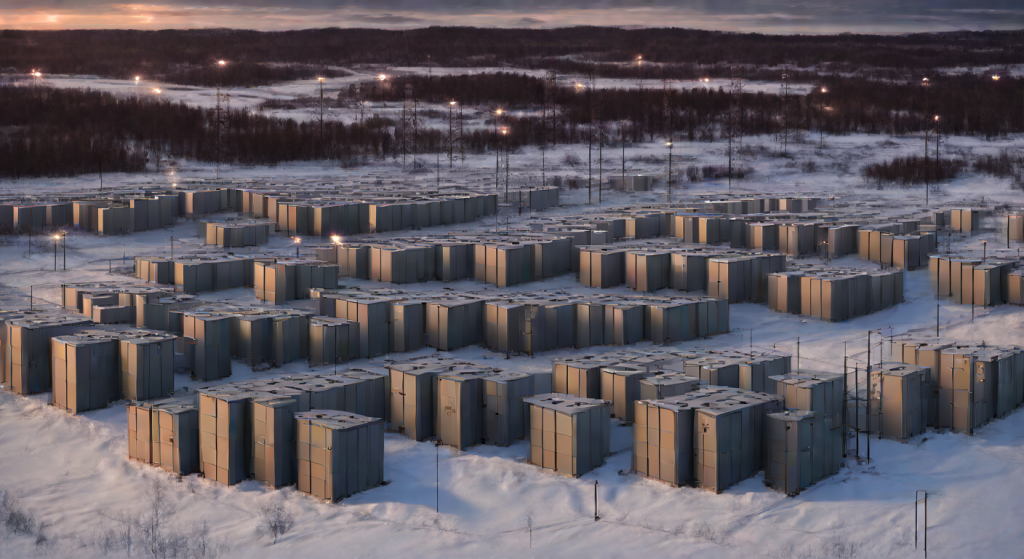
Leeward Renewable Energy (LRE) brought its Antelope Valley Battery Energy Storage System online in Kern County, California in May 2025 — the company’s first stand-alone battery project, operating under a 15-year power purchase agreement with Southern California Edison. The 126 MW / 504 MWh four-hour system uses lithium iron phosphate batteries integrated by Powin and discharges during peak demand windows when the CAISO grid faces its highest stress.
What Is Being Built
Antelope Valley BESS is a pure-storage facility with no co-located solar, operating on the CAISO grid in Southern California. The project sits adjacent to two LRE solar-plus-storage sites in Kern County: Chaparral Springs (174 MW PV with 88 MW / 352 MWh BESS) and Rabbitbrush (100 MW PV with 20 MW / 50 MWh BESS). Together, the three projects form a concentration of LRE assets in one of California’s most active renewable energy corridors.
Powin supplied the battery system integration. Powin is a US-headquartered storage integrator with grid-scale projects across North America. LFP chemistry was selected for its thermal stability relative to NMC chemistries — a practical consideration for Kern County’s desert climate, where ambient temperatures directly affect battery degradation rates.
Why It Matters
Kern County has become a focal point for grid-scale battery storage in California. The California Energy Commission’s Energy Storage System Survey shows the county leads the state in total installed BESS capacity. The Antelope Valley project adds 126 MW as California phases out fossil-fuel peaker plants. For Southern California Edison, the 15-year PPA secures dispatchable capacity callable during late-afternoon demand peaks — the window when solar generation drops and grid stress is highest.
LRE’s stand-alone approach — storage without co-located generation — tests whether pure storage projects can compete economically against solar-plus-storage hybrids under long-term utility contracts. The successful commercial operation demonstrates that independent power producers can build storage-only assets under utility PPAs without adjacent generation, a model other developers are tracking closely.
Critical Perspective
LRE disclosed no financing cost or capacity market compensation rate for the Antelope Valley project. The PPA was signed in 2023 when long-term storage contract rates were higher than in 2025; developers signing comparable agreements now face a tighter economic case. The PPA structure also restricts LRE from participating in ancillary service markets during contracted dispatch periods, capping revenue to the fixed contract payment.
Usable Energy vs Nameplate
Understanding the distinction between nameplate and usable energy is critical for utility planners evaluating battery storage projects like Leeward Renewable Energy’s Antelope Valley BESS. While the project’s nameplate energy capacity is 504 MWh, the actual usable energy is constrained by operational limits and system efficiencies. Lithium Iron Phosphate (LFP) batteries, while capable of 0-100% depth-of-discharge (DoD), often have warranty clauses capping DoD at 90% to preserve cycle life, effectively reducing usable energy to approximately 454 MWh. Furthermore, round-trip AC-AC efficiency for utility-scale battery systems utilizing LFP and modern power conversion systems (PCS) typically ranges from 85% to 88%. This means that from a full charge, the energy actually delivered to the grid during a discharge cycle is closer to 385-400 MWh. It’s also important to remember that storage systems do not generate energy; they shift existing grid energy. For a 4-hour duration system, the “capacity factor” is directly tied to dispatch frequency, with one full charge-discharge cycle per day yielding a capacity factor of roughly 16-17% against its 126 MW rating. Finally, LFP degradation typically results in a 1-2% loss of energy capacity annually, but large-scale PPAs, such as this one with SCE, commonly incorporate augmentation provisions to ensure the contracted MWh capacity is maintained throughout the 15-year term.