Sungrow Power Supply Prepares a Solid-State Transformer Entry for AI Data Center Markets

- Sungrow unveiled a dedicated solid-state transformer for the AI data-center market at GRES 2026 on April 24, 2026.
- Sungrow's AI Data Center Full-chain Power Supply white paper uses a Green-Gray-White three-space, grid-to-chip architecture for MW-level racks and GW-scale clusters.
- Sungrow ships power-electronics products into more than 150 countries, ranking among the dominant Chinese inverter makers with Huawei and BYD.
- Sungrow's SST positioning maps onto NVIDIA's 800 VDC architecture, which targets 1 MW racks from 2027.
- BYD separately announced solid-state-battery commercialization for 2027 in limited batches, indicating the breadth of the Chinese SST-adjacent base.
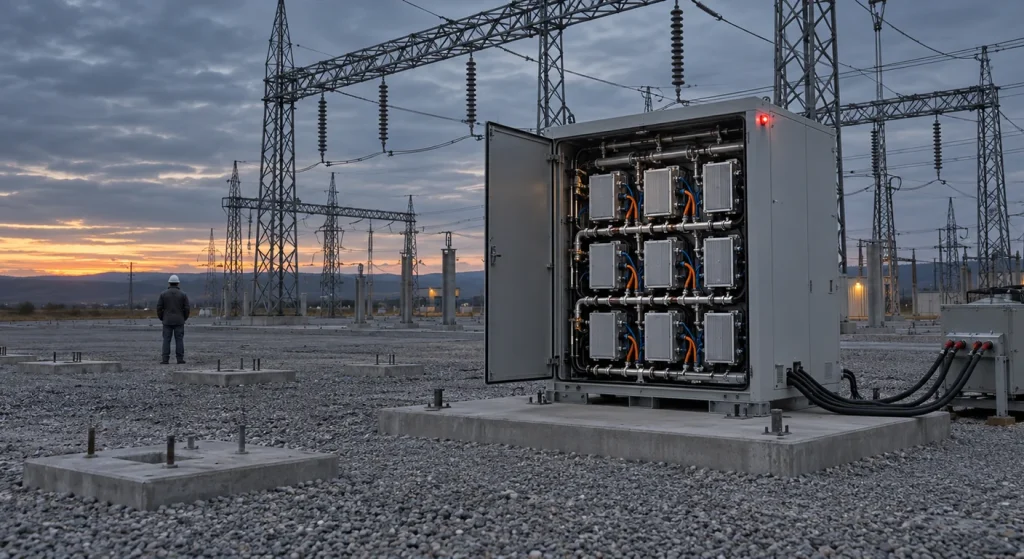
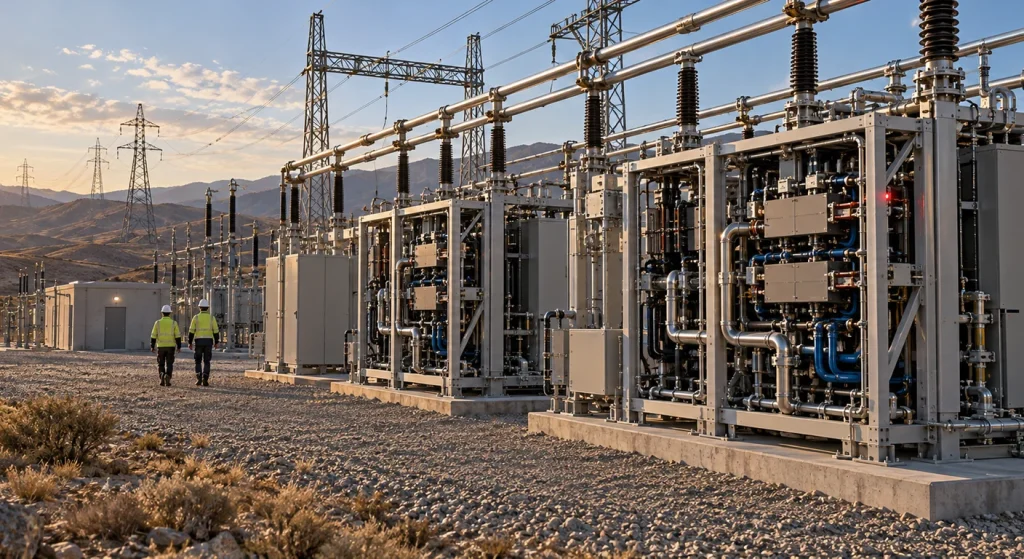
Sungrow Power Supply unveiled a dedicated solid-state transformer (SST) for the AI data-center market at its GRES 2026 global summit on April 24, 2026, the most significant new-vendor entry yet from the Chinese SST industrial base. The product shrinks physical footprint while raising conversion efficiency versus conventional medium-voltage-to-low-voltage (MV-LV) distribution, and Sungrow says it will launch the new generation of high-efficiency SSTs for data-center applications later this year.
What Sungrow Actually Announced
At GRES 2026 Sungrow released an “AI Data Center Full-chain Power Supply” white paper outlining a grid-to-chip solution it calls a “Green-Gray-White” three-space architecture, designed to support MW-level racks and GW-scale clusters with higher safety, stability, and low-carbon performance. That positioning maps directly onto the same demand NVIDIA’s 800 VDC architecture targets — 1 MW racks from 2027 — making the SST the medium-voltage front end for the next generation of AI power distribution.
The Engineering Adjacency
Sungrow’s heritage is in multi-megawatt solar inverters and battery-energy-storage-system (BESS) integration at utility scale, and its medium-voltage transformer products already serve solar-plant and BESS interconnect applications globally. The SST is a natural adjacency rather than a new market category: it reuses the company’s power-electronics and silicon-carbide expertise. Sungrow ships into more than 150 countries and ranks among the dominant Chinese inverter manufacturers alongside Huawei and BYD.
The Broader Chinese Base
The Chinese SST competitive landscape is broader than Western trade-press coverage typically recognizes. BYD and Inovance Technology are major power-electronics makers with adjacent portfolios; BYD has separately announced solid-state-battery commercialization for 2027 in limited batches, and Inovance is among the top Chinese motor-controller makers, sharing the silicon-carbide MOSFET supply base SST production requires. Whether either pivots to dedicated SST products through 2026-2027 is the open competitive question.
Why It Matters For Western Vendors
The strategic question for Western SST makers — Hitachi Energy, ABB, Eaton, Delta Electronics, and US startups DG Matrix, Amperesand, and Heron Power — is how to defend share against credible Chinese entrants while US-China trade policy is in flux. Sungrow’s global solar-inverter relationships in the US, Europe, and the Middle East give it a channel; US trade-policy constraints on Chinese-supplied data-center infrastructure complicate but do not foreclose the export opportunity. Technology and certification advantages, not raw manufacturing capacity, will likely decide the Western position through 2030.
Critical Perspective
Editorial correction: This post is part of MGRID’s Solid-State Transformer industry coverage. As of May 2026, that body of work systematically framed manufacturer announcements, funding rounds, and laboratory demonstrations as commercial deployments. Sungrow’s SST is an announced product targeted for launch “later this year,” not a shipping unit in revenue service; the reality is that field-deployed commercial-class SST globally is measured in single digits. Readers should treat the specific claims in this post against the standards documented in our [SST Industry Reality Check](/?p=9044). The corrective article is the canonical reference for SST industry reality; this post remains published with its original framing so the editorial drift is traceable.