State of Power Quality & Standards: Grid Operators Face October
- Analysis Power Quality
Marin Holt
- 0
- 18 minutes read
- IEEE 519-2022 sets 5% voltage THD limit at utility-customer interface
- Blackout Duration: 12 hours in Madrid and other areas
- Computational Load Threshold: 1,000 MW dropped offline in seconds
- Registration Deadline: May 15, 2026
- Compliance Deadline (BES): October 1, 2026
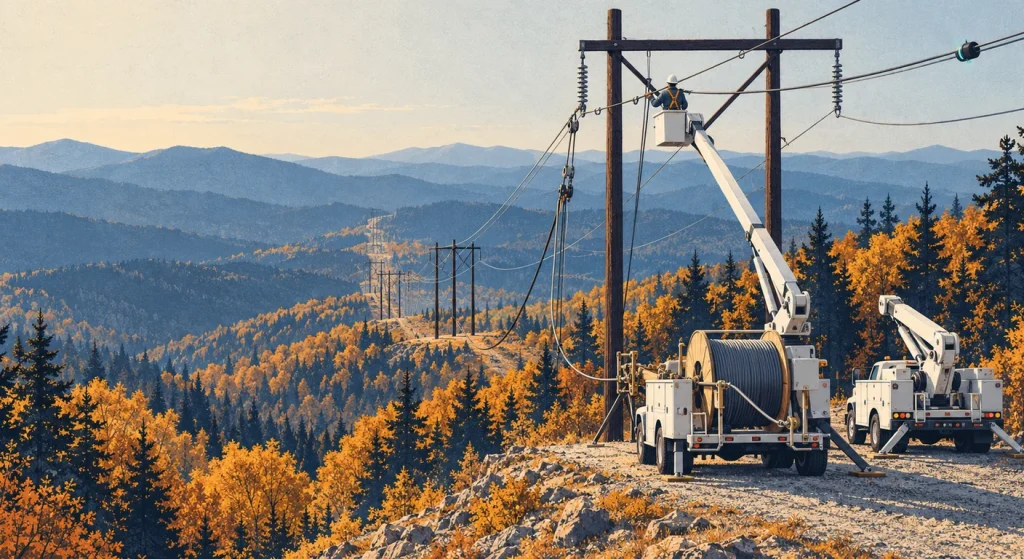
The power quality sector is converging on a hard October 1, 2026 compliance deadline for solar and wind operators under NERC PRC-030-1[1], even as explosive growth in AI infrastructure and megawatt-scale EV charging pushes existing harmonic and reactive power standards to their breaking point. The global power quality equipment market is projected to reach $52.47 billion by 2030, driven by the need to manage inverter-based resources and non-linear loads that now dominate grid edge dynamics.
Regulatory Deadlines Are Colliding This Spring and Fall
Grid operators face a cascade of compliance milestones in 2026. NERC’s inverter-based resource registration deadline hit May 15, 2026[2], requiring operators to document their solar and wind assets in preparation for stricter performance standards. The more consequential deadline arrives October 1, 2026, when NERC PRC-030-1 sets new compliance requirements for solar and wind operators[1] connected to the Bulk Electric System. Meanwhile, FERC unanimously approved Order 918 (CIP-003-11) and Order 919 on March 19, 2026[3], introducing cybersecurity requirements for virtualized grid infrastructure. The regulatory pressure extends beyond renewables: NERC Project 2026-02 is developing new standards specifically for computational loads[4], responding to incidents where 1,000 MW dropped offline in seconds[5], triggering a rare Level 3 alert from NERC.
Harmonic Distortion Standards Face Real-World Stress Tests
IEEE 519-2022’s 5% voltage total harmonic distortion (THD) limit at the utility-customer interface is being tested by megawatt-scale loads. Solid-state transformers are emerging as a solution to the IEEE 519 harmonic problem at megawatt EV chargers[6], where conventional passive filters struggle with the non-linear switching characteristics of high-power charging infrastructure. Industrial applications continue to deploy proven mitigation technologies: RXPE commissioned a 34.5 kV / 150 Mvar delta-connected STATCOM at Tenaris TAMSA’s steel plant in Veracruz, Mexico on November 19, 2024[7], specifically targeting arc furnace flicker, while Amtech delivered outdoor harmonic filters for Fulton pump stations[8]. The market is responding with measurement infrastructure, as Accuenergy’s AcuRev 4100 now monitors up to 24 branch circuits at ANSI C12.20 Class 0.2 and IEC 62053-22 Class 0.2S revenue-grade accuracy[9], enabling per-circuit power quality capture.
Reactive Power Management Emerges as Grid Stability Bottleneck
The shift to inverter-based generation is creating reactive power shortfalls with tangible consequences. MIT researchers documented a 12-hour blackout in Madrid and other areas linked to reactive power shortfall[10], highlighting the vulnerability of grids with high penetrations of solar and wind. The power factor correction market is expanding in response, with global PFC market valuations rising from $2.1 billion in 2025 to a projected $4.2 billion by 2035 at 7.0% CAGR[11]. Distributed generation is accelerating the challenge: Puerto Rico’s rooftop solar installations reached 1,456 MW by the end of 2025[12], surpassing natural gas to become the territory’s second-largest generation source and accounting for one-fifth of total capacity, according to the U.S. Energy Information Administration. This rapid deployment of inverter-based resources without corresponding reactive power support is forcing utilities to rethink grid architecture.
AI Infrastructure Demands Redefine Power Quality Requirements
Power quality is now key for AI infrastructure[13] as demand for computational capacity grows explosively. The sector’s sensitivity to voltage sags, harmonics, and momentary interruptions is driving investment in both monitoring and mitigation technologies. Ubicquia secured $106 million in Series C funding to scale AI-powered distribution transformer monitoring[14], reflecting investor confidence that predictive analytics can prevent power quality events before they impact critical loads. The software-defined approach is gaining traction: GE Vernova launched GridBeats APS, consolidating hundreds of substation communication and cybersecurity packages into as few as 10 devices[15], reducing complexity while improving visibility into power quality parameters. Manufacturing capacity is expanding to meet demand, with Hitachi Energy investing $10 million in its Cary, North Carolina Power Electronics Center of Competence[16] and TSEA Energy investing $25 million in a North Carolina factory[17].
What to Watch
October 1 compliance enforcement: How NERC enforces PRC-030-1 for solar and wind operators will set precedent for inverter-based resource performance standards and determine whether penalties drive technology upgrades or operational changes.
Computational load standards: NERC Project 2026-02’s development of standards for large computational loads will define how data centers and AI facilities participate in grid services, potentially requiring them to provide reactive power support and ride-through capabilities.
Solid-state transformer adoption: Whether solid-state transformers move beyond pilot projects to commercial deployment at EV charging sites will determine if the industry can meet IEEE 519 harmonic limits without oversized passive filters.
Reactive power markets: The Madrid blackout and MIT research may accelerate regulatory requirements for inverter-based resources to provide reactive power, potentially creating new ancillary service markets that value power quality contributions.
Why It Matters
Pillar pages are how operators, planners, and procurement leads orient themselves in a fast-moving subsector. The value is not the aggregate numbers — those drift weekly — but the ability to follow named projects, vendors, and policy actions as they progress through stages. Use this index as a launch point into the stage-tagged underlying articles, where the actual decision-grade detail lives. For utility planners, this is most useful as a quarterly scan; for procurement leads tracking a specific vendor or technology, the named-entity articles linked from here are the higher-resolution view.
Critical Perspective
This pillar aggregates MGRID’s recent coverage of the category. Readers should treat the aggregate numbers cited above as a snapshot of a fast-moving sector, not a final scoreboard. Three caveats: (1) project counts and capacity figures conflate announced, funded, under-construction, and operational tiers, so individual articles should be consulted for stage-specific status; (2) the corpus reflects what MGRID has covered, not the full universe of activity globally; (3) MW and dollar totals are nominal at time of publication and do not adjust for cancelled or restructured projects. Use the pillar to navigate, but ground decisions in the underlying named-entity articles.
Sources
- NERC PRC-030-1 Sets New Compliance Bar for Solar and Wind Operators [1]
- NERC Inverter-Based Resource Registration Deadline Hits May 15 [2]
- FERC Approves NERC CIP-003-11 for Virtual Grid Security [3]
- NERC Project 2026-02: Large Loads Face New Standards [4]
- NERC Issues Rare Level 3 Alert After 1 [5]
- How Solid-State Transformers Solve the IEEE 519 Harmonic Problem at Megawatt EV Chargers [6]
- RXPE 150 Mvar STATCOM Cuts Arc Furnace Flicker at Tenaris TAMSA [7]
- Amtech Delivers Outdoor Harmonic Filters for Fulton Pump Stations [8]
- Accuenergy AcuRev 4100 Brings Per-Circuit Power Quality Capture [9]
- MIT Researchers Cite Reactive Power Shortfall [10]
- Power Factor Correction Market to Reach $4.2B by 2035 [11]
- Puerto Rico Rooftop Solar Hits 1,456 MW and One-Fifth of Total [12]
- Power Quality Now Key for AI Infrastructure [13]
- Ubicquia Secures $106M to Scale AI-Powered Distribution Transformer [14]
- GE Vernova Launches GridBeats APS Software-Defined Substation [15]
- Hitachi Energy Invests $10M in North Carolina Power Electronics [16]
- TSEA Energy Invests 5 Million in North Carolina Factory [17]
References
- [1] NERC PRC-030-1 Sets New Compliance Bar for Solar and Wind Operators
- [2] NERC Inverter-Based Resource Registration Deadline Hits May 15
- [3] FERC Approves NERC CIP-003-11 for Virtual Grid Security
- [4] NERC Project 2026-02: Large Loads Face New Standards
- [5] NERC Issues Rare Level 3 Alert After 1
- [6] How Solid-State Transformers Solve the IEEE 519 Harmonic Problem at Megawatt EV Chargers
- [7] RXPE 150 Mvar STATCOM Cuts Arc Furnace Flicker at Tenaris TAMSA
- [8] Amtech Delivers Outdoor Harmonic Filters for Fulton Pump Stations
- [9] Accuenergy AcuRev 4100 Brings Per-Circuit Power Quality Capture
- [10] MIT Researchers Cite Reactive Power Shortfall
- [11] Power Factor Correction Market to Reach $4.2B by 2035
- [12] Puerto Rico Rooftop Solar Hits 1,456 MW and One-Fifth of Total
- [13] Power Quality Now Key for AI Infrastructure
- [14] Ubicquia Secures $106M to Scale AI-Powered Distribution Transformer
- [15] GE Vernova Launches GridBeats APS Software-Defined Substation
- [16] Hitachi Energy Invests $10M in North Carolina Power Electronics
- [17] TSEA Energy Invests 5 Million in North Carolina Factory
Related Coverage
Update: Late June 2026
The back half of June sharpened the regulatory teeth around power quality rather than the technology itself. New York City’s Department of Buildings now mandates harmonic mitigation for behind-the-meter battery storage above 5 MW, making harmonic compliance a permitting gate rather than an afterthought, at least for one of the country’s densest interconnection markets. It is a narrow rule, but it is the kind of local mandate that vendors of active filters and multi-pulse converters have spent a decade asking for, and its real test will be whether other jurisdictions copy the threshold or quietly ignore it.
On the measurement side, the period reinforced a theme this pillar has tracked since launch: the grid’s instrumentation is behind its problems. A CU Boulder study flagged AI training workloads as a distinct source of fast, structured load swings that conventional metering smooths over, echoing DOE’s own warning that today’s sensors miss the high-frequency oscillations AI data centers create. IEEE Press even shipped a new reference volume, Measuring the Electric Grid: Mysteries Explained, aimed squarely at that visibility gap. The through-line is uncomfortable: operators are being asked to manage harmonic and oscillatory behavior they still cannot fully see, and the October standards deadlines this pillar opened with are arriving before the measurement stack has caught up.