Vehicle-to-Grid (V2G) Bidirectional Charging Architectures Require Solid-State Transformers at Megawatt-Class Fleet Scale

- V2G requires bidirectional power flow at MW scale with controlled power factor and harmonic distortion
- Conventional iron-core + thyristor rectifier cannot support V2G without substantial auxiliary equipment
- Bidirectional multilevel SST architecture handles V2G natively via DC intermediate bus injection
- 11 kV grid connection typically requires 12 cascaded multilevel modules per phase
- Multi-port SST: independent DC ports allow simultaneous charge/discharge/idle from one chassis
Vehicle-to-grid (V2G) operation — using parked electric-vehicle batteries as distributed energy storage for the utility grid — has been a promised application of EV adoption since the early 2010s. Practical V2G at commercial fleet scale requires bidirectional power flow at megawatt-class power levels between the depot DC bus and the utility distribution interface. Solid-state transformers (SSTs) are the only commercially available power-electronics architecture that handles this requirement at depot scale without imposing significant upstream-grid disturbances.
The technical case is straightforward. Conventional megawatt-class EV chargers are unidirectional: they convert utility AC to DC at the rated power level but cannot reverse the flow. A V2G-capable charger must instead handle bidirectional power, must control upstream power factor and harmonic distortion at both flow directions, and must respond to utility dispatch signals on second-to-minute timescales. The conventional iron-core transformer plus thyristor-rectifier architecture cannot do any of this without substantial auxiliary equipment.
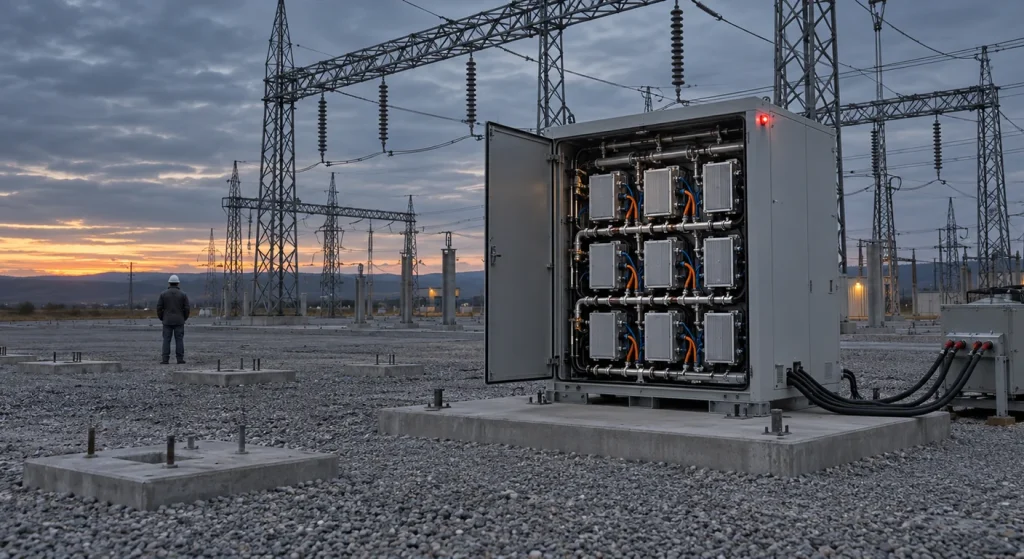
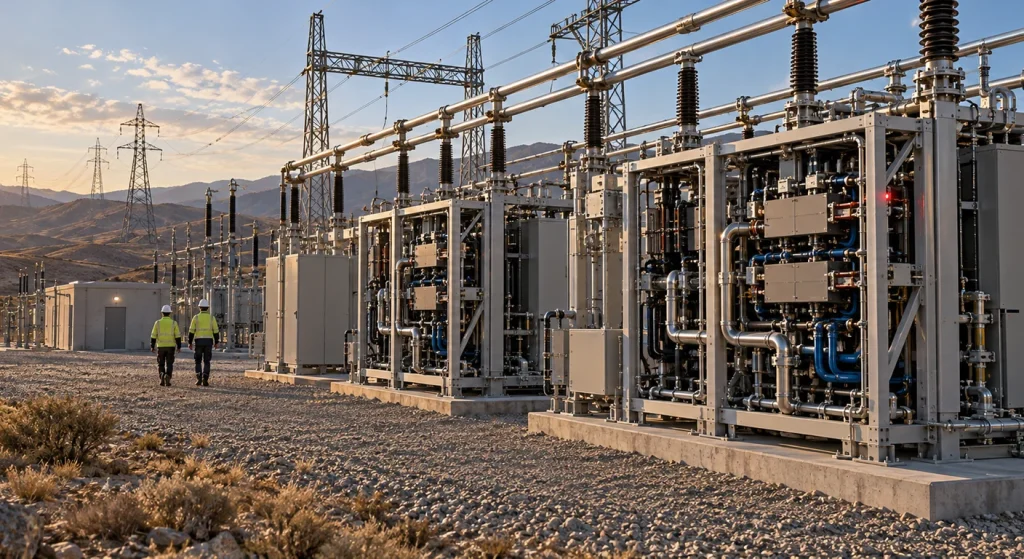
A bidirectional multilevel SST architecture handles the V2G application natively. The SST’s input AC-DC stage operates as a controlled active rectifier or as a controlled inverter depending on power-flow direction. The DC intermediate bus is the natural injection point for the EV battery DC connection through the second DC-DC stage. The output stage delivers DC to the vehicle during charging and receives DC from the vehicle during V2G discharge. An 11-kilovolt grid connection typically requires 12 cascaded modules per phase in the multilevel topology.
The independent-DC-port architecture of multi-port SSTs is particularly useful for fleet-depot V2G. Each DC port can operate independently at different voltage, current, and power-flow direction. A 32-vehicle depot equipped with a multi-port SST can simultaneously charge some vehicles, discharge others to the grid, and idle others while preparing for departure — all from a single SST chassis. This independent-port capability is the architectural feature that makes V2G practically commercially viable rather than just technically demonstrated.
The commercial barriers to V2G adoption remain substantial despite the technical readiness. Utility dispatch protocols for V2G have not been standardized at national scale in the US. EV-OEM-imposed battery-warranty restrictions on bidirectional cycling have limited which vehicle models are V2G-capable. The economic case for fleet operators to enroll in utility V2G programs depends on demand-response payment structures that vary substantially by service territory. Whether the SST industry can drive faster V2G adoption by reducing the equipment-cost barrier remains to be seen through 2026 and 2027.
Why It Matters
For fleet-charging operators, megawatt-class V2G requires bidirectional power flow between the depot DC bus and the utility interface without disturbing the upstream grid, and the SST is currently the only commercial architecture that does it at depot scale. That makes the SST the enabling piece for turning parked fleet EVs into a dispatchable grid resource, moving V2G from a decade of promise toward something a balancing authority could actually call on.
Critical Perspective
Editorial correction: This post is part of MGRID’s Solid-State Transformer industry coverage. As of May 2026, that body of work systematically framed manufacturer announcements, funding rounds, and laboratory demonstrations as commercial deployments. The reality is that field-deployed commercial-class SST in revenue service globally is measured in single digits, and almost every product cited in this series is at “announced” or “funded” stage, not “operational.” Readers should treat the specific claims in this post against the standards documented in our SST Industry Reality Check (the per-claim audit table maps marketing language to verifiable deployment status). The corrective article is the canonical reference for SST industry reality; this post remains published with its original framing so the editorial drift is traceable.
Related Coverage
Multi-port SST: independent DC ports allow simultaneous charge/discharge/idle from one chassis