Electrify America Opens Santa Barbara Fast-Charging Hub
- EVs Infrastructure & Grid Connection News
Marin Holt
- 0
- 7 minutes read
- Chargers: 20 stalls, up to 350 kW
- Battery storage: 1.9 MW (largest public BESS)
- Location: Santa Barbara, California
- Opened: June 17, 2026
Electrify America opened a 20-stall DC fast-charging station in Santa Barbara, California, on June 17, 2026, pairing 350-kilowatt chargers with a 1.9 MW battery energy storage system, the company’s largest public battery deployment to date. The station sits on the site of the former Greyhound bus depot at 36 West Carrillo Street and is the operator’s fourth large-format site in California, joining hubs in Santa Monica, San Diego, and San Francisco.
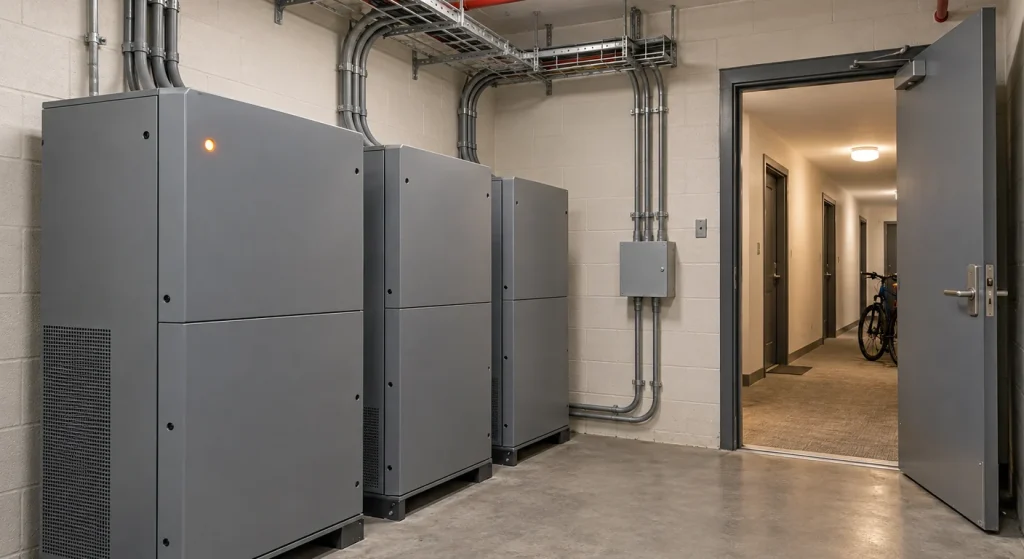
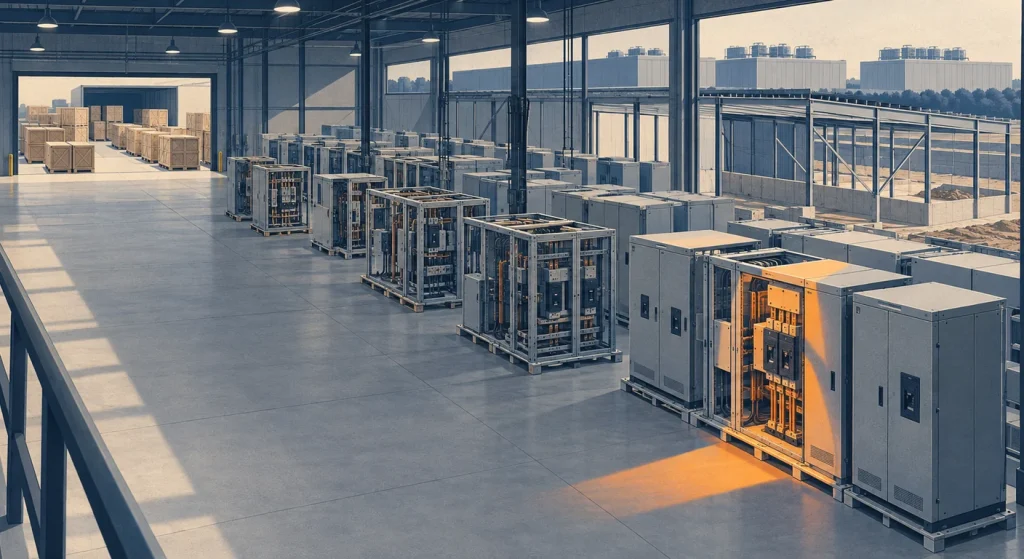
Each of the 20 chargers delivers up to 350 kW. The on-site 1.9 MW battery stores grid electricity during low-demand periods and when solar output is high, then discharges during peak charging windows. That buffer lets the station run high-power stalls at a location where the local distribution connection would otherwise limit how many vehicles could charge at once. The chargers ship with CCS connectors, and Electrify America plans to add NACS connectors in summer 2026. The site is the company’s second in Santa Barbara, after an existing station at 3790 State Street.
One detail Electrify America did not disclose is the battery’s energy capacity in megawatt-hours, which sets how long the 1.9 MW system holds output before it needs to recharge. A power rating alone does not establish whether the buffer covers a full evening of clustered demand or only the sharpest spikes. The shortfall is partial by design: against up to 7 MW of theoretical instantaneous draw across 20 stalls, a 1.9 MW battery trims the worst of the peak rather than erasing the site’s reliance on the local feeder, and how much it shaves depends on how often vehicles charge at full power at the same time. The Santa Barbara hub is the fourth large-format California site Electrify America has built on this battery-buffered model, after Santa Monica, San Diego, and San Francisco, evidence the company treats on-site storage as a standard way to side-step distribution limits in dense urban markets.
Critical Perspective
Electrify America paired 20 stalls of 350 kW charging with only a 1.9 MW battery, against the roughly 7 MW of instantaneous draw the article notes those stalls can pull at once. The company still has not disclosed the battery’s capacity in megawatt-hours, the figure that decides whether the buffer covers a full evening of clustered demand or just the sharpest spikes. Tesla has leaned on much larger on-site storage at its busiest Supercharger sites for exactly this reason, sizing packs to duration rather than peak power alone. If this battery-buffered design is now Electrify America’s fourth California build after Santa Monica, San Diego, and San Francisco, why has it never published the one number, energy capacity, that shows how long any of them can hold output?
Why It Matters
Public fast-charging sites keep running into a hard grid limit: a 20-stall hub drawing 350 kW per stall needs up to 7 MW of instantaneous capacity, more than many urban distribution circuits supply. By placing a 1.9 MW battery between the grid and the chargers, Electrify America holds down the site’s peak draw on the local feeder while still serving simultaneous charging demand, the same demand-charge and capacity logic commercial battery operators use, applied to charging infrastructure. Rob Barrosa, Electrify America’s president and chief executive, said the storage approach lets the company bring Hyper-Fast charging to locations that have traditionally been difficult to serve. For utilities facing clustered EV load, a battery-buffered station turns a multi-megawatt interconnection request into a smaller, flatter one.
Sources
- Electrek — Electrify America opens its biggest battery-backed charging station (June 17, 2026)
- electrive — Electrify America opens 20-bay charging hub in Santa Barbara (June 18, 2026)
- Solar Builder — Electrify America opens EV fast-charging station and battery in Santa Barbara
- PR Newswire — Electrify America Opens New EV Fast Charging Station in Santa Barbara (June 17, 2026)