DOE Keeps 397-MW Wagner Oil Unit Running Past Permit Limits Through November 17
- FERC & Federal Policy & Markets Regulatory
Marin Holt
- 0
- 8 minutes read
- Unit capacity: 397 MW
- Annual run-hour cap: 438 hours
- Order window: August 20 to November 17, 2026
- DOE 202(c) orders issued in 2026: 39
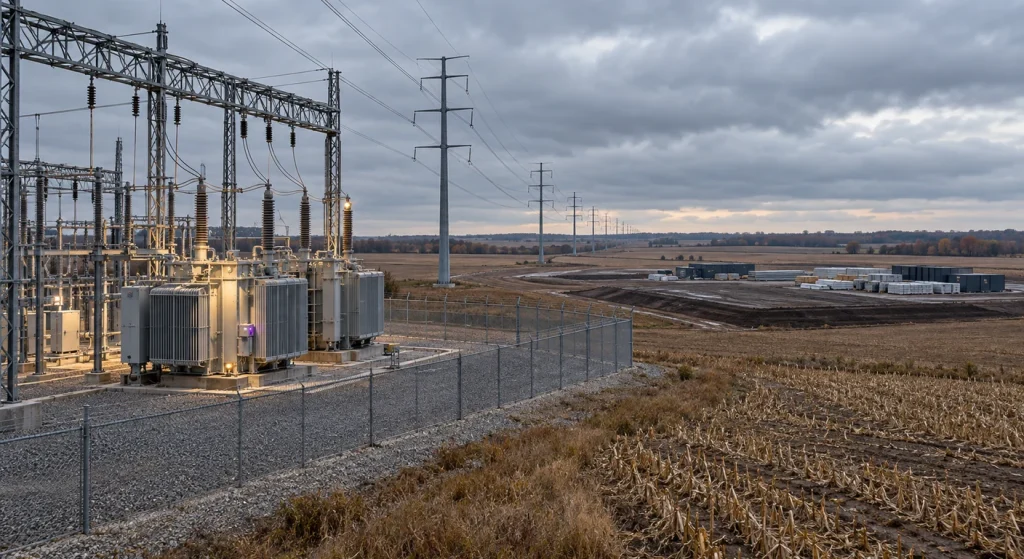
The U.S. Department of Energy has ordered PJM Interconnection and Talen Energy to run Unit 4 at the Herbert A. Wagner Generating Station in Anne Arundel County, Maryland past its air-permit limits from August 20 through November 17, 2026. The oil-fired unit rates 397 MW and is otherwise capped at 438 operating hours per calendar year, or 18.25 days. Energy Secretary Chris Wright signed the extension on August 19, 2026. It continues a chain of emergency orders on this single unit that began in July 2025.
What Actually Changed
Order 202-26-25A succeeds Order 202-26-25, which covered May 22 through August 19, 2026. The new window runs 90 days. The unit, the operator and the legal authority all stay the same. Only the calendar moves.
PJM told DOE it still needs Wagner Unit 4 to meet peak demand in the Baltimore Gas and Electric zone. DOE has issued 39 emergency orders under section 202(c) of the Federal Power Act so far in 2026. At least 14 of them name PJM resources, including Eddystone Units 3 and 4 and several data center backup generation fleets.
What Did Not Change
The 438-hour cap itself survives. It sits in a 2020 consent order that followed an EPA finding that the plant is a significant source of local air pollution. DOE suspends the effect of that limit inside each emergency window. It does not amend the permit, and it does not reopen the consent order.
Talen also keeps every payment obligation. The order grants no relief from fees, emission offsets or allowances for what the unit burns during the emergency period.
Enforcement Reality
A 202(c) order is self-executing. PJM dispatches the unit, Talen runs it, and DOE posts the order. Maryland regulators do not vote on it, and no state agency signs off. The only structural check is the expiry date written into the order.
That check has now been reset four times on this unit. Order 202-25-6 arrived on July 28, 2025 for 90 days. Order 202-25-6A extended it in October 2025. Order 202-26-25 followed in May 2026, and 202-26-25A now carries the same 397 MW into November. Thirteen months of consecutive orders describe a standing arrangement, not an emergency.
Why It Matters
Anyone siting large load in the BGE zone should read the order as a capacity disclosure. PJM is holding its summer and autumn margin together with a 397-MW oil unit that its own permit contemplates running 18 days a year. Interconnection studies and reliability-must-run assumptions in that zone rest partly on a resource with no permanent legal right to operate at this level.
The pattern also sets an expectation for retirement dates across PJM. Eddystone has drawn the same treatment since 2025. A generator scheduled to close in the BGE or Philadelphia zones now faces a real chance of a DOE order. That holds whatever the owner has told investors.
Critical Perspective
Four consecutive orders across 13 months strain the word emergency. Section 202(c) exists for sudden, unforeseen shortfalls. A 90-day window that renews on schedule describes a known capacity deficiency in the BGE zone, and the statute was not written for that.
The orders also demand nothing in return. None of the public documents require PJM to show what it has done since July 2025 to replace this 397 MW. No source describes a transmission upgrade, a demand-side program or a replacement resource tied to the same zone. The unit stays available, so the pressure to solve the underlying problem stays low.
The cost side is simply unpublished. Running an oil unit out of merit order has a price, and none of the sources here give a ratepayer figure for any of the four orders. DOE declines to waive the emission obligations, which confirms a cost exists without disclosing its size.
Set against DOE’s 39 emergency orders in 2026, the question stops being about one plant in Maryland. If emergency authority has become the routine instrument, then the capacity market and the reliability-must-run process are not delivering what they were built to deliver.
Sources
- U.S. Department of Energy, “Energy Secretary Acts to Protect Mid-Atlantic Grid” (August 19, 2026)
- U.S. Department of Energy, 2026 DOE 202(c) Orders
- PJM Interconnection, Wagner Unit 4 202(c) Application
- POWER Magazine, “DOE’s Fifth Emergency Order for PJM Caps Summer of Escalating Grid Risk”
- Utility Dive, “DOE allows Talen to run oil-fired unit above limits to avoid outages amid heat wave”