rPlus Energies Energizes 400-MW Green River Solar Plant With 1,600 MWh Battery in Utah
- Energy Storage News Solar + Storage Integration
Marin Holt
- 0
- 6 minutes read
- Solar capacity: 400 MW
- Storage: 400 MW / 1,600 MWh
- Offtaker: PacifiCorp (long-term PPA)
- Investment: More than $1 billion
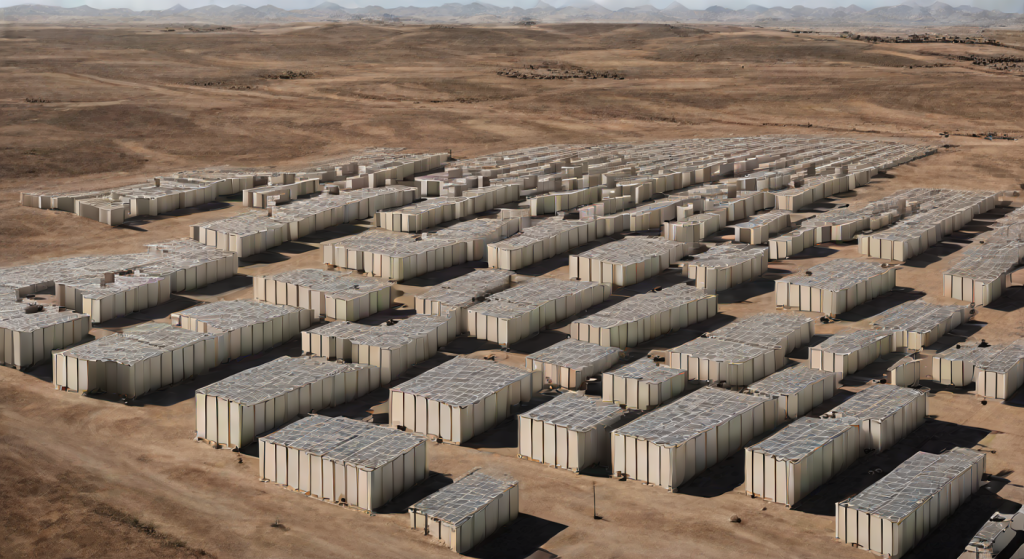
rPlus Energies began commercial operation of the Green River Energy Center in Emery County, Utah in June 2026, pairing 400 MW of solar with a 400 MW / 1,600 MWh battery system that now ranks as the largest solar-plus-storage facility in PacifiCorp’s six-state service territory.
PacifiCorp takes the output under a long-term power-purchase agreement. The four-hour battery shifts midday solar generation into the evening peak, letting the plant act as a dispatchable resource rather than an intermittent one. That capability is the reason rPlus and PacifiCorp amended their original 2022 contract in March 2024 to quadruple storage from 400 MWh to 1,600 MWh.
The project carried capital investment of more than $1 billion and broke ground in September 2024, reaching commercial operation in roughly 21 months. rPlus estimates Green River will generate more than $55 million in property taxes for Emery County schools and public services over its operating life. The American Clean Power Association ranks it among the seven largest solar-plus-storage projects developed in the United States.
The Storage Carries the Economics
The ratios explain why the deal looks the way it does. A 1,600 MWh battery on 400 MW of output is a four-hour system, sized to cover the evening peak after midday solar fades. The 2022 contract called for 400 MWh; the March 2024 amendment left the solar nameplate at 400 MW but quadrupled the storage to 1,600 MWh. At more than $1 billion for 400 MW, the plant runs past $2,500 per kilowatt of solar, a figure that only pencils out because the battery, not the panels, earns the peak-hour revenue PacifiCorp is paying for. The utility is buying a schedulable four-hour block dressed as a solar farm.
Critical Perspective
The Green River Energy Center pairs 400 MW of solar with a 400 MW / 1,600 MWh battery, which works out to roughly four hours of storage at full output. That duration smooths the evening ramp but does little for the multi-day low-sun stretches that set winter reliability across PacifiCorp’s Intermountain West service area. Nevada’s Gemini project, online since 2024 at 690 MW of solar and 380 MW / 1,416 MWh of storage, carries almost the same four-hour profile and still relies on the wider grid for firm capacity after sundown. With more than $1 billion committed against a single long-term PPA, the financial case rests on PacifiCorp continuing to value four-hour storage at today’s capacity prices. When PacifiCorp’s next integrated resource plan re-prices capacity, will a four-hour battery still earn enough to cover a billion-dollar build, or will Green River need a second tranche of longer-duration storage to stay whole?
Why It Matters
PacifiCorp is retiring coal across its Western footprint while load growth from electrification and data centers climbs. A 400 MW solar plant that holds 1,600 MWh of storage behaves less like a weather-dependent generator and more like a four-hour peaker, the firm, schedulable capacity utilities need to replace baseload coal without leaning entirely on new gas. The quadrupled battery is the tell: the value is increasingly in the storage, not the panels.
Sources
- Solar Power World (June 23, 2026)
- Renewable Energy World (June 23, 2026)
- PV-Tech — project financing background
- rPlus Energies — Green River Energy Center