NERC 2026 Summer Assessment: 58 GW Added
- Analysis Grid Services & Demand Response Policy & Markets
Marin Holt
- 0
- 6 minutes read
- New capacity added since summer 2025: 58 GW
- Solar / battery share of additions: 16.4 GW solar, 14.7 GW battery
- Peak demand growth since 2025: 11 GW
- Elevated-risk regions: New England, Pacific Northwest, Saskatchewan
The North American Electric Reliability Corporation (NERC) released its 2026 Summer Reliability Assessment (SRA) on May 19, 2026, finding that more than 58 GW of new generation added across North America since summer 2025 has strengthened resource adequacy, even as it flagged New England, the Pacific Northwest, and the Canadian province of Saskatchewan as facing elevated risk of shortfalls during above-normal heat. The record build was led by 16.4 GW of solar and 14.7 GW of battery storage, with 6.7 GW of natural gas and 1.6 GW of wind. S1
Record resource additions outpace demand
NERC reported that bulk-power resource additions since the prior summer exceeded 58 GW across North America, dominated by 16.4 GW of solar and 14.7 GW of battery storage. The reliability body said the influx of solar, storage, and new gas-fired generators “has strengthened reserves” entering the season. Summer peak electricity demand grew by 11 GW since 2025 — itself building on a 10 GW increase the prior year that doubled the 2023-to-2024 jump. The result is that supply growth modestly outran load growth, lifting reserve margins in most assessment areas. S2
Three regions remain elevated risk
NERC designated three subregions as elevated risk for summer 2026. New England faces declining firm import commitments from neighboring systems and increased reliance on non-firm supplies during peak demand. The Pacific Northwest confronts drought-driven hydropower reductions tied to below-normal snowpack, eroding the region’s traditional reliability anchor exactly as summer heat peaks. Saskatchewan rounds out the elevated-risk list. NERC stressed that the headline improvement does not mean overall risk is falling. S3
The Gap: large loads and outage overlap
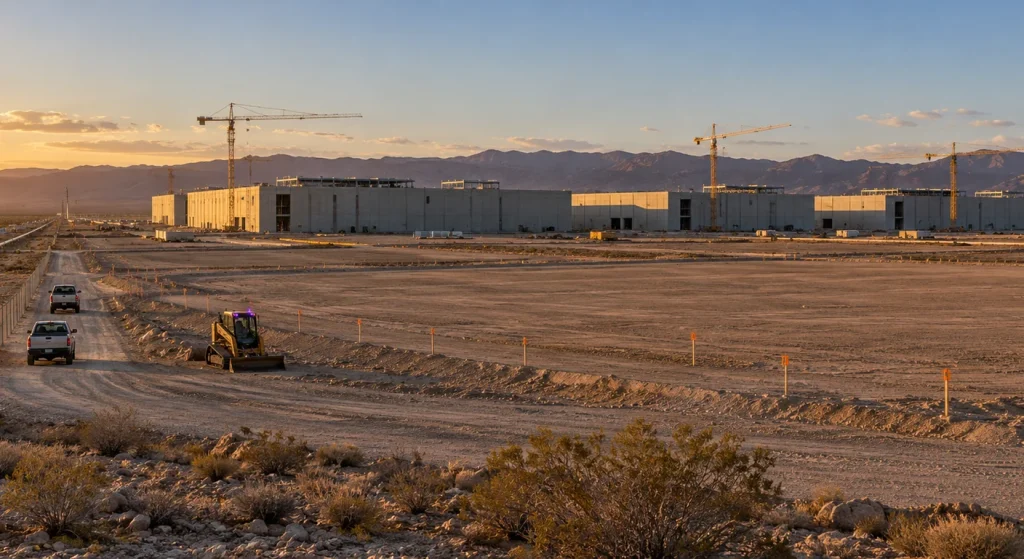
The assessment’s adequacy math is built on “normal” peak conditions, and NERC named several factors that can erode the cushion: accelerated demand, rapid growth of large loads such as data centers, periods of low wind output, and the overlap of early-summer heat with spring maintenance outages. What the snapshot does not resolve is how fast unscheduled large-load interconnections — the same demand driving FERC’s RM26-4 rulemaking — will be added inside the assessment window, a variable that sits outside NERC’s forecast horizon. S4
Critical Perspective
NERC’s director of reliability assessments cautioned that the better numbers should be read narrowly: “The improved conditions we’re seeing shouldn’t be interpreted as saying that overall reliability risk is declining.” A grid that clears a normal-summer test on paper can still fail under correlated stress — a heat dome that suppresses wind while drought caps hydro and maintenance outages linger. Battery storage’s 14.7 GW addition helps within its duration limits, but four-hour systems do not cover a multi-day event. S3
Why It Matters
For grid planners and large-load developers, the SRA is the season’s baseline risk map. Operators in New England and the Pacific Northwest should expect tighter capacity and a higher chance of conservative operations or appeals for demand response during heat waves. For data-center and manufacturing loads weighing interconnection, the assessment underscores why FERC and DOE are pushing flexibility and full-cost recovery for large loads: the reserve cushion that NERC reports is thin enough that a wave of unmanaged new demand could move an “adequate” region back toward elevated risk. S1