NoMIS Power Joins ARPA-E DC-GRIDS Project
- Power Electronics Power Factor Research
Marin Holt
- 0
- 4 minutes read
Key Facts
- Project Funding: $2.5 million over three years
- Lead Institution: Michigan State University (PI Dr. Omid Beik)
- NPC-PEBB Rating: 6.6 kV / 2.5 kA
- NoMIS Device: 3.3 kV SiC MOSFETs, including a 25 milliohm device
- Submodule Capacitor Reduction: 60 percent versus conventional silicon IGBT half-bridge
The Project
This three-year initiative, with a budget of $2.5 million, is spearheaded by Michigan State University, with Dr. Omid Beik serving as Principal Investigator. The full consortium comprises the Electric Power Research Institute (EPRI), OPAL-RT Technologies, GE Grid Solutions, the National Renewable Energy Laboratory (NREL), Salt River Project, and Minnesota Power.What the Hardware Does
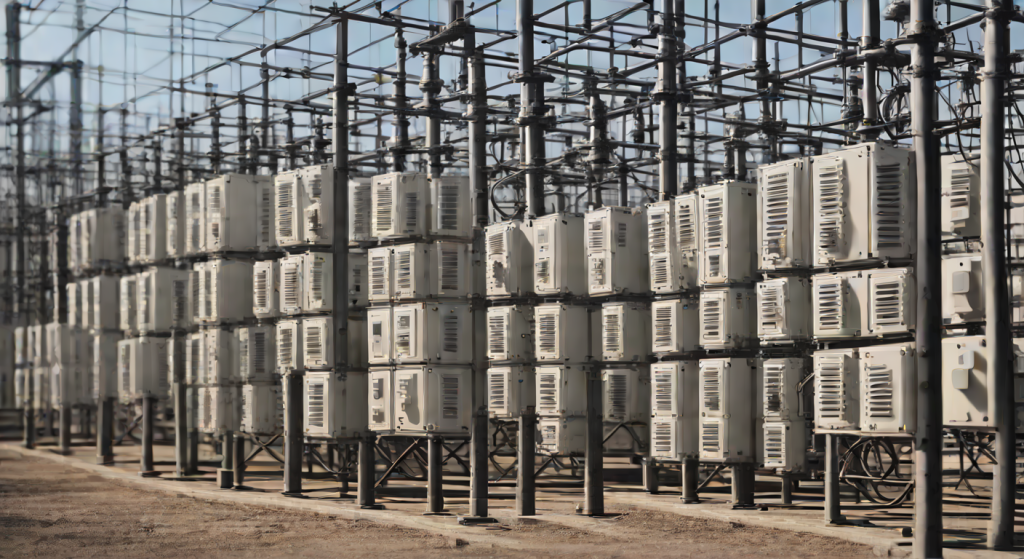
The project focuses on building SiC-based Neutral Point Clamped Power Electronics Building Blocks (NPC-PEBBs) rated at 6.6 kV and 2.5 kiloamperes (kA). These are designed as vendor-agnostic, plug-and-play submodules for modular valves in multiport multiterminal HVDC (MT-HVDC) converters. The NPC-PEBB approach delivers a three-level 6.6 kV output, a contrast to the two-level 4.5 kV output typical of silicon insulated-gate bipolar transistor (IGBT) half-bridge submodules. Furthermore, it provides full DC fault current blocking and a 60% reduction in submodule capacitor size, according to the May 15 NoMIS press release.Why It Matters
This work falls under the DC-GRIDS program, a portfolio for which ARPA-E committed $38 million in late 2024. The program aims to advance HVDC technologies to expand U.S. transmission capacity for offshore wind interconnection, data center load corridors, and renewable transmission corridors. SiC-based NPC-PEBBs offer the potential for HVDC valves to withstand DC-side faults without requiring external breaker action, a scenario that has historically necessitated oversizing protection equipment or accepting slower fault clearing compared to alternating current substations.Critical Perspective
The path to commercialization for this technology involves consortium partners Minnesota Power and Salt River Project on the utility side, and GE Grid Solutions on the converter manufacturer side. This structure suggests a research-to-deployment thread rather than a purely laboratory demonstration. However, the current phase represents three years of lab work, not immediate deployment.Related Coverage
Research Implications
ReadinessConcept
Why it matters
Array