Ford Energy Launches 20 GWh US Battery Storage Business
- Energy Storage Product Utility-Scale BESS
Marin Holt
- 0
- 6 minutes read
- Annual Capacity Target: 20 GWh
- Investment: $2 billion
- Product: Ford Energy DC Block, 5.45 MWh per 20-ft container
- Cell Chemistry: 512 Ah LFP prismatic
- First Deliveries: late 2027
Ford Energy, a new subsidiary of Ford Motor Company, has officially launched its utility-scale battery energy storage system (BESS) business, unveiling the Ford Energy DC Block. This 5.45 MWh system, designed for grid stability and industrial power management, is slated for US assembly. Ford Energy aims to capture a segment of the market currently held by established players, targeting utilities, data centers, and large industrial clients. The company projects reaching an annual deployment capacity of 20 GWh by late 2027, with an investment of approximately $2 billion over two years. Production will stem from Ford’s BlueOval Battery Park Michigan and a Kentucky gigafactory.
Specifications
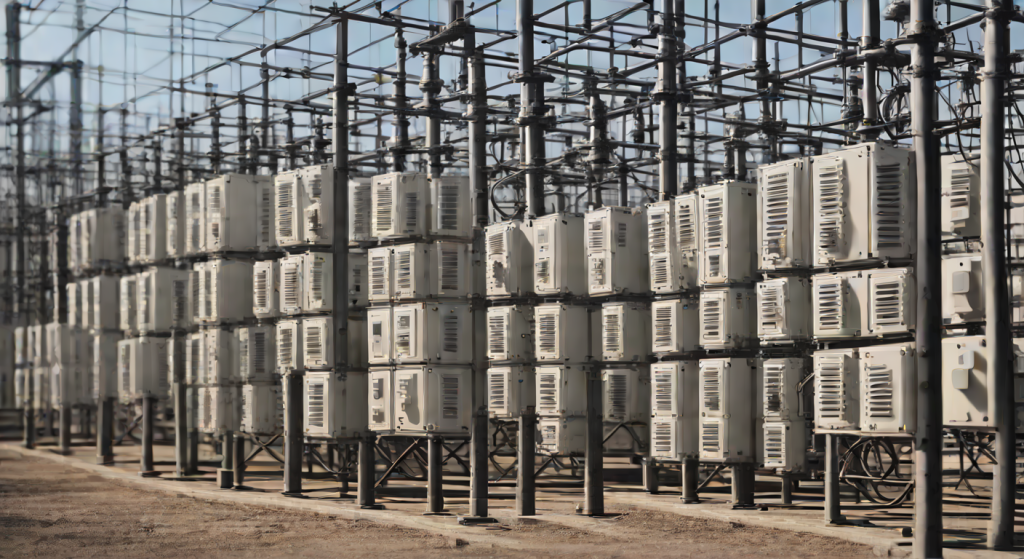
The Ford Energy DC Block is a 5.45 MWh utility-scale system housed within a standard 20-foot container. It is offered in both two- and four-hour duration configurations and employs 512 Ah prismatic LFP cells, according to the company’s announcement.
Market Context
Ford Energy enters a competitive landscape. Tesla deployed a record 46.7 GWh of energy storage in 2025, per industry data. Competitors like Fluence and CATL EnerC also offer large-scale BESS. Ford Energy plans to invest approximately $2 billion over two years to reach an annual deployment capacity of 20 GWh, with production originating from Ford’s BlueOval Battery Park Michigan and a Kentucky gigafactory. First deliveries are slated for late 2027, according to the company’s timeline.
Why It Matters
If Ford Energy achieves its stated 20 GWh annual deployment target, it represents a significant injection of US-assembled BESS capacity into a market projected to add 24 GW of new utility-scale battery storage in 2026, according to market forecasts. This scale could provide utility and industrial buyers with a more diversified supply chain and potentially influence pricing dynamics for demand-charge management and AI infrastructure power needs.
Critical Perspective
The announcement raises the question of whether Ford Energy’s offering represents a fundamentally new approach to grid-scale storage or a repurposing of automotive-grade battery capacity. Given Tesla’s established deployment record and the sheer volume of its energy storage installations, Ford Energy faces the challenge of demonstrating a distinct advantage beyond its US assembly claim. The company’s ability to scale and deploy reliably will be a key metric to watch.