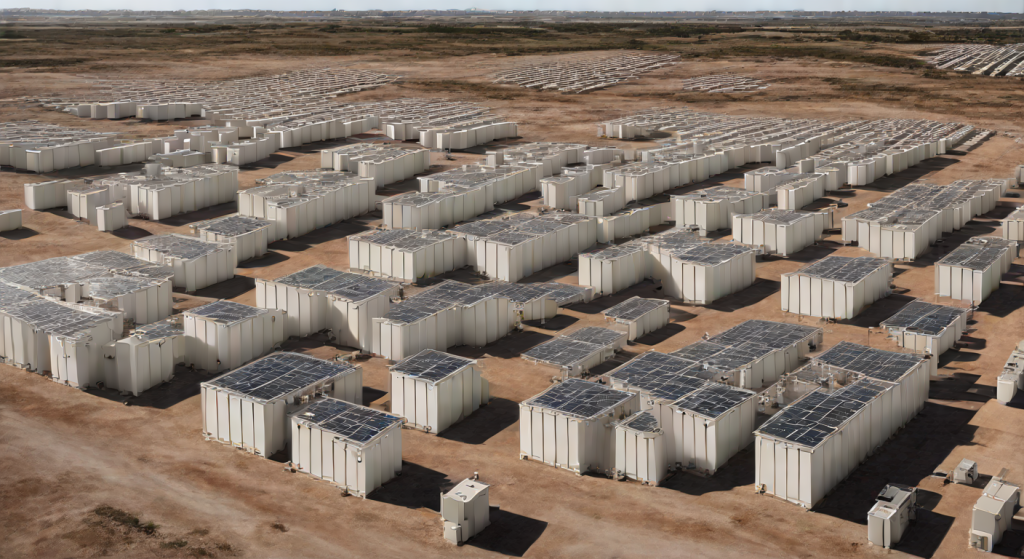
Orsted Buys 150 MW Salzburg BESS in Michigan from ESA Solar
- Energy Storage Grid Services & Demand Response News Utility-Scale BESS
Marin Holt
- 0
- 6 minutes read
- Project Capacity: 150 MW / 600 MWh
- Buyer / Seller: Orsted purchases from ESA Solar Energy
- Commercial Operation Target: 2029 to 2030
- Michigan RPS Target: 60% by 2035
Orsted, the Danish offshore wind developer, agreed in May 2026 to buy the 150 MW / 600 MWh Salzburg Battery Energy Storage System (BESS) project in Michigan from ESA Solar Energy, an independent power producer focused on co-located solar-storage development. The deal, announced May 7, 2026, gives Orsted a utility-scale storage asset in the Midcontinent Independent System Operator (MISO) footprint as the company rebuilds its US portfolio after earlier offshore wind project cancellations. Commercial operation is targeted between 2029 and 2030.
ESA Solar Energy developed the Salzburg project and is selling it as a de-risked development asset — a pattern common in the US storage sector where developers originate projects and monetize them at or near notice-to-proceed stage. The transaction was confirmed simultaneously by Energy-Storage.News, Solar Builder, and a PRNewswire press release from ESA. Terms were not disclosed. Michigan’s Renewable Portfolio Standard, which requires utilities to reach 60 percent clean energy by 2035, creates ongoing procurement pressure in the state that increases the value of dispatchable storage resources that can support high renewable penetration on the grid.
Why It Matters
The Salzburg acquisition is Orsted’s most visible US storage move since its offshore wind writedowns, and the 150 MW / 600 MWh scale — four hours of discharge at full power — positions it directly in the operating window that MISO grid operators use to manage evening peak demand as wind and solar generation ramp down. Michigan’s 60 percent RPS target by 2035 is among the more aggressive in the Midwest, and state utilities will need dispatchable storage resources to meet it. The 2029-2030 commercial operation target means Salzburg will arrive at roughly the same time that MISO’s interconnection queue backlog is expected to clear enough to allow significant new capacity additions, making the timing commercially sensible even though it sits outside the current period of tightest capacity risk.
Sources
- https://www.energy-storage.news/orsted-purchases-150mw-michigan-bess-project-from-esa-solar/
- https://solarbuildermag.com/energy-storage/esa-sells-michigan-bess-project-to-danish-energy-developer/
- https://www.prnewswire.com/news-releases/esa-sells-150-mw-salzburg-battery-energy-storage-project-in-michigan-to-orsted-302764702.html
Critical Perspective
Orsted’s acquisition of the 150 MW / 600 MWh Salzburg BESS project from ESA Solar Energy is a significant move, but the headline’s implication that this will substantially bolster grid stability and reliability overlooks several critical engineering constraints. According to Watt-Logic’s research, the UK is at risk of losing 12 GW of net firm capacity by 2030, with only 147.39 GWhrs of battery storage planned in CP 2030 (Watt-Logic, November 14, 2025). This means that even if all planned projects are built on schedule, they will still fall short by a substantial margin. The Salzburg project, while welcome, is just one piece of a much larger puzzle. Moreover, the article fails to address the technical challenges associated with delivering weeks-long electricity storage at scale (Watt-Logic, July 27, 2025). The lead time for such projects is uncertain and fraught with risk. Given that Orsted targets commercial operation between 2029 and 2030, this project will not come online until after the critical period of capacity loss, potentially exacerbating grid instability. The question remains: how will we ensure adequate firm capacity by 2030 when even large-scale battery projects face such significant uncertainties? The burden of proof lies with Orsted to demonstrate that their project can be delivered on time and at scale without compromising grid reliability.